


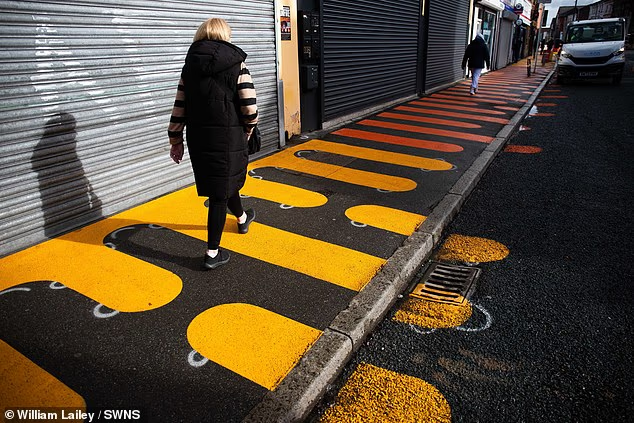
Traffic-calming markings likened to Wotsits have been removed from a Birkenhead road, a year after their installation prompted criticism from residents and was described as a waste of taxpayers’ money.
The orange squiggles covered about 170 yards of Grange Road West and formed part of a trial scheme intended to slow traffic along a winding one-way street. Street furniture and planters were positioned alongside the markings.
Wirral Council has now reversed the paintwork, although the one-way system will remain after officers concluded it improved the flow of traffic and created more parking space for local shops.
The original works were valued at £300,000. The council has paid for the removal itself, but has not said how much the clean-up has cost.
Residents gave the brightly coloured road the nickname “Wotsit Street” after the popular cheesy snack. Theresa, 68, from Birkenhead, called the scheme “gaudy and silly” and said it had been “completely pointless and a waste of money”.
Debbie Taylor told the BBC: “I don’t think it complements the area, it doesn’t fit in with anything else. It doesn’t seem to be part of a master plan – it’s an eyesore.”
Another resident, Vicky, 42, said she would miss the benches installed as part of the changes, adding: “I’ll certainly miss sitting on the benches.”
The redesign was introduced as a six-month trial following a public consultation. Wirral Council awarded construction firm Graham a £2.9 million contract for revitalisation projects in the area, with part of the funding used for the road scheme.
The authority had said the changes would help transform the town centre into a more pleasant place to shop, rather than leaving it cluttered with cars. But it later changed course after what it described as “significant concerns” from local people.
Joy Langshaw compared the appearance to a collaboration between artists Jackson Pollock and Salvador Dali, saying it was “a bit much… (as if) Pollock and Dali had a child”.
Wirral Council leader Paula Basnett said the markings had “put Birkenhead on the map, for maybe the wrong reasons”. She said the trial had nevertheless provided “valuable evidence” for road planners and demonstrated how the area’s long-term layout should be shaped.
“This is exactly what a trial should do, allow us to test changes, understand their impact and use that evidence to shape the right long-term solution,” she said.
The council has also said the street furniture and planters removed from the road will be donated to schools and community groups.
