


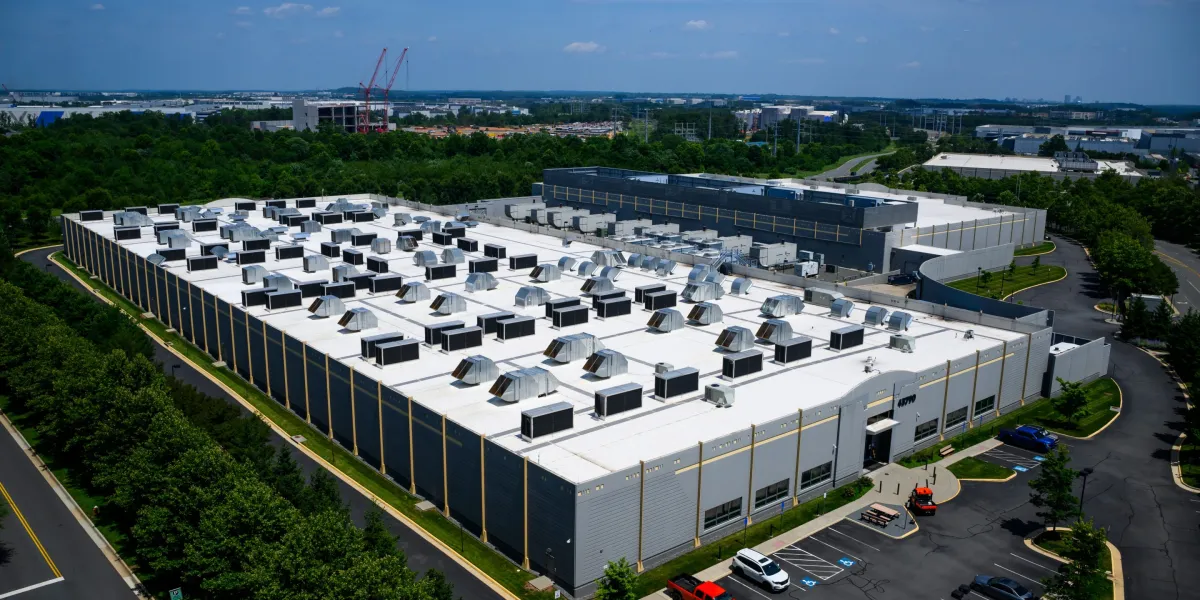
Data centre tax breaks are costing US states billions of dollars in lost revenue as technology companies race to expand the infrastructure needed to power the artificial intelligence boom.
Nearly three-quarters of US states offer incentives for data centre development, including exemptions from sales and use tax, property tax relief and financial transaction breaks. The sector is expected to grow at an annual rate of 14% through 2030, according to property consultancy JLL.
The incentives vary widely. Texas requires data centre projects to meet substantial investment thresholds, while Maine uses minimum floor-space requirements and some states impose employment conditions. New York, by contrast, has no minimum investment requirement and applies exemptions to a broad range of spending.
For operators, the value of the relief can be considerable. Electrical systems, batteries and buildings may last for more than 20 years, but servers and other equipment used for artificial intelligence workloads can require replacement after about three years.
The Tax Foundation estimates that a $5 billion data centre could spend more than $1 billion a year on machinery and equipment. Exempting those purchases from sales tax can therefore become a major factor in deciding where a facility is built.
Illinois offers qualified data centres exemptions from state and local sales and use taxes on equipment essential to their operations. Eligible items include servers, storage systems, electrical and telecommunications infrastructure, software, climate-control equipment and building materials incorporated into the facilities.
The state also provides a 20% income tax credit on wages paid to construction workers. The relief can continue for up to 20 years, renewed in five-year periods, provided the facility maintains the required investment.
Illinois requires a minimum capital investment of $250 million, while the threshold in Virginia – home to the area known as “data centre alley” – is $150 million, alongside a requirement for at least 50 new jobs paying more than 150% of the local average wage. Across the US, minimum investment requirements range from $2 million in parts of Maryland to $450 million in Kentucky.
Data centre tax breaks face scrutiny
Concerns are growing that the public cost of the incentives is not being properly disclosed. Good Jobs First, a corporate accountability group, said at least 14 states with data centre tax exemptions did not publish comprehensive annual figures showing the revenue forgone.
Its analysis identified annual losses of about $2.5 billion in Georgia, $1.94 billion in Virginia and $1 billion in Texas. The group said Ohio reported losses of $555 million in 2024, rising to $1.6 billion in 2025.
Illinois has published evidence of rapidly rising costs, although its Department of Commerce and Economic Opportunity stopped including an annual revenue-loss figure in its data centre investment report from the 2023 financial year.
The number of Illinois projects receiving sales and use tax exemptions rose from six in 2020 to 27 in 2024. A previous state report put the cost of the programme at $10.4 million in 2020, while an initial version of its 2023 report estimated the loss at $465.3 million.
Good Jobs First said the surge reflected the expansion of facilities built for cloud computing and AI, as well as the absence of caps on the amount individual companies can claim. It has argued that governments should disclose the cost of the abatements in their audited financial reports.
The economic benefits are also being questioned. Research from Georgia Tech found that opening a data centre was associated with a 3.5% rise in local employment, a 5% increase in total wages, a near-5% increase in the number of businesses and a 1.9% rise in household income.
However, the researchers said the gains were smaller than might be expected from projects involving such large capital investments and were unevenly distributed. In areas where price effects could be measured, electricity costs rose by about 5% after a data centre began operating.
The findings suggest that data centres can provide a short-term lift to construction and local economic activity, but do not necessarily deliver the scale of employment or long-term prosperity promised when tax incentives are agreed.
