


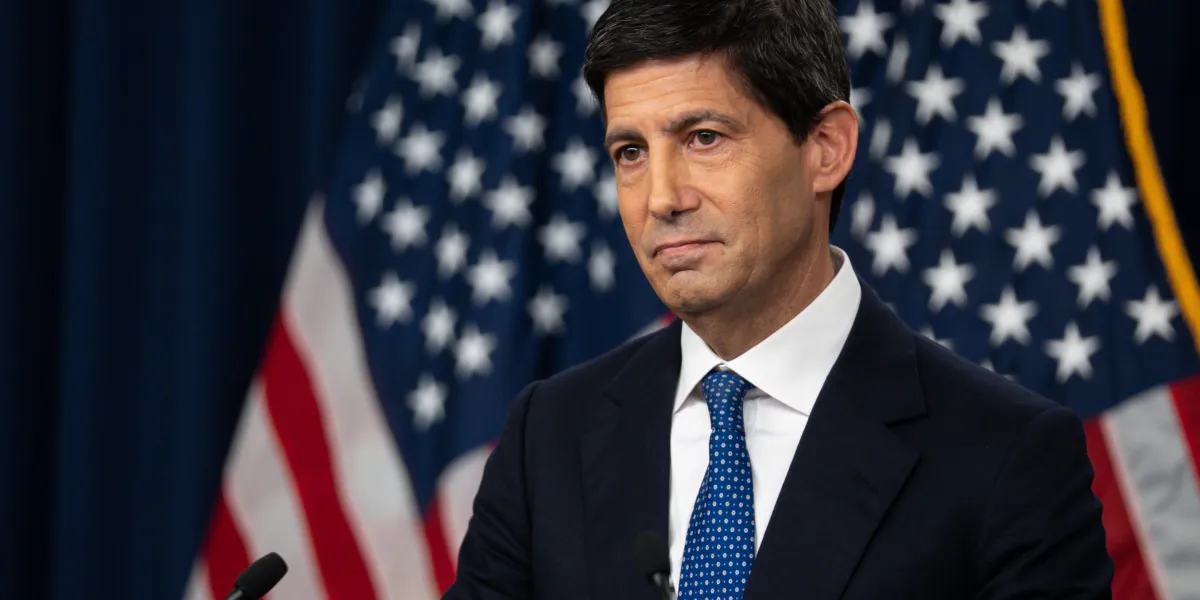
Federal Reserve chair Kevin Warsh’s hawkish turn has triggered a sharp sell-off in US government bonds, pushing 30-year Treasury yields to their highest level since 2002 and raising concerns about renewed losses for banks, homeowners and investors.
The yield on the 10-year Treasury rose by more than half a percentage point in September to about 5.3%, making it the worst month for US government bonds in four years. The scale of the move has led market participants to look beyond technical trading factors for an explanation.
Some analysts have pointed to weaker demand from hedge funds involved in the so-called basis trade, while others have cited a higher term premium — the additional return investors require to hold longer-dated debt. More speculative explanations include an “absorption premium”.
But those factors appear insufficient to explain such a large shift in a Treasury market worth about $40 trillion. The central change, according to the analysis, was the Federal Reserve’s new signal on interest rates.
Markets reassess the Federal Reserve’s plans
Warsh’s speech at Jackson Hole on August 28 signalled a more aggressive approach to inflation. Torsten Sløk, chief economist at Apollo, said the Fed had entered 2026 expecting several rate cuts but was now leaning towards raising rates.
Traders began pricing in a possible increase at the Fed’s September meeting. A hotter-than-expected August consumer price inflation report on September 11 accelerated the sell-off, although the market may have interpreted the data incorrectly.
The Fed raised rates by a quarter of a percentage point on September 16, as expected. However, Warsh’s emphasis on “discipline” and “resolve”, alongside his pledge that “this Fed will deliver price stability”, unsettled investors.
Projections indicated that rates could rise further, with inflation remaining above target until 2029. Markets subsequently priced in the possibility of a series of increases, with an 80% chance of at least 100 basis points more tightening than had been expected before the Jackson Hole speech.
The view that rates would remain “higher for longer” was replaced by expectations of a much more prolonged period of elevated borrowing costs.
The legacy of the last rate shock
Investors have been particularly sensitive because of the damage caused by the Fed’s previous tightening cycle. Between 2022 and 2023, US interest rates rose by 525 basis points over 17 months.
The Bloomberg Aggregate Index fell 13%, while Treasuries lost 12.5%. The 10-year Treasury recorded a 16% decline, its worst return in a century, and the iShares 20+ Year Treasury ETF fell 31.4%.
Losses on bonds previously regarded as safe contributed to the collapse of Silicon Valley Bank and placed pressure on the wider banking sector. By the middle of 2023, banks were carrying almost $700 billion in unrealised losses, with between $300 billion and $500 billion still remaining.
Mortgage rates also rose from about 3% to nearly 8%, leaving the housing market facing a continuing affordability crisis. Traders now have a recent example of what an aggressive Federal Reserve can do and have responded by reducing their exposure to long-duration assets.
Losses spread from bonds to housing
The iShares Aggregate bond ETF has fallen 4% since Jackson Hole, implying market-wide losses of more than $1 trillion.
Estimates cited in the analysis put banks’ additional unrealised losses at $115 billion in September and $180 billion for the third quarter. That would take the value of underwater securities above $500 billion, more than 50% higher and the largest total since June 2024.
Mortgage rates have increased by almost one percentage point since the speech, while home sales have declined. The S&P mortgage-backed securities index has fallen 5%, implying losses of about $400 billion.
The current episode is not necessarily a repeat of the 2022-23 crisis, and market fears may prove excessive. However, the previous rate shock has left investors with clear reasons to avoid long-term bonds.
The consequences extend beyond financial markets. Consumers face more expensive car loans and credit-card borrowing, homeowners face higher mortgage payments, and businesses must pay more for credit.
Banks are exposed to further losses on securities once considered safe, while higher US rates and a stronger dollar place pressure on overseas economies and currencies, including the yen.
Warsh’s approach appears to accept those costs as the price of restoring the Federal Reserve’s credibility. The bond-market reaction to his Jackson Hole speech has so far been more severe than the response to Ben Bernanke’s 2013 “Taper Tantrum”, an episode now widely regarded as a policy mistake.
The central question for the Fed is whether the economic damage caused by a highly hawkish stance will ultimately prove justified by the gains from bringing inflation under control.
