


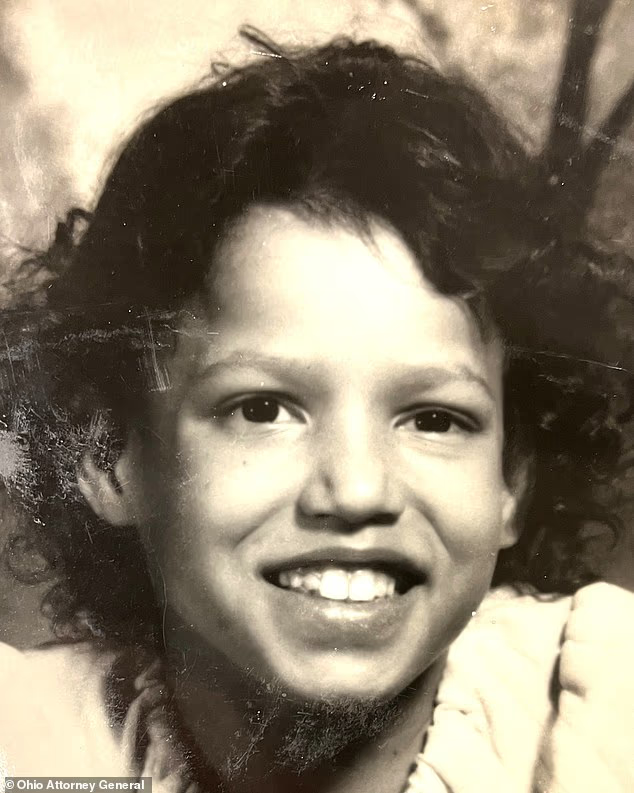
New DNA testing in the murder case of 10-year-old Debbie Smith has failed to identify her killer but has renewed hopes that modern forensic techniques could solve one of north-east Ohio’s most troubling cold cases.
Massillon police revisited the investigation after the Porchlight Project, a non-profit organisation supporting unsolved murder cases, contacted them in October 2024. Officers subsequently sent clothing and other items recovered during the original inquiry for further analysis.
The testing found no match to Robert Buell, the man convicted of abducting and killing 11-year-old Krista Harrison in 1984. It also failed to identify anyone else.
Detective Shaun Dadisman said the possibility that Debbie’s killer was still alive could not be ruled out.
“That is true. It’s very possible,” he said.
Debbie disappeared on June 25, 1983, while attending a carnival in Massillon with her mother, Linda Smith, and her teenage brother, David. She had been riding the Tilt-A-Whirl with David when her mother briefly turned away to get drinks.
When Linda returned, Debbie had vanished. A search of the carnival grounds and surrounding area began, involving about 200 police officers, firefighters and volunteers.
Investigators questioned carnival workers, checked amusement operators’ vehicles and searched streets, buildings, railway tracks and riverbanks. Linda was particularly fearful because Debbie had juvenile diabetes and needed insulin injections twice a day.
For nine days, searchers looked for the missing schoolgirl. On August 6, a canoeist changing beside the Tuscarawas River found badly decomposed human remains in a wooded area about 15 miles from Debbie’s home.
Hair recovered from the body was compared with hair from Debbie’s comb, confirming her identity. A Smithsonian expert concluded that she had suffered a stab wound through her second rib, which may have pierced her heart. Her throat had been cut, and investigators also considered whether she had been strangled.
Wax was found beneath the remains and a similar substance was discovered nearby. Investigators also suspected that Debbie may have been sexually abused.
Robert Buell was suspected but never charged
Debbie’s killing formed part of a wider series of attacks on young girls in north-east Ohio. Tina Marie Harmon, 12, disappeared from Creston in October 1981, while Krista Harrison vanished from Marshallville in July 1982.
Seven-year-old Dawn Hendershot was killed in Massillon in September 1982. Her neighbour, Donald Maurer, was later convicted of her murder.
The cases prompted investigators to examine whether a single predator was targeting children. By October 1983, their attention had turned to Buell, then a 43-year-old Akron planning department employee, who was suspected of involvement in the deaths of Debbie, Tina and Krista.
Buell had been implicated in separate abduction and rape cases involving two adult women. During a search of his home, police found candles and quantities of wax. Beer cans discovered near Debbie’s remains and an account of a canoe trip Buell had taken along the Tuscarawas River shortly before her disappearance also drew scrutiny.
Despite the suspicions, Buell was never charged with Debbie’s murder. He was convicted of Krista’s abduction and killing, sentenced to death and executed in September 2002.
DNA evidence later linked Buell to Tina Harmon’s murder. In 2009, Ohio Attorney General Richard Cordray said the probability of the match occurring by coincidence was about one in 96 trillion.
Buell maintained his innocence in the girls’ murders and told witnesses, including Krista’s parents: “I didn’t kill your daughter.” Prosecutors said the DNA findings supported their conclusion that he had acted alone.
True-crime author James Renner has advanced an alternative theory, suggesting that a male relative who lived with Buell may have been responsible for some of the killings. Renner said the relative resembled Buell, had access to his vehicle and might have been able to access materials connected with the investigation.
The theory has not been proved, and investigators have not established that the relative was responsible for any of the murders. Renner said the latest testing, which excluded Buell, strengthened his suspicion that Buell may not have carried out the killings himself.
“But I don’t think he acted alone,” Renner said. “And my suspicion is (Buell) was not the one that actually was carrying out the murders of these girls.”
The Porchlight Project remains willing to help fund genetic genealogy testing if investigators believe it could help advance the case.
Detective Dadisman said he would continue working on the investigation.
“When I began investigating this case, I had a daughter the same age as Debbie when she was abducted, so it goes without saying, these acts of violence on children break my heart,” he said.
“Although several family members are deceased, I believe justice still needs served here on earth.”
Debbie’s mother and grandparents died without learning what happened to her. More than four decades after she disappeared from the carnival, investigators are hoping that evidence preserved from the original investigation may finally reveal who killed her.
