


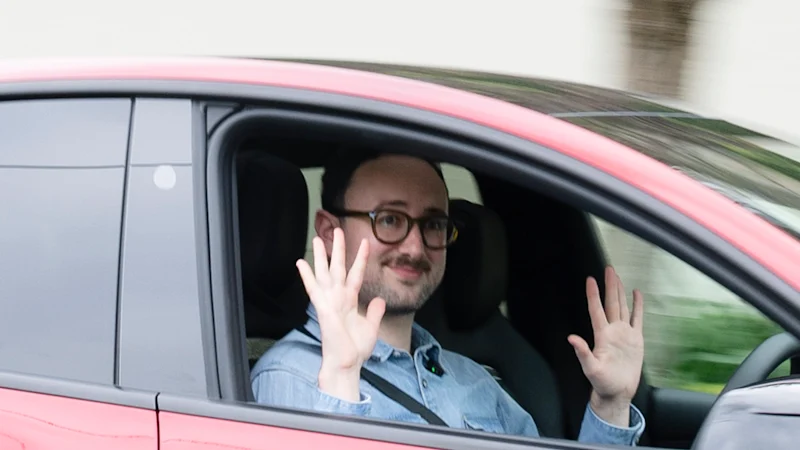
Zurich Insurance is offering discounted premiums to Australian Tesla owners who use the company’s supervised self-driving technology, after early data suggested the vehicles were involved in fewer accidents.
The move makes Zurich the first insurer in Australia to include Tesla’s Full Self-Driving (FSD) Supervised mode in its assessment of risk. The insurer believes it is only the second company worldwide to do so.
Zurich’s underwriters reviewed initial claims and driving data before concluding that journeys using the system appeared safer, on average, than trips controlled entirely by human drivers. The company has not disclosed the size of the discount.
Tesla’s supervised self-driving system
FSD Supervised became available in Australia about 12 months ago for certain newer Model 3 and Model Y vehicles. Owners pay 149 Australian dollars a month to use the system, which can steer, accelerate, brake and change lanes towards a pre-set destination.
The technology uses eight cameras to provide a 360-degree view around the car. Information from those cameras is processed by navigation software, while an internal camera monitors the driver to check that they remain alert and ready to take control.
Drivers are legally responsible for the vehicle because the system is classified as a Level 2 advanced driver assistance system under Australian road rules. They must continue watching the road and can be required to intervene if the car encounters a problem.
If the system repeatedly detects that a driver is distracted or unable to take control, it can issue warnings, pull the vehicle over and disable the feature for the rest of the journey.
Tesla says Australian vehicles have now travelled more than 132 million kilometres using the technology. That remains a small proportion of the 264 billion kilometres travelled by all vehicles in the country during 2025.
There have nevertheless been concerns about how the system handles local road layouts. Roundabouts and Melbourne’s hook turns initially appeared to present difficulties, while drivers have also posted videos of Teslas moving without anyone visibly touching the steering wheel.
During a recent drive in Sydney, the system was reported to handle roundabouts smoothly and to slow promptly for hazards and pedestrians. It became confused by recently altered lanes near Sydney Harbour Bridge, however, at one point attempting to use a bus-only exit and later failing to recognise a 40km/h school-zone limit.
The insurance offer comes as the cost of cover for Australian motorists has risen by about 50 per cent between 2019 and 2025.
“Humans make mistakes. They get tired. They can be distracted. It’s not that the machine is perfect, but it does appear to be true that on average, across the population and over time, it makes fewer of the mistakes that humans do,” said Alex Morgan, Zurich’s head of general insurance.
He said automated driving could reduce accidents caused by driver error, but would not prevent other types of damage, including a tree branch falling on a vehicle, hail breaking a windscreen, a shopping trolley hitting a door or the car being stolen.
Thom Drew, Tesla’s Australia director, said the company welcomed insurers recognising what he described as the safety benefits of automated driving. “FSD [Supervised] is making driving significantly safer, and it’s encouraging to see … this [insurance] benefit and reflecting the reduced risk for Tesla owners.”
