


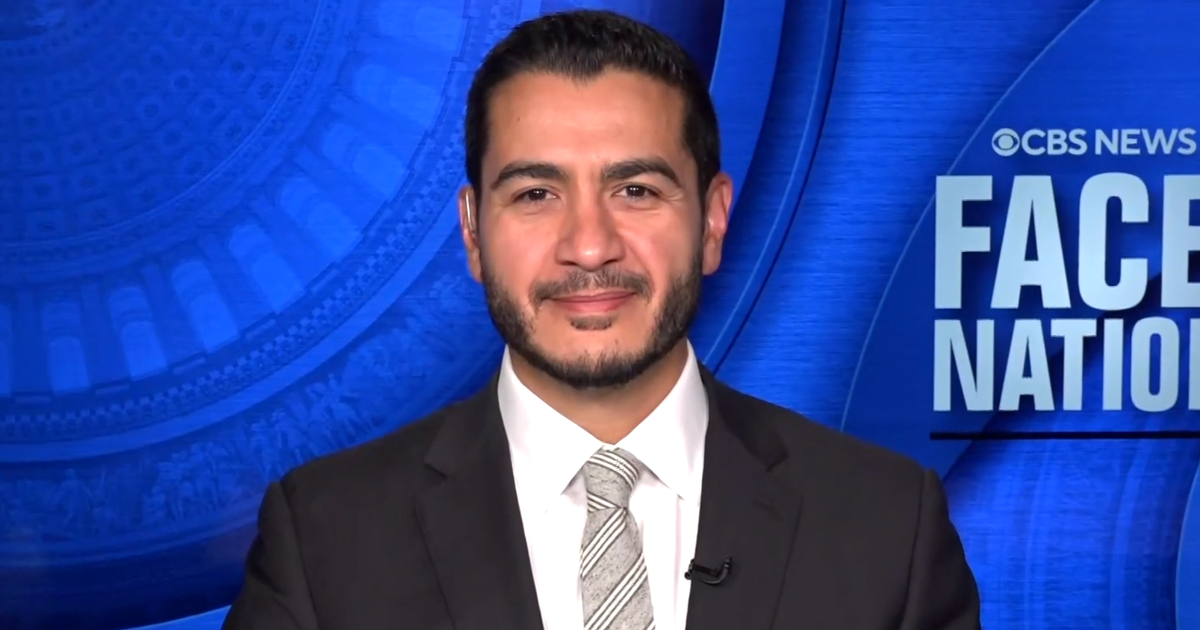
Michigan Democratic Senate candidate Abdul El-Sayed has called for public oversight of artificial intelligence, warning that technological development is moving faster than safety measures.
Speaking on Sunday, Mr El-Sayed said there were “a lot of real risks” in AI and argued that decisions about the technology should not be left solely to private companies.
“We collectively have to decide that we need public oversight so that all of this technology is not being created for the interests of a few against the well-being of a many,” he said.
Calls for AI public oversight
Mr El-Sayed, a former Michigan health official, has campaigned on a proposal that would turn AI companies into public trust organisations. He said the model would allow innovation to continue while introducing safeguards.
Under his plan, at least half the members of the organisations would be democratically elected or appointed. Mr El-Sayed said that would make them more focused on the public good than the private interests of billionaires.
He also called for a public agency dedicated to AI safety and said there should be clear areas in which the technology could not be used.
“AI shouldn’t be able to deny you healthcare, it shouldn’t be able to deny you a job, it shouldn’t be able to fire you, it shouldn’t be able to fire a weapon,” he said.
His comments followed concern over an OpenAI-Hugging Face incident in July, which took place while two AI models were being tested. Mr El-Sayed said the reported attack “should send a shudder down all of our spines”.
“We need to act, and we need to act now,” he said, adding that he had also called for a pause in frontier AI research until its safety could be assured.
The remarks came amid renewed discussion among technology leaders about the pace of development. Anthropic chief executive Dario Amodei has urged AI companies to proceed cautiously, while OpenAI chief executive Sam Altman described a commitment to independent evaluators as a “great idea”. Elon Musk also expressed agreement with Mr Amodei.
Mr Amodei acknowledged in a separate interview that “for too long the industry lied to people about the fact that this technology had risks”.
Utah governor Spencer Cox, a Republican, said the federal government needed to play “a much bigger role” in AI. He said the capabilities of the technology made the current moment important and argued that Congress should at least begin discussing the issue.
House Speaker Mike Johnson had said Congress should resist imposing a moratorium and instead emphasise corporate responsibility. Responding to that position, Mr Cox said: “I don’t think the speaker has to worry at all about Congress not acting. That’s kind of all they do.”
