


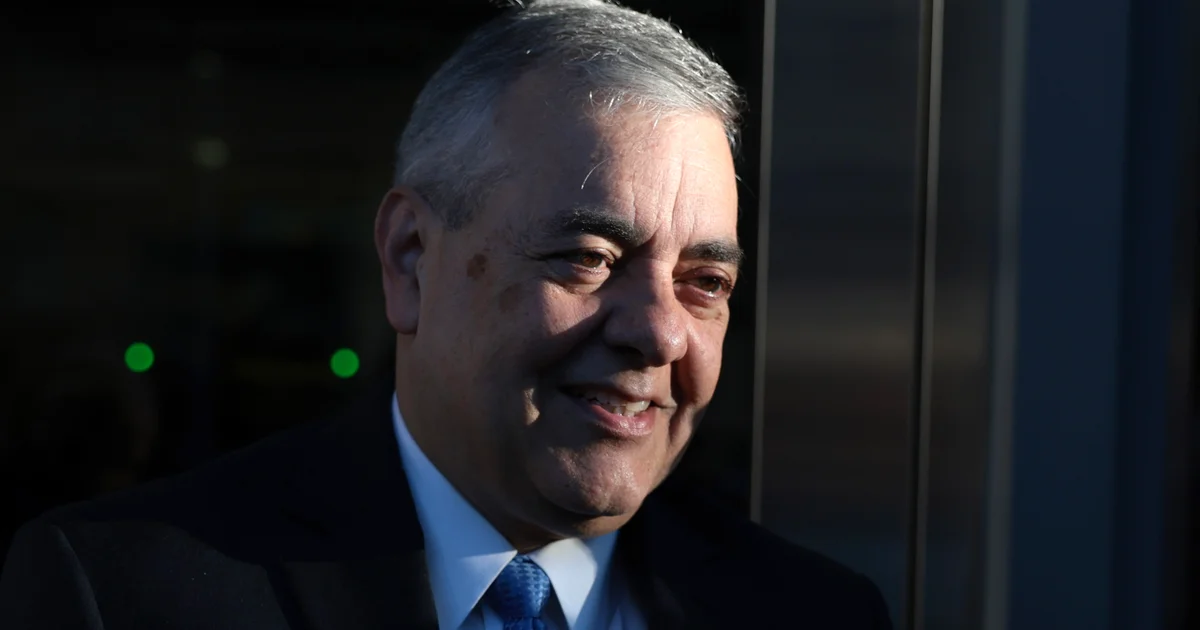
Former US congressman David Rivera has been sentenced to 10 years in federal prison for his role in a secret 50 million-dollar lobbying campaign carried out on behalf of the Venezuelan government during Donald Trump’s first administration.
Rivera was sentenced in federal court in downtown Miami after a jury convicted him in May on every charge following a seven-week trial. He had been held without bail since the verdict on May 1.
The former Florida representative was convicted of, among other offences, failing to register as a foreign agent with the US Justice Department and conspiracy to commit money laundering. Political consultant Esther Nuhfer, who was tried alongside him, was also found guilty on all counts.
Former congressman accused of concealing Venezuela work
Prosecutors said Rivera and Nuhfer worked secretly for Nicolás Maduro’s government between 2017 and 2018 through a multimillion-dollar contract involving Rivera’s consultancy and a US-based affiliate of Venezuela’s state oil company, PDVSA.
They alleged that Delcy Rodríguez, then Venezuela’s foreign minister, recruited Rivera to use his Republican contacts to persuade the Trump administration to soften its position towards Caracas and ease sanctions.
Rivera and Nuhfer were accused of seeking access to influential figures, including Marco Rubio and Texas congressman Pete Sessions, without revealing the consulting arrangement. Rubio, a long-time friend of Rivera, later became US Secretary of State.
Evidence shown to jurors included messages from an encrypted chat group called “MIA”, which prosecutors said Rivera created with Venezuelan media tycoon Raúl Gorrín, his main intermediary with the Maduro government. The messages allegedly used code names for political figures and referred to millions of dollars as “melons”.
Prosecutors also said the group tried to hide the work after it came under scrutiny by backdating documents and creating sham agreements. One such agreement was allegedly used to justify a 3.75 million-dollar payment to a South Florida company that maintained Gorrín’s luxury yacht.
The lobbying operation included arranging meetings for Rodríguez in New York, Caracas, Washington and Dallas. Sessions later tried to organise a meeting between Rodríguez and ExxonMobil’s chief executive and agreed to deliver a letter from Mr Maduro to Mr Trump after a private meeting in Caracas.
Federal officials described Rivera’s conduct as a betrayal of the South Florida community he once represented. Jason A Reding Quiñones, the US attorney for the Southern District of Florida, said: “This was not some paperwork violation, or a simple mistake. He sold his reputation to communists to fill his greed.”
Brett Skiles, of the FBI’s Miami field office, said that “operating illegally and covertly on behalf of a foreign government has consequences”. Charles Miller, of the Florida office of IRS Criminal Investigation, added: “A person’s title or political connections do not place them beyond accountability.”
Rivera’s defence said he opposed Maduro
Rivera’s lawyers argued that he had acted in good faith and believed the work did not need to be declared under the Foreign Agents Registration Act. They said the three-month, 50 million-dollar contract concerned efforts to bring ExxonMobil back to Venezuela and fell within an exemption for commercial activity.
The defence also maintained that Rivera’s later meetings with Rubio and Sessions were intended to help replace Maduro with Venezuelan leaders more sympathetic to the United States. His lawyer, Ed Shohat, told jurors: “He was working every possible angle to get Nicolás Maduro out.”
Rubio, Sessions and a prominent Washington lobbyist testified during the trial that they only learned later about Rivera’s contract with the PDVSA affiliate.
Rivera served one term in Congress after being elected in 2010 and had previously held a senior role in the Florida legislature. He and Rubio shared a home in Tallahassee while serving in state government.
Rivera had faced a maximum statutory sentence of up to 60 years and a potential 20 million-dollar asset forfeiture order. Properties he owned in Doral and the Florida Keys were ordered to be forfeited after his conviction.
