


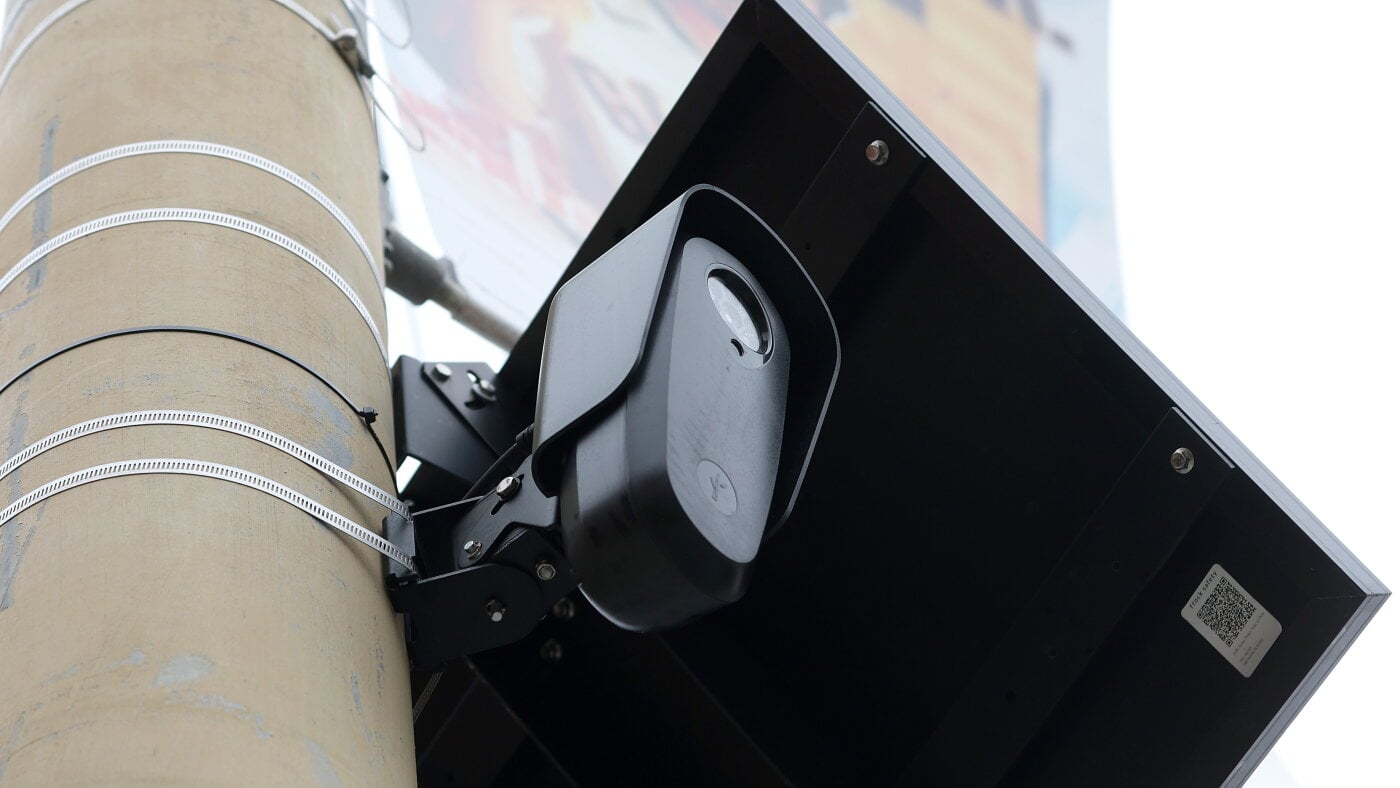
San Francisco car crime has fallen sharply since 2022, with thefts down by almost 59% and break-ins by more than 82% in the first eight months of 2026. Police and city leaders say an expanding network of automated number plate cameras, including Flock Safety’s artificial intelligence system, has played a significant part — but researchers caution that the technology’s precise contribution remains uncertain.
The debate has placed San Francisco at the centre of a wider US argument over whether high-tech surveillance can reduce crime without creating an unchecked record of people’s movements.
San Francisco district attorney Brooke Jenkins has described the cameras as one of the most important factors behind the improvement. The San Francisco Police Department has also credited automated number plate recognition, or ALPR, with helping officers identify vehicles linked to crimes and target organised burglary groups.
But civil liberties campaigners say the evidence for the systems is limited and warn that mistakes or misuse can have serious consequences. The city has already disclosed breaches of its safeguards, including improper searches of its Flock database.
How Flock cameras are being used in San Francisco
Flock cameras photograph vehicles as they pass fixed locations. Its software analyses number plates and other features, including a vehicle’s make, colour, body style, roof racks and bumper stickers. It can also catalogue vehicles without visible registration plates.
The resulting database allows investigators to search when and where a vehicle was recorded. Police say the system can help them trace cars connected to offences without resorting to dangerous pursuits.
In one case publicised by the department, cameras identified a moving vehicle linked to an earlier car burglary. Officers then deployed a drone, which recorded suspects breaking into a parked sports utility vehicle and taking luggage before police arrested them.
Jenkins said the technology had given officers the ability to catch people who had committed crimes and could also deter offenders who believed the risk of being identified had increased.
The department began installing Flock cameras in March 2024, the same month voters approved Proposition E, which made it easier for police to use drones and advanced surveillance cameras. San Francisco also increased patrols in areas popular with tourists and used bait cars to target organised burglars.
The city’s tougher approach followed the 2022 recall of district attorney Chesa Boudin and Jenkins’s appointment to replace him. She has since been elected twice and adopted a more aggressive approach to prosecuting suspected offenders.
What the evidence says about falling car crime
Research into large, continuously operating networks of AI-powered number plate cameras is still developing. A 2019 analysis of 76 studies found that conventional closed-circuit television cameras were associated with a modest reduction in crime, with the clearest effect in car parks, where offences fell by about 37% compared with areas without cameras.
Earlier vehicle-mounted number plate readers produced less convincing results. A US Department of Justice review found little evidence that they reduced crime, although at least one study suggested they helped recover stolen vehicles and make arrests.
The most substantial study of Flock so far examined 216 law enforcement agencies that introduced the cameras. Researchers Ian Adams and Scott Mourtgos found that car thefts were associated with an 11% fall in the first year after installation, compared with places that had not adopted the system.
The study has not yet been peer-reviewed and was not a randomised controlled trial. Its authors acknowledged that other factors could have contributed to the reduction, although they used a method known as difference-in-differences to compare crime trends in areas with and without Flock.
They also compared vehicle theft with offences such as shoplifting, which the cameras are less likely to prevent. The steeper decline in vehicle theft suggested that the result was not simply reflecting a general fall in crime.
Even so, the research did not examine the effect of Flock on car break-ins. Those offences have fallen more sharply in San Francisco than vehicle thefts, but the cameras’ role is harder to establish.
Many break-ins take place in residential areas where there are gaps in the camera network. Photographing a car as it passes an intersection would not, by itself, prevent someone smashing its window on an unmonitored street.
Police argue that identifying and arresting prolific offenders can have a wider effect. The department said a small number of suspects were responsible for a large proportion of car burglaries and that ALPR technology had helped officers identify organised crews.
Privacy concerns and misuse allegations
The American Civil Liberties Union has campaigned against Flock under the slogan “Get The Flock Out!”. Its senior policy counsel, Chad Marlow, disputes the strength of the evidence that the cameras reduce crime and says they allow authorities to track people who are not suspected of any wrongdoing.
Flock has more than 120,000 cameras across the United States. About 75% of its law enforcement customers have opted to share data with participating agencies, according to Marlow, creating a system through which vehicle movements can potentially be traced well beyond the jurisdiction where a camera is installed.
There have also been reported cases of officers using number plate databases improperly. At least 50 law enforcement officers have been charged or accused of unauthorised use of such systems, including to stalk women, with Flock involved in 46 of the cases cited.
Marlow also highlighted the case of Lindsey Isaacs, who spent 13 days in jail after investigators wrongly connected her vehicle to a fatal hit-and-run, in part using an image captured by a Flock camera.
Flock said searches of its system created an audit record showing who had searched, when and why. By the end of 2026, its customers will be required to use case codes for searches except in emergencies, while unusual activity will be flagged to agency administrators. The company also plans to suspend access automatically when searches meet criteria for abnormal use.
However, critics say oversight still relies heavily on police departments and local authorities policing their own use of the technology.
San Francisco police said privacy interests were taken seriously and that ALPR data was not used for immigration enforcement or investigations concerning reproductive rights. Officers who misuse the system can face penalties including dismissal, the department said.
Those assurances have been tested. In September 2025, it was reported that out-of-state agencies had carried out more than 1.6 million searches of San Francisco’s database in breach of California law, including at least 19 marked as related to US Immigration and Customs Enforcement. The department said those agencies no longer had access.
In June, San Francisco disclosed a further 299 improper searches. Analysts working through a California law enforcement partner had conducted the searches for federal and out-of-state agencies. The police department cut off the partner’s access and said its audit found no searches relating to immigration enforcement or reproductive rights.
The city’s Human Rights Commission later found insufficient evidence that the department had breached San Francisco’s rules limiting co-operation with federal immigration authorities. It said Flock had enabled nationwide access to the records without the department’s knowledge or intention, and recommended stronger safeguards.
San Francisco tightens controls
Mayor Daniel Lurie has announced new restrictions, including removing the city’s number plate data from the Flock platform after 30 days. Police may retain records for up to a year, but officers need an active criminal investigation and senior approval to access information older than 30 days.
Jenkins is also working with California Assemblymember Matt Haney on legislation that would make it a criminal offence for officers and other officials knowingly to misuse number plate data or share it without authorisation.
The district attorney said the aim was to preserve the technology’s crime-fighting potential while putting safeguards in place strong enough to prevent the public from rejecting it altogether.
Hundreds of cities and counties in the US have ended, suspended or declined to renew contracts with Flock as concerns over misuse have grown. Some, including Los Angeles and Denver, have replaced it with a rival system made by Axon.
San Francisco, by contrast, is keeping Flock and attempting to regulate it more tightly. Its experience is likely to be watched by other municipalities weighing the apparent fall in car crime against the risks of allowing authorities to build detailed records of where vehicles travel.
