


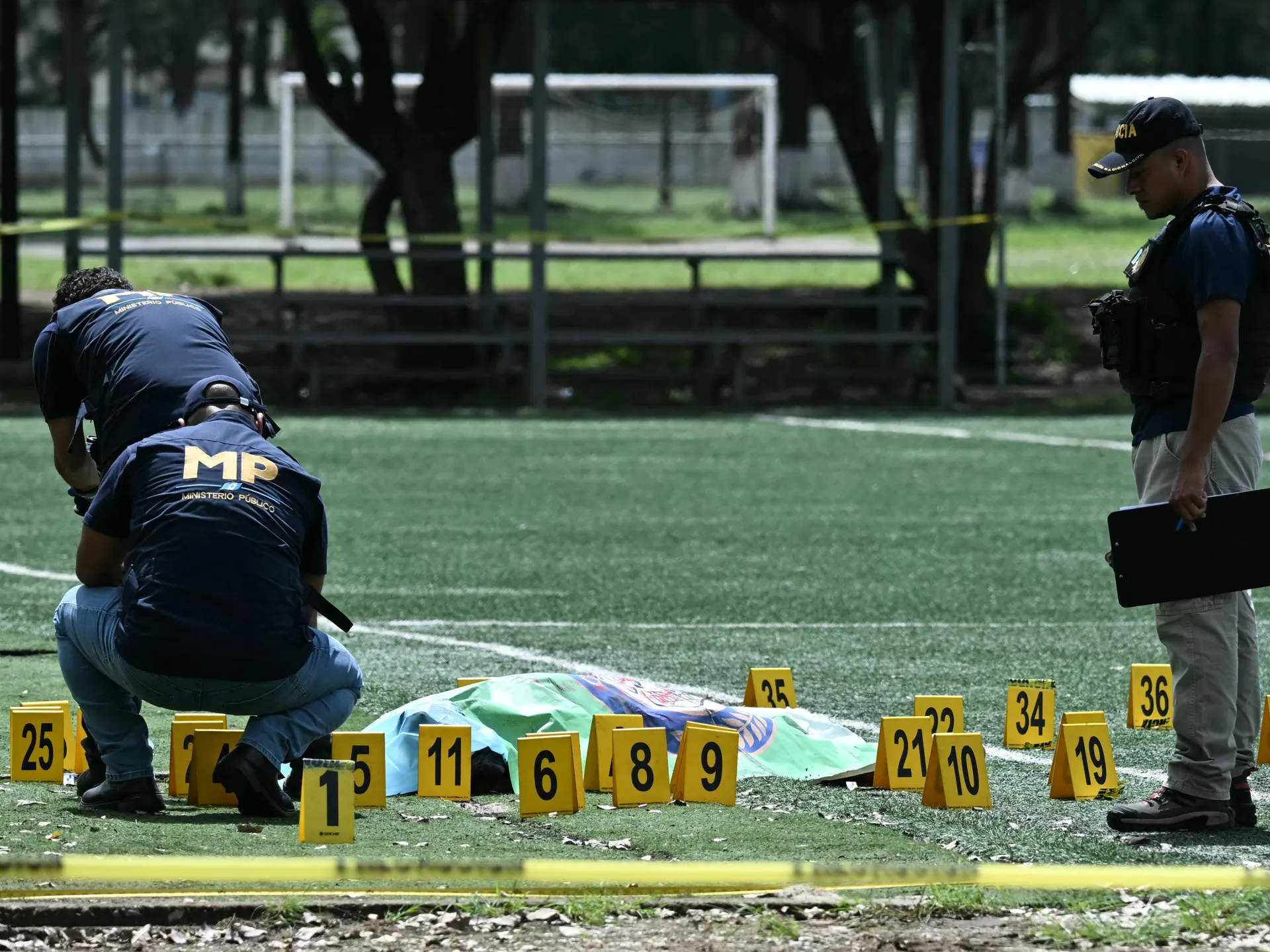
Former Guatemalan prosecutor and lawyer Juan Francisco Solorzano Foppa has been shot dead at a sports centre in Guatemala City, with police arresting two men in connection with the killing.
The attack took place on Saturday at the Campo Marte sports complex. Gustavo Adolfo Aguilar Gamarro also died, according to the Public Prosecutor’s Office.
Police said they arrested two suspects shortly afterwards and seized a carbine-style firearm and a motorcycle. The identities of those arrested were not given in the statement.
Foppa, 43, was known for taking on cases involving powerful politicians, business leaders and companies. He had previously headed the Criminal Investigations Directorate within the Public Prosecutor’s Office before leading Guatemala’s tax authority, SAT, from 2016 to 2018.
During his time at SAT, he helped prosecute dozens of prominent business figures and recover unpaid taxes. He later continued to speak out against alleged wrongdoing and links between criminal groups and state institutions.
President Bernardo Arevalo condemned the killing and called for both those who carried it out and those who ordered it to face justice.
“I strongly condemn the cowardly murder of former prosecutor Juan Francisco Solorzano Foppa,” Mr Arevalo wrote on his official X account. “Both the direct perpetrators and those who ordered the crime must face the full weight of the law.”
The president said he had instructed his government to co-ordinate with the relevant authorities to solve the case.
“Those who believe that terror can intimidate the people of Guatemala and the government I lead are mistaken. In honour of Foppa, in honour of our homeland, in honour of justice,” he added.
In 2025, Foppa alleged connections between the Barrio 18 gang and the National Unity of Hope party, as well as links between criminal gangs and Guatemala’s judicial system.
He also briefly joined the defence team of journalist Jose Ruben Zamora in 2023. Mr Zamora has become an international symbol of resistance to what supporters describe as the criminalisation of journalism and the erosion of judicial independence in Central America.
Foppa left the case after the Public Prosecutor’s Office accused him of obstructing proceedings and destroying or concealing information. He denied the allegations but accepted them as part of a plea agreement, saying he did not believe he would receive a fair trial.
