


Moody’s has kept France’s credit rating unchanged but warned that political paralysis, social unrest and a mounting debt burden threaten the eurozone’s second-largest economy.
The ratings agency retained France’s Aa3 rating, two grades below the United States and three below Germany, while maintaining a negative outlook. Fitch and S&P Global rate the country one notch lower.
Moody’s said France continued to benefit from a wealthy economy and capable public institutions. But it warned that a divided parliament and growing political and social instability could prevent the government from taking the difficult steps needed to reduce the deficit.
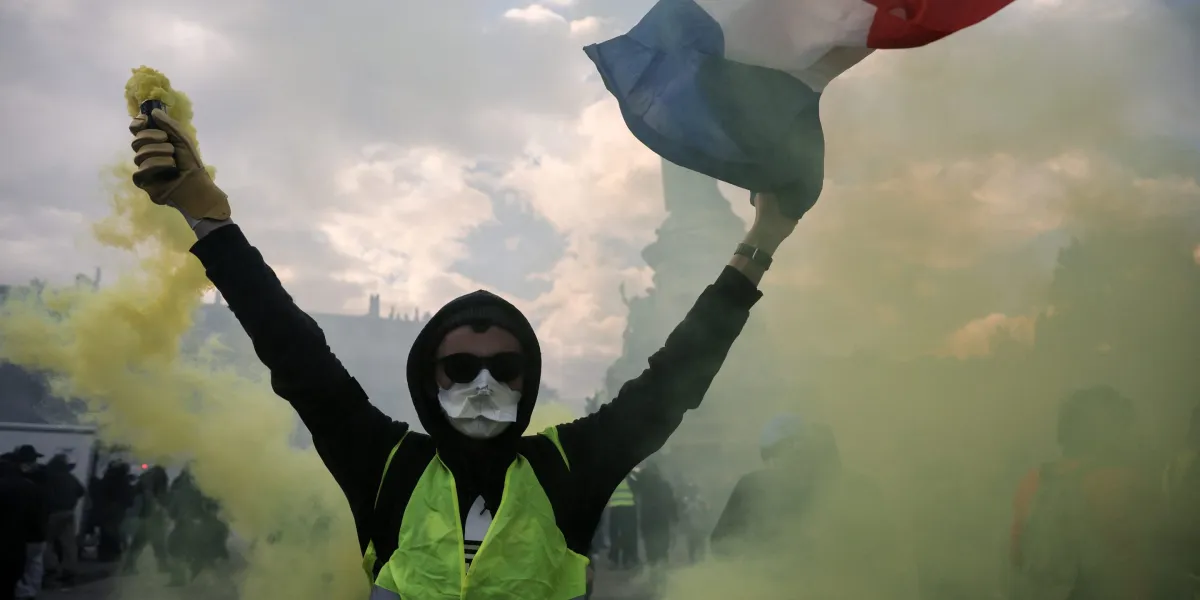
The warning comes as protests that began more than a month ago have spread into widespread rioting. Students initially demonstrated over a lack of investment in public education, before broader opposition emerged over the rising cost of living and soaring fuel prices linked to the US war on Iran.
Similar demonstrations have taken place elsewhere in Europe as part of what has been dubbed the “Oct. 17 Movement”.
France’s debt crisis and political gridlock
France’s public debt has reached a record $4 trillion, equivalent to 119% of gross domestic product and the highest level since the immediate aftermath of the Second World War. Bond yields have risen to their highest point in 24 years, reviving concerns not seen since the eurozone debt crisis of 2011.
Markets are also facing uncertainty ahead of France’s presidential election in the spring, with far-right and far-left candidates leading the field. Moody’s said investors were losing confidence that either side would be willing or able to restore the country’s finances.
A proposal for the 2027 budget would reduce the deficit from 5.4% to 5% of GDP, but it has yet to pass amid parliamentary deadlock. Moody’s said recent unrest could make fiscal consolidation even more difficult.
“The 2027 budget process coincides with some of the most extensive social protests France has experienced in many years,” the agency said.
Moody’s expects the budget to be approved eventually, possibly by decree if the National Assembly fails to agree it. However, it forecasts that weaker economic growth and the political difficulties of imposing genuine spending cuts could leave the deficit at 5.2% of GDP.
The agency said France would need a “significant and sustained fiscal effort” after the presidential election to stabilise its debt burden, which is expected to reach 122% of GDP next year.
“While we expect that the next president and government will seek to continue to narrow France’s deficit, our baseline expectation is that they are unlikely to be able to implement rapid fiscal consolidation in light of social tensions, a political environment that is likely to remain fragmented and muted GDP growth,” Moody’s said.
“As a result, the debt burden will continue to rise through the remainder of the decade.”
France has some protection from a sudden rise in borrowing costs because its debt has an average maturity of about 8.5 years. Moody’s said the recent increase in yields would have to persist for an extended period before significantly worsening the affordability of the debt.
Nevertheless, the agency described France as particularly exposed to political and geopolitical “event risk”. It said the negative outlook reflected the possibility that political fragmentation would continue to hinder the country’s legislative institutions.
Thierry Wizman and Gareth Berry, global strategists at Macquarie, have separately linked the protests with the deteriorating debt outlook. They warned that prolonged demonstrations could lead the government to approve additional spending, pushing up bond yields and making it more expensive to finance that spending.
“France is veering toward a full-blown civil crisis because of its political polarization, which heretofore had been manifested mainly in the political realm itself, and at the ballot box only,” they wrote.
