


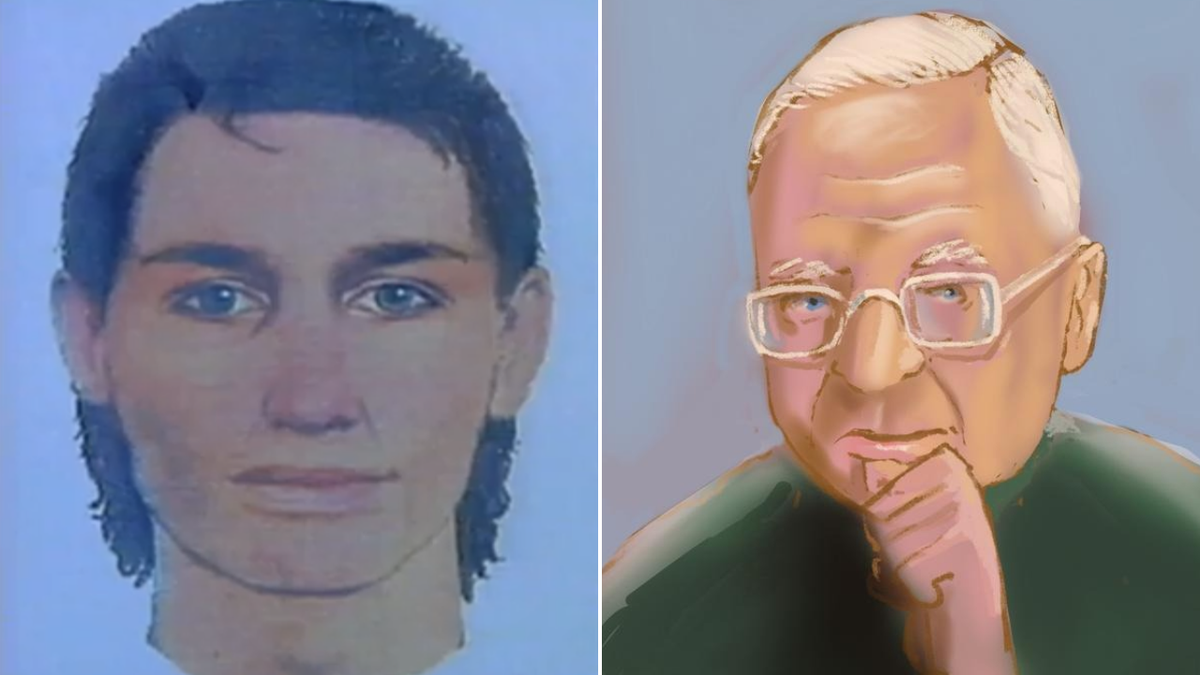
Glenn Gary Cameron broke down in tears during a Sydney District Court hearing more than three decades after he sexually assaulted eight women in the city’s Moore Park and inner-west areas.
Cameron, who appeared by audiovisual link wearing prison clothing, pleaded guilty more than a year ago to the attacks, which took place between 1991 and 1993. He admitted using knives to threaten his victims, indecently assaulting all eight women and detaining one at knifepoint for sexual gratification.
The attacks led to Cameron being known as the “Moore Park rapist” and the “night stalker”. He was in his 20s at the time and remained unidentified for decades before forensic advances led to his arrest at Sydney International Airport in February 2024 after he had moved overseas.
Several victims attended the sentencing hearing. One woman, who cannot be identified, told the court the assault had permanently altered her life.
She had been 24 and was walking home before meeting friends for dinner when she encountered Cameron near Moore Park. “I wish I didn’t make eye contact with you … I was terrified, you had a knife,” she said.
“I did not get to have dinner with my friends because of you, I ended up in the (hospital) getting a rape kit because of you,” she said. “You didn’t kill me but a little bit of me died.”
The woman said her relationship ended after the attack and that she had spent decades suppressing her emotions. Cameron’s arrest caused the trauma to resurface, leaving her in what she described as an “almost continual state of anxiety”.
“I never relax, I’m in a state of terror writing this, it’s the same feeling I felt that night … I sometimes wake up screaming,” she said.
She told Cameron she had spoken his name for the final time, while he lowered his head and appeared to sob as she left the witness stand.
Glenn Gary Cameron said he wanted the power
Cameron’s barrister argued that his childhood and later drug and alcohol use reduced his criminal culpability. The court heard he had witnessed men physically assaulting his mother as a young child, before her death when he was six.
He was later cared for by his grandmother and said he had been sexually assaulted by a carer at a youth centre. Cameron began using alcohol and drugs at 14 and was using cannabis, cocaine, speed and other amphetamines by the time of the offences.
A psychological assessment linked his upbringing to the attacks and recorded that he felt “powerful” while assaulting the women. Cameron told the court: “I didn’t walk around feeling I was powerful, it was only when I was engaged in the offending.”
He later acknowledged that the feeling had attracted him to continue offending. “I wanted to scare them, I wanted the power, I liked the power,” he said.
Judge John Pickering said he found the argument difficult to accept and that evidence supporting reduced culpability would need to be compelling.
In a letter read to the court, Cameron said he was “extremely remorseful” and rejected the suggestion that he was sorry only because he had been caught.
“Guilt and shame are insidious. Unless you have lived with them you will never guess the impact they will have,” he wrote. “Unless you have carried such a burden you will not know how it felt.”
Asked why he had not come forward, Cameron said: “I should have come forward, but the truth is I was a coward and afraid of the ramifications not only for me and my family, but also my victims.”
He said the offending had stopped after the birth of his third child, when he wanted to change his life. He also described learning about Buddhism through his partner at the time of his arrest and developing a greater understanding of compassion.
“I wish I could turn back time and change things but I can’t,” Cameron told the court. “I don’t know what I can do other than hope this brings some closure.”
Cameron is due to return to court on December 7 to learn his sentence.
