


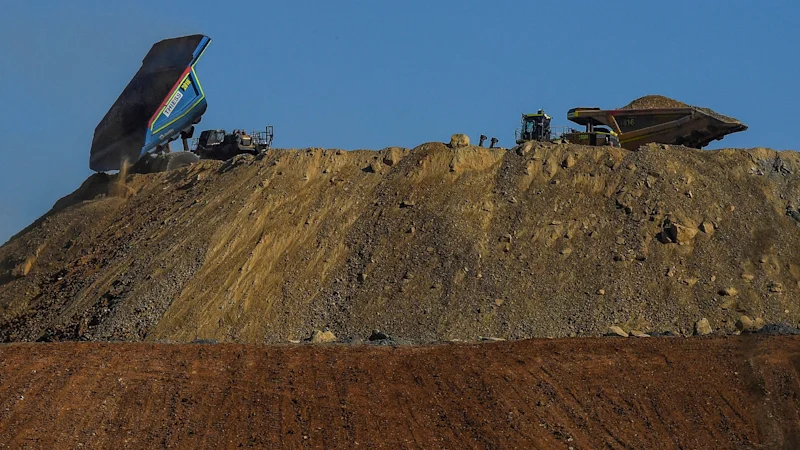
The NSW government is to pass special legislation allowing the Mount Pleasant coal mine in the Hunter Valley to increase production, after its operator warned that about 400 workers could lose their jobs before Christmas.
Premier Chris Minns said MACH Energy would be permitted to raise annual output at the Muswellbrook mine from 12.5 million tonnes to 16.5 million tonnes until 2032. The company will also sign a jobs guarantee creating a legal obligation to maintain staffing levels.
The intervention follows a High Court ruling earlier this month which found that a 2022 approval for the expansion by the NSW Independent Planning Commission was invalid. The court ruled that the commission had failed properly to consider the climate impact of coal exported from the mine, known as scope 3 emissions.
Minns said MACH Energy had told the government it was preparing to dismiss half its workforce before Christmas because it had increased staffing in anticipation of an annual production limit of 21 million tonnes.
“Without urgent intervention, hundreds of mineworkers could have been out of a job by Christmas,” said Grahame Kelly, president of the Mining and Energy Union, which welcomed the decision.
Criticism of Mount Pleasant mine intervention
The decision has drawn fierce criticism from environmental groups, which accused the Labor government of bypassing independent planning processes and responding to political pressure from the mining industry.
Elaine Johnson, a lawyer for the Denman Aberdeen Muswellbrook Scone Healthy Environment Group, which brought the successful High Court challenge, said the move made it appear that “laws are being written for individual mine owners and not in the public interest”.
Georgina Woods, national co-ordinator of Lock the Gate, described the intervention as “cynical and dangerous political interference in the planning system”. She said the mine already had approval to operate until 2032 and argued there was no immediate threat to jobs.
Greens MP Sue Higginson accused the government of creating “an incredible new low” by bypassing the planning process and the High Court’s ruling.
“One thing is clear, under Labor the coal mining giants are writing the laws, and they are laws that will cause significant unassessed climate pollution and hurt communities,” she said.
Natural Resources Minister Courtney Houssos said the legislation, which is due to be introduced during the next sitting fortnight, would include measures to limit scope 3 emissions. The conditions would mean the company could export coal only to countries that are signatories to the Paris climate agreement.
The decision comes as Labor faces pressure from One Nation in the Hunter and parts of western Sydney, while also risking criticism from Greens voters in inner-city areas. Minns said he had “agonised” over the intervention but rejected the suggestion that it had been driven by the approaching election.
“We’re a Labor government. We do need to protect jobs,” he said, adding that the government had to pursue its climate goals while avoiding putting “hundreds and hundreds of families onto the scrap heap weeks before Christmas”.
Minns denied that the government was undermining independent assessments of mines. He described the measure as a partial approval intended to maintain the current workforce while the legal consequences of the High Court judgment were resolved in lower courts.
