


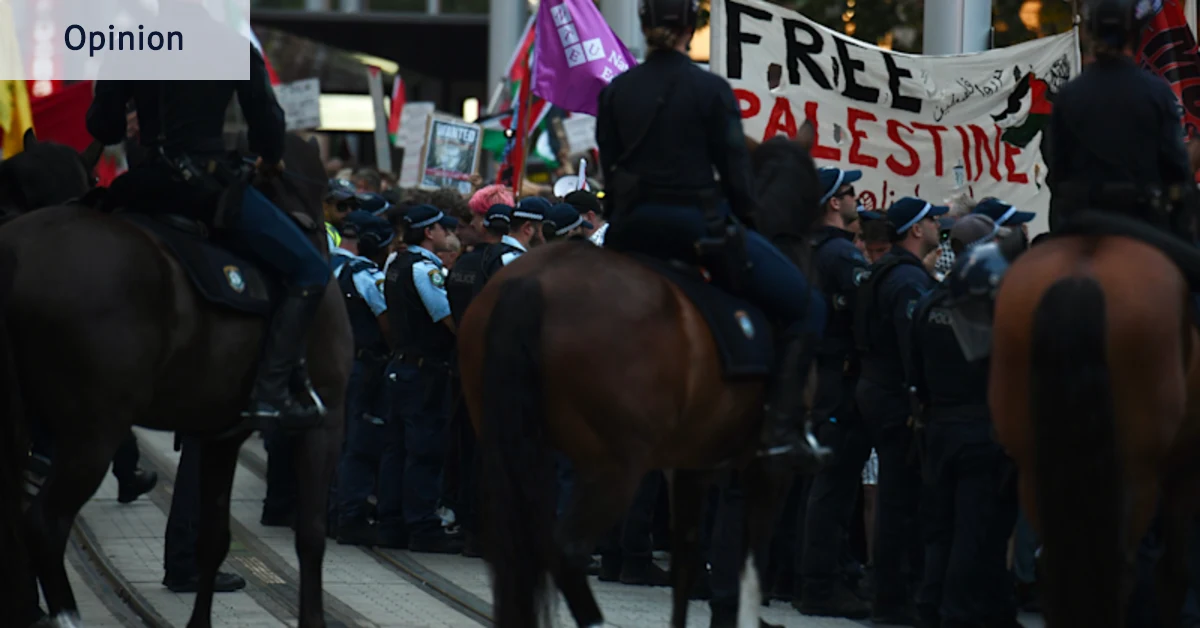
The NSW police watchdog’s inquiry into the handling of a protest during Israeli president Isaac Herzog’s visit will largely take place behind closed doors, despite significant public interest in the events.
The Law Enforcement Conduct Commission began its investigation on Monday with a public opening address. It will then hold five weeks of private hearings involving junior officers who were on the frontline as the February 9 demonstration in Sydney descended into clashes between police and protesters.
The inquiry, known as Operation Makalu, is examining the use of force by NSW Police, including the deployment of capsicum spray among crowds that included elderly people. It will also consider how decisions about policing the protest were made and communicated.
Kirsten Edwards, SC, counsel assisting the commission, said the investigation was not a corruption inquiry and would work collaboratively with police on any recommendations for improving responses to protest events.
“This is not an exercise in retrospective blame for its own sake,” Ms Edwards said in her opening statement.
Senior police officers are expected to give evidence publicly during the inquiry. However, LECC chief commissioner Peter Johnson, SC, has decided that officers up to the rank of inspector will not be identified during proceedings.
The decision is partly based on concerns that holding the entire inquiry in public could harm social cohesion in Sydney. But restricting access to the hearings has raised questions about whether the police watchdog is providing sufficient public scrutiny of an event that attracted more than 800 complaints.
Questions over transparency in the LECC inquiry
There may be grounds for private hearings where evidence involves classified information or presents serious and legitimate national security concerns. Beyond those circumstances, the case for keeping evidence from the public is less clear.
The protest took place against the backdrop of tensions following the Hamas attacks on Israel on October 7, 2023. The inquiry is expected to examine whether police dealt appropriately with the difficult and politically charged event.
NSW Police is a substantially different organisation from the force examined by the Wood royal commission in the mid-1990s, which found systemic and entrenched corruption in parts of the force. That inquiry led to the creation of the Police Integrity Commission, later replaced by the LECC.
The police watchdog’s role is intended to help maintain confidence that the NSW Police Force remains subject to scrutiny. Transparency and fairness in Operation Makalu will be central to whether the public can retain that confidence.
