


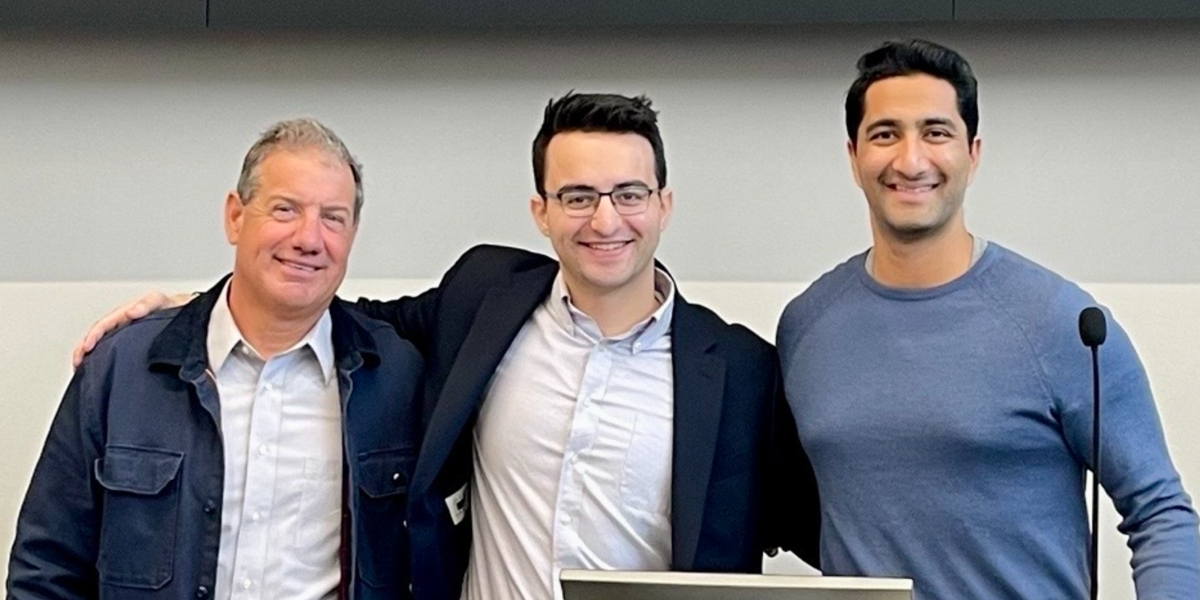
Blue Voice, a Boston-based start-up providing real-time policy guidance to police officers, has raised $6 million as it emerges from stealth, its founders said.
The company was co-founded by David Lawrence, who left Harvard Law School after an on-campus shooting involving a police officer prompted him to examine how officers access operational rules, alongside former Google engineer Amit Patankar and retired Boston police deputy chief Michael Gropman.
Blue Voice’s backers include SignalFire and Las Olas VC. The company says its platform is now used daily by officers at 225 county agencies across 25 US states.
Lawrence has compared the service with Harvey, an artificial intelligence tool used by lawyers, and OpenEvidence, which is designed for doctors. Blue Voice is trained on department-specific policies, local ordinances, state laws and operational guidelines that are not generally available through public internet searches.
“When an officer makes a decision, they do so from memory or best guess, based on thousands of pages of law, policy, municipal ordinances, and state laws that they’ve internalized and keep in their head,” Lawrence told TechCrunch.
He said officers faced a difficult choice when they could not remember a particular procedure: search through manuals that can run to 15,000 pages, contact a supervisor or use a general-purpose service such as Google or ChatGPT. Blue Voice is intended to provide a department’s own rules immediately, while directing users back to the original regulations.
The platform does not instruct officers what action to take, according to Lawrence. Instead, it presents the relevant legal and policy material, leaving officers to make the final decision using their own judgement and experience.
Blue Voice also provides detailed school maps on officers’ phones during active-shooter emergencies. Lawrence said the service now answers about one question a minute and that its customer base increased elevenfold over the past year.
Blue Voice police policy tool
Lawrence cited an incident in which a rookie officer saw a man attempting to pressure a young girl into a vehicle. Unsure whether he had sufficient legal grounds to intervene, the officer consulted Blue Voice, which identified the circumstances as meeting the criteria for child enticement, Lawrence said.
In a separate case, the system reminded a police chief that an officer could not return to active duty after a shooting without first receiving an independent mental-health assessment, according to the founder.
The company is also developing a tool intended to help detectives investigate cold cases. It competes with Lexipol, a private-equity-backed business that provides policy and training services to law-enforcement agencies.
Police use of artificial intelligence has attracted criticism in other areas, including automated licence-plate surveillance. Lawrence said he hoped Blue Voice would demonstrate that the technology could be used to support public safety while protecting civil rights.
He previously worked for Connecticut governor Ned Lamont and said he had no regrets about leaving law school. “This is the best thing I could do with my career and the most impact I could potentially make,” Lawrence said.
