


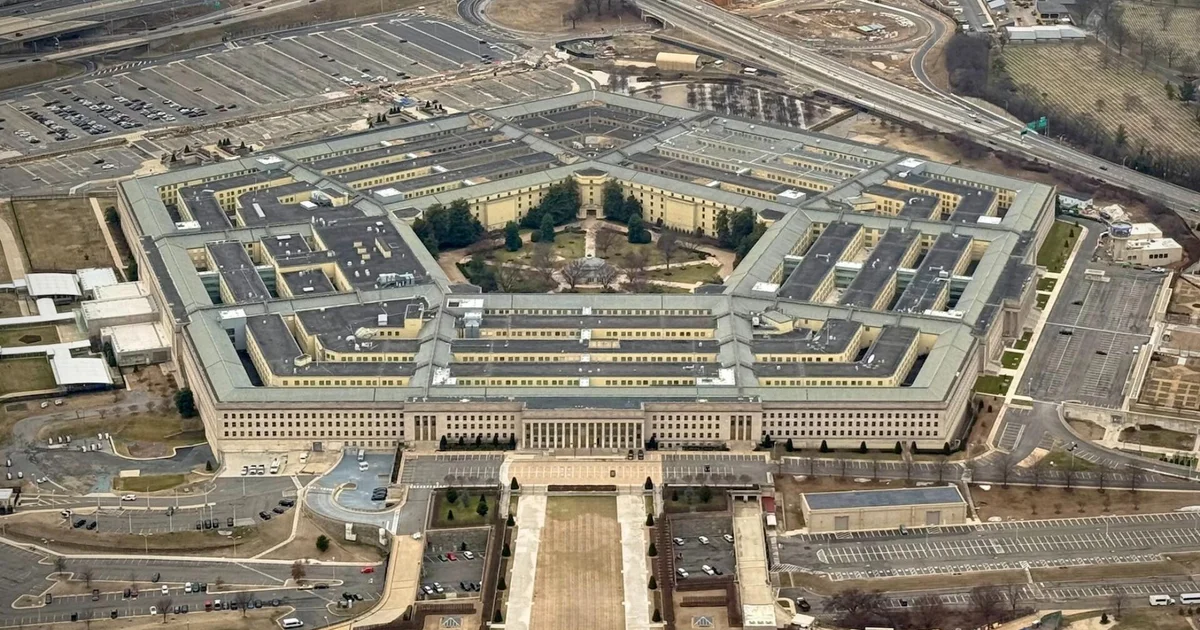
The Pentagon has fired Army Lieutenant General Brett Sylvia, its top military planner, over alleged leaks of classified information relating to the war in Iran and the Russia-Ukraine war.
A Pentagon official said Sylvia was accused of misconduct after failing three polygraph tests about sharing classified material with the press. The case has been referred to the Department of Justice, the official said.
Sylvia was removed as head of strategy, plans and policy on the Joint Chiefs of Staff, a role commonly known as the J5. No replacement has been named.
He is the second general to be removed from the post under Defence Secretary Pete Hegseth. Lieutenant General Joseph McGee, his predecessor, was forced to retire last October.
The J5 director and staff typically develop and co-ordinate military plans with the chairman of the Joint Chiefs and the president. Sylvia’s dismissal comes as President Donald Trump considers renewed military action against Iran.
Mr Trump has repeatedly said he wants to “finish the job” in Iran after launching the war with Israel eight months ago. He has said further strikes could be an option after next week’s midterm elections.
US officials have reportedly told several Middle Eastern countries and regional allies to prepare for possible renewed military action, as well as the possibility of Iranian retaliation. A third US aircraft carrier and thousands of additional troops are also heading to the region.
A Joint Staff spokesperson said: “The Chairman, the Joint Staff, and the Joint Force extend our deepest gratitude to Lt. Gen. Brett Sylvia and his family for 32 years of distinguished service to our nation” and wished him and his family “the best”.
Sylvia previously commanded the 101st Airborne Division at Fort Campbell, Kentucky, until May 2025. He had also served as the J5’s vice director.
His departure is the latest in a series of removals under Mr Hegseth. Nearly two dozen generals, admirals and other military leaders have been fired, forced to retire or otherwise left their positions during his tenure, with the Pentagon publicly explaining few of the moves.
The departures have included the civilian secretaries of the Army and Navy and senior uniformed officers in the military services. Mr Hegseth said last month that he had ordered the number of top officers to be cut by 20 per cent by 1 January 2027, describing the measure as “accountability and long overdue”.
Some members of Congress have criticised the reductions as a “purge”. Senator Mark Kelly, a former Navy combat pilot who has criticised Mr Hegseth, said: “He’s got some kind of like deep-seated grievance about leadership in the military. He’s purging a generation of great leaders of the military, and it’s going to take a generation to recover from it.”
