


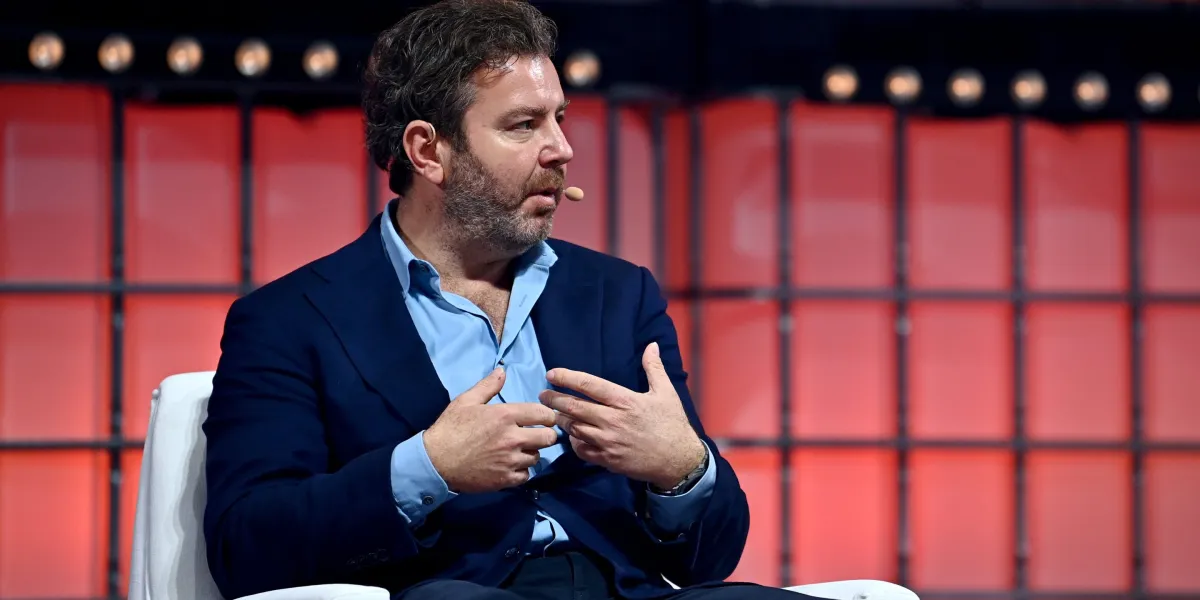
UiPath founder and chief executive Daniel Dines has published a book about the future of work that he developed in collaboration with Claude and ChatGPT, arguing that artificial intelligence should make recommendations while people retain responsibility for important decisions.
The Work That Remains sets out a model summed up by Dines as: “AI proposes. Humans decide. Automation executes.” The framework is intended for businesses seeking to introduce AI into complex and highly regulated operations without surrendering accountability or control.
The book, which runs to 168 pages and about 40,000 words, was released as a digital download on August 18. UiPath said a limited print edition is due to follow on September 22. ([uipath.com](https://www.uipath.com/resources/automation-whitepapers/the-work-that-remains?utm_source=openai))
Dines said the writing process developed into a form of debate with the two systems. He used opposing prompts to test arguments, asking one model to develop an idea while instructing another to challenge it.
“It was really like a Socratic dialogue,” he said. “This is the theory. Read this article. Create opposing views.”
The manuscript at one stage expanded to almost 100,000 words before being cut down. Dines said the models’ tendency to produce lengthy responses meant that editing, rather than drafting, became the main task.
His ideas evolved over about three years alongside UiPath’s own strategy. Dines said he had not started with a fully formed conclusion, but developed his argument through reading, observation, running the company and repeatedly testing his assumptions with AI.
“When I started, I didn’t have such a clear idea of where I wanted to land,” he said. “The ideas I got came through the process of writing the book. Our company strategy, the book, they evolved together.”
Dines, who grew up in Romania and once hoped to become a novelist, said the experience showed both the potential and limitations of current AI systems. He argued that models are particularly effective when working with established information or structured problems, but are less reliable when asked to originate genuinely new ideas.
He also stressed the importance of sceptical feedback, saying that both people and AI systems risk becoming trapped by untested assumptions or producing confident but false answers. The book’s proposed division of labour gives AI responsibility for synthesis and proposals, while humans provide judgement and automation carries out approved actions.
“I have ideas, but I don’t have the time and the talent to put them on paper in a structure, in a manner that can be consumed by the public at large,” Dines said.
UiPath describes Dines’s approach as a way of moving beyond experimental AI projects towards systems that can operate reliably inside large organisations. The company says the model depends on governance, audit trails, orchestration and human oversight, rather than simply placing autonomous agents inside existing business processes. ([uipath.com](https://www.uipath.com/resources/automation-whitepapers/the-work-that-remains?utm_source=openai))
