


State and local election results could have a greater impact on the US data centre boom and the wider economy than control of Congress, as candidates campaign over the environmental and infrastructure costs of rapid artificial intelligence investment.
House and Senate hopefuls have seized on data centres as a national issue, but governors, state lawmakers and local officials hold much of the power over planning approvals, energy infrastructure and connections to the electricity grid.
That has made lower-profile races in states including Texas, North Carolina, South Carolina, Ohio, Illinois and Wisconsin particularly significant for an industry whose spending has become a major source of economic growth.
Hyperscalers are spending hundreds of billions of dollars a year, with forecasts for 2027 exceeding $1 trillion. JPMorgan estimates that AI-related investment accounted for about a fifth of US GDP growth over the past year, while ING expects AI to contribute a third of growth in 2026.
With Election Day just over a week away and early voting under way in many states, expectations of substantial Democratic gains could add to pressure on stock markets already unsettled by fears that the AI boom may falter.
Thierry Wizman, global foreign exchange and rates strategist at Macquarie, said a further market decline could follow if a “blue wave” at state and local level brought in politicians opposed to new data centres.
“For the direction of the U.S. economy, the composition and direction of governance at the state level may matter more than whether the Democrats ‘win’ the House or the Senate,” he said in a note.
Local opposition to data centres grows
The political risk was highlighted in Virginia this week when Amazon cancelled plans for data centres in Loudoun County after reaching an agreement with local officials amid opposition from residents.
Amazon Web Services had bought the site for $427 million in February. The company has promised not to build data centres there and will use most of the land for mixed-use and residential development. It will also donate 25 acres for a community arts and recreation facility and provide $5 million for a housing fund.
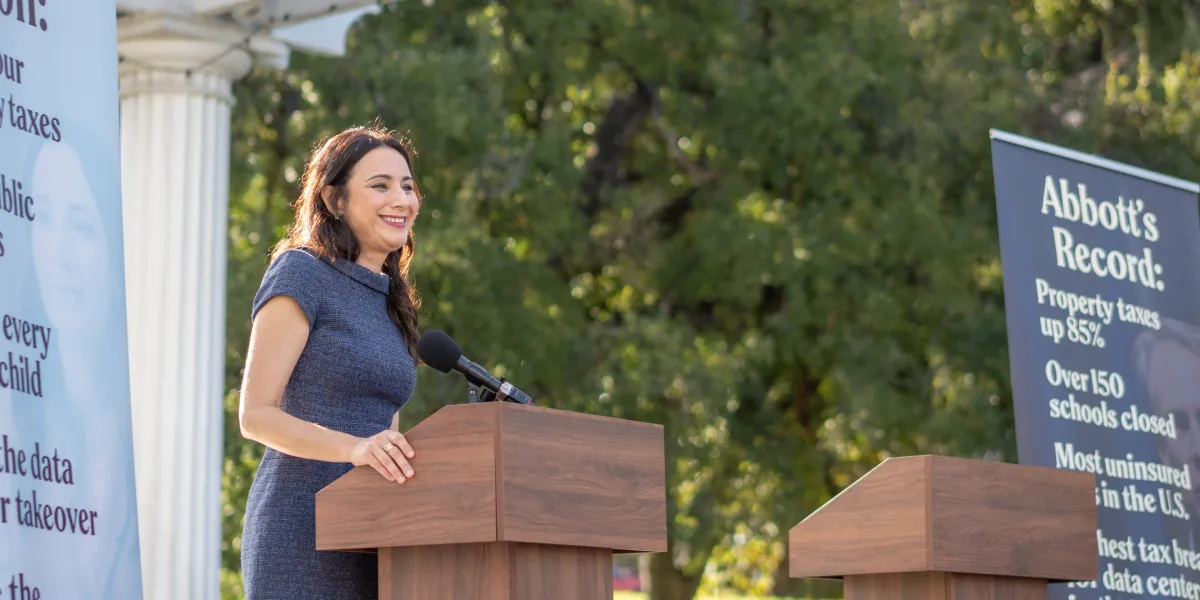
In Texas, Republican governor Greg Abbott has also shifted from supporting data centres to taking a more sceptical position as he faces a difficult re-election contest against Democratic state representative Gina Hinojosa.
Michael Pearce, chief US economist at Oxford Economics, said state capitals and town halls posed a bigger threat to the data centre buildout than decisions in Washington.
The Trump administration has used regulations and executive orders to encourage construction, while comprehensive legislation in Congress would be slow to pass, he said. Local authorities can act more quickly through building moratoriums, environmental reviews and delays to grid connections.
“If this year’s elections show that an anti-data center stance wins political contests, it could put data center regulation at the heart of the 2028 campaign,” Mr Pearce said.
Developers may be able to ease resistance by demonstrating that new facilities will reduce local tax bills or help pay for schools and roads. Construction also rose sharply in the middle of the year, potentially reflecting concerns about a more hostile political climate.
Any restrictions would not immediately halt the economic benefits of the current expansion. Mr Pearce estimated that spending on the computing equipment inside data centres lags construction by six to eight quarters.
“This year’s surge will keep supporting business investment over the next couple of years, whatever happens on the ground,” he said.
Daniel Skelly, a portfolio manager at Morgan Stanley Wealth Management, said a slowdown in spending could ultimately support the AI sector by extending its investment cycle.
“Also, ongoing power deficits, a shortage of people to build data centers, and political pushback against them may elongate the cycle and lower the odds of a blow-off top,” he said.
