


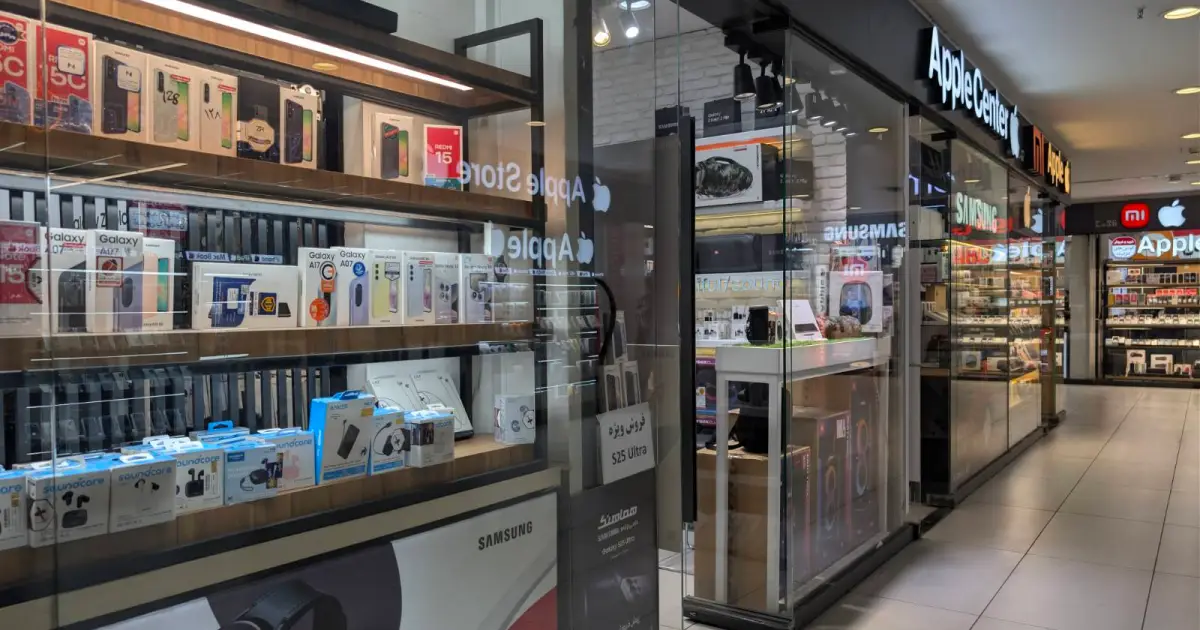
Electronics prices in Iran are soaring as sanctions, disrupted trade routes and government charges make it increasingly difficult and expensive to bring new devices into the country.
The latest iPhone 18 models reached shops in central Tehran within days of their US release on September 18, despite Apple having no physical presence in Iran and imports through the country’s southern ports being disrupted by a months-long US naval blockade.
“These things can’t stop a mobile phone seller,” a trader at Charsou Mall, a major electronics centre in Tehran, said. He asked not to be named for security reasons.
But the trader said importing phones had become more complicated, slower and more costly as a result of external pressure and restrictions imposed by the Iranian government.
International electronics have traditionally entered Iran through Dubai in the United Arab Emirates. However, an almost eight-month war involving the US and Israel has disrupted trade through the Strait of Hormuz, while attacks and an Emirati decision to halt trade, commercial exchanges and financial transactions with Iran on August 19 further restricted the route.
Some traders turned to passengers arriving from Oman to carry phones and other goods. That option has also narrowed since US sanctions on Iranian airlines, and those providing services to them, took effect in September, leaving fewer flights arriving in Iran.
“Most of the phones are now smuggled into the country. Many go to Sulaimaniyah and then come in by land,” the trader said, referring to the city in the Kurdish region of northern Iraq, near Iran’s western border.
The same supply problems have affected laptops, graphics and processing units, PlayStation consoles and Starlink terminals.
In Tehran this week, a 15-inch MacBook Air with an M4 chip was selling for the rial equivalent of more than 1,450 dollars, about 6 per cent above the price at an average retailer in the UAE. A one-terabyte PlayStation 5 Slim disc edition cost about 730 dollars, making it 11 per cent more expensive than at some US retailers.
Iran’s mobile phone registration fees
Mobile phones brought into Iran face an additional barrier: imported devices can only connect to the country’s mobile networks for 30 days unless a government registration fee is paid.
The system was introduced almost a decade ago and was presented as a measure to combat smuggling and corruption. Charges vary according to a phone’s value, reaching up to 6 per cent for devices priced below 600 euros, 15 per cent for those between 600 and 900 euros, and 30 per cent for phones worth more than 900 euros.
Further levies and warranties sold by domestic companies can push the additional cost of some phones to more than half the price paid by the customer.
Registration does not remove other restrictions. Iran imposes extensive internet filtering and shutdowns, while sanctions prevent Iranians from using global payment methods and have led international companies to refuse many services to Iranian nationals.
Commercial mobile phone imports were worth about 1.6 billion dollars in the Iranian year ending in March 2026, according to figures reported by state-linked media. Up to a fifth of those devices cost more than 600 dollars, while passengers arriving by air brought in phones worth 470 million dollars, most of them higher-specification models.
There are no clear figures for phones entering the country through unofficial channels. Iran’s customs chief, Foroud Asgari, said that about one million phones had been imported during the first five months of the current Iranian year, compared with 3.16 million during the same period a year earlier. He said their total import value had fallen by about 70 per cent.
The authorities can also suspend registration at any time. Newer iPhone models were barred from registration between 2023 and 2024 because officials said they were made by an American company and consumed valuable foreign currency, although similarly priced premium phones from other manufacturers were not affected.
The restrictions come as the rial continues to weaken. It was trading at about 2.64 million to the US dollar in Tehran on Monday, slightly above its record low earlier this month, while food and other essentials have also risen in price.
Iran’s monthly minimum wage, combined with basic state subsidies for an average married worker, amounts to the equivalent of only about 83 dollars.
Afsaneh, a 27-year-old teacher in Tehran, said she had considered replacing her iPhone 13 with last year’s model but could not justify the cost.
“The only way to get it is to sell my current phone, use my small savings and also borrow from my parents,” she said.
Many of her friends and colleagues, she added, were repairing old devices or replacing individual parts because they could not afford upgrades. “A lot of people are one failure of a major electronic device away from getting into serious debt,” she said.
