


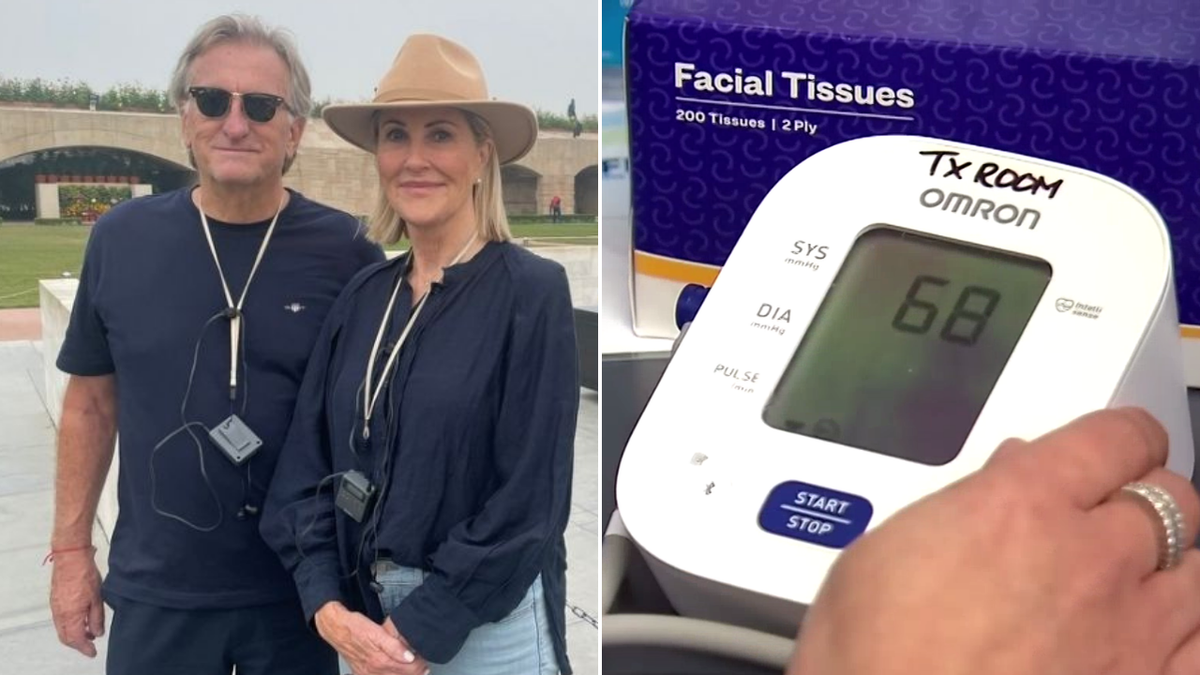
Former 7NEWS presenter Kay McGrath is urging Australians aged over 45 to arrange a heart health check after her fiancé, Richard Moore, died from a heart attack while the couple were travelling in India.
Moore had recently completed a solo motorbike journey around Australia and appeared to be in good health when the couple began their holiday. But symptoms initially blamed on “Delhi belly” were later recognised as signs that his heart was failing.
McGrath said the couple had not fully understood the risks posed by coronary heart disease, a condition that can develop without obvious symptoms.
“We were both seemingly in good health, but not fully appreciating the silent killer travelling with us,” she said. “Richard’s heart failed, and it was clear our understanding of his risks had failed too.”
Moore became unwell during the trip and later suffered a heart attack in Agra. He was taken to Upadhyay Agra Hospital, where doctors tried to save him.
McGrath’s experience features in Heart of It, a four-part 7NEWS series produced in partnership with the Heart Foundation. The series aims to highlight the warning signs of heart disease and the health measurements people should monitor.
Heart Health Checks recommended for Australians over 45
The Heart Foundation recommends that adults aged 45 and over speak to their GP about a Heart Health Check, even if they feel well. The assessment takes at least 20 minutes and considers factors including family history, lifestyle, blood pressure, weight and waist measurement.
Blood tests can be used to check cholesterol and blood sugar levels, while a risk calculator estimates a person’s chance of suffering a heart attack or stroke over the following five years.
Heart Health Checks are covered by Medicare and are free at practices that bulk bill the service. People living with diabetes may be eligible from the age of 35, while First Nations people are advised to discuss checks from the age of 30.
GP Sumera Angus said the results could help doctors identify patients who might benefit from lifestyle changes or medicines such as statins.
She added that a reassuring risk assessment did not always provide the complete picture. In some cases, doctors may recommend a coronary artery calcium scan to look for deposits in the arteries, although the additional test is not covered by Medicare.
Derek Chew, of the Heart Foundation, said people often failed to recognise symptoms that could be linked to the heart.
“The symptoms that commonly go unnoticed are often symptoms that people don’t necessarily connect to their heart,” he said.
Chest pain remains the most common warning sign of a heart attack, but symptoms can also include nausea, indigestion, tiredness, dizziness, breathlessness or pain in the jaw, shoulder or back. The Heart Foundation warns that women may experience a heart attack without chest pain.
Chew said age was an important risk factor, but younger people should not assume they were protected from heart disease.
“Certainly heart disease increases with age, but unfortunately being young doesn’t mean that we’re immune from heart disease,” he said.
McGrath is now encouraging people to know their blood pressure, cholesterol and blood sugar levels, as well as their weight and waist measurement, and to seek urgent medical help if they develop possible heart attack symptoms.
