


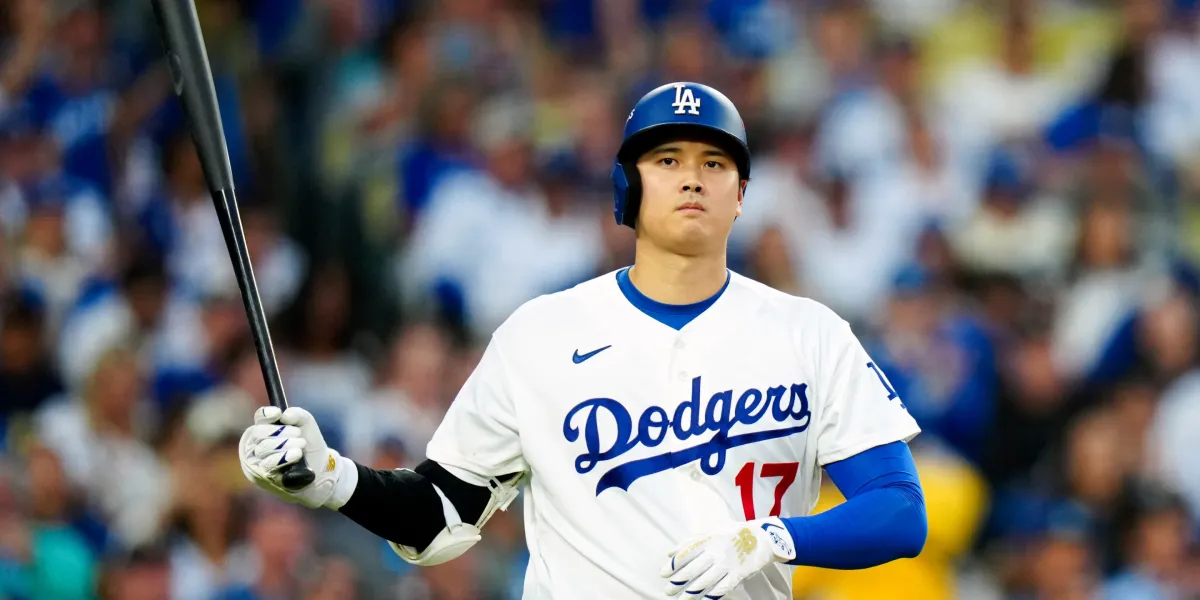
A Los Angeles restaurant group has used a $60,000 trade on Kalshi to hedge the financial risk of the Dodgers failing to reach the World Series, highlighting the growing use of prediction markets as an unconventional form of business insurance.
The unnamed company operates 25 bars, several of them close to Dodger Stadium. It placed the position on the outcome of the team’s play-off campaign, with the trade paying out after the Dodgers lost to the Milwaukee Brewers in the National League Championship Series.
The return was almost twice the original stake, helping to compensate the group for revenue it would have earned had the Dodgers played more post-season games.
The example reflects a broader shift in the way companies, particularly small businesses, are using prediction markets to assess and manage risks. Once viewed mainly as alternatives to online sportsbooks or forums for prop bets, the platforms are increasingly being treated as financial and decision-making tools.
Prediction markets used to manage business risks
Joshua Mitts, a Columbia University law professor who studies prediction markets and securities law, said the Dodgers trade was “functionally quite similar to a form of bespoke insurance”.
“You could imagine that there are other risks that businesses face that if there were a market available which functions similarly to the insurance market, then those businesses might want to participate in that kind of a market,” he said.
Other businesses have tested similar strategies. In June, New York bar The Jeffrey promised customers that it would cover tabs of up to $100 if the Knicks won an NBA Finals game. It placed a $5,000 trade on Kalshi, which produced a $13,500 payout and left the bar with an $8,500 profit after covering customers’ bills.
Last month, an unnamed insurance company made five trades on Kalshi that could pay out $3 million if Louisiana State University won this season’s national championship. The sum matched bonuses the college’s football programme would owe its coach, Lane Kiffin.
An ice cream shop in Los Angeles also reported using the platform to bet on when cold fronts would arrive, protecting itself against weak demand. Its winnings reached nearly half of its monthly rent, up to $1,500.
Trading volumes on prediction platforms doubled between May and July this year, reaching more than $58 billion on Kalshi and almost $22 billion on Polymarket, according to Pew Research Center data. Sports have been the main driver of that growth.
The limits of prediction markets as insurance
Eric Zitzewitz, an economics professor at Dartmouth College, said prediction markets could be well suited to sports-related hedging because they draw on large volumes of data and repeated events.
“There’s so much data, there’s so much repetition, there’s so many games all the time that they can be very well-calibrated,” he said. “You’ll pay fees when you do that—so you’ll be paying something for the insurance you get from these markets—but you should be getting fair underlying prices.”
The approach is likely to work best for straightforward yes-or-no outcomes, such as the result of a game or a change in the weather, Mr Mitts said. It may be less reliable where success depends on access to better information, potentially leaving a business owner at a disadvantage if a competitor has stronger intelligence.
Prediction markets may also be most useful in large cities, where there are enough participants to support trading while still allowing individual businesses to hedge highly specific risks.
In August, financial economist Lauris Zminsky launched Blanket, an app developed with Kalshi that uses artificial intelligence to suggest yes-or-no markets that could offset risks faced by particular businesses.
Mr Zminsky described the service as “a reasoning tool” and “a discovery tool” that directs users towards Kalshi, with the aim of making hedging through prediction markets available to small-business owners.
The same markets could also provide companies with timely indicators for decision-making. Mr Zitzewitz said an online retailer could study trades concerning future Amazon credit-card receipts to gauge consumer spending in the month ahead.
“It’s probably a better signal for you than GDP growth,” he said. “And it’s certainly fresher.”
However, the limited regulation surrounding prediction markets may also restrict their value as insurance substitutes. Mr Mitts said traditional insurers had extensive systems for detecting fraud, while the decentralised structure and changing regulatory environment of prediction markets offered fewer safeguards.
“We don’t have a small number of companies who are state-regulated and who are doing things in very organized ways,” he said. “This is a bit of a free-for-all.”
