


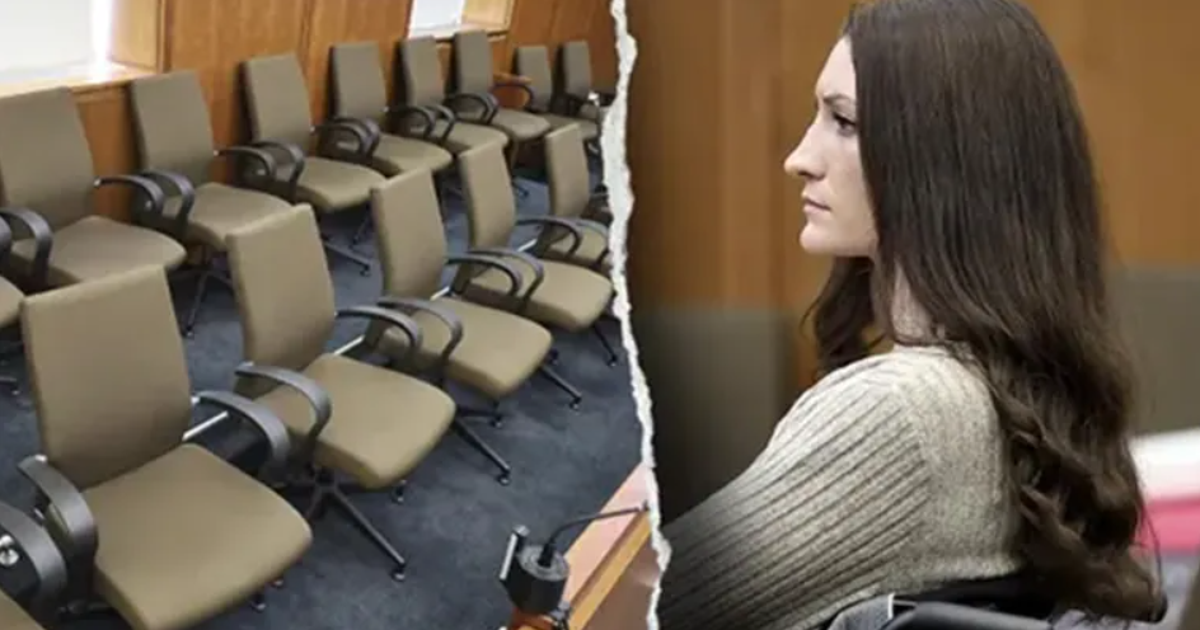
A jury in Massachusetts has told the judge it remains unable to reach a unanimous decision in the Lindsay Clancy trial, but has been ordered to continue deliberating over whether she was criminally responsible for the deaths of her three children.
The development came on Tuesday, 1 September, at Plymouth Superior Court as the panel entered its fourth day of discussions. No verdict has been returned and no mistrial has been declared.
Judge William Sullivan asked the jurors to resume their deliberations after they indicated they had reached an impasse. It was the first sign that the 12-member panel was divided since it began considering the case last Thursday.
Lindsay Clancy trial centres on mental state
Clancy, 36, is charged with killing her children, Cora, five, Dawson, three, and eight-month-old Callan, at the family home in Duxbury, south of Boston, in January 2023.
The former labour and delivery nurse does not dispute that she strangled the children. She has pleaded not guilty by reason of lack of criminal responsibility, arguing that she was experiencing postpartum psychosis and could not understand the nature or wrongfulness of her actions.
Prosecutors maintain that Clancy knew what she was doing and deliberately killed the children before attempting to take her own life. They have argued that depression, rather than psychosis, drove her actions.
The trial has heard conflicting evidence from medical experts about Clancy’s mental state after the birth of her third child. Her mother and sister described her as increasingly anxious, paranoid and suicidal, while the defence said she had bipolar disorder and had lost touch with reality.
The prosecution’s case is that Clancy made a conscious decision to kill her children because she intended to end her own life. Her defence has argued that she believed she was acting under the influence of a voice and did not recognise the killings as wrong.
More than four weeks of testimony included evidence from more than 80 witnesses and the examination of over 300 exhibits. Jurors also asked to see a knife used by Clancy after the killings and bags containing empty prescription bottles.
If convicted, Clancy could face life in prison for murder, although the jury may instead find her guilty of manslaughter. It can also acquit her if it concludes that mental illness meant she was not criminally responsible.
Even in the event of an acquittal on that ground, a judge could order Clancy to be confined in a psychiatric facility if she were deemed a danger to the public. Should the jury remain deadlocked and a mistrial be declared, the charges would remain and prosecutors would decide whether to seek a retrial.
