


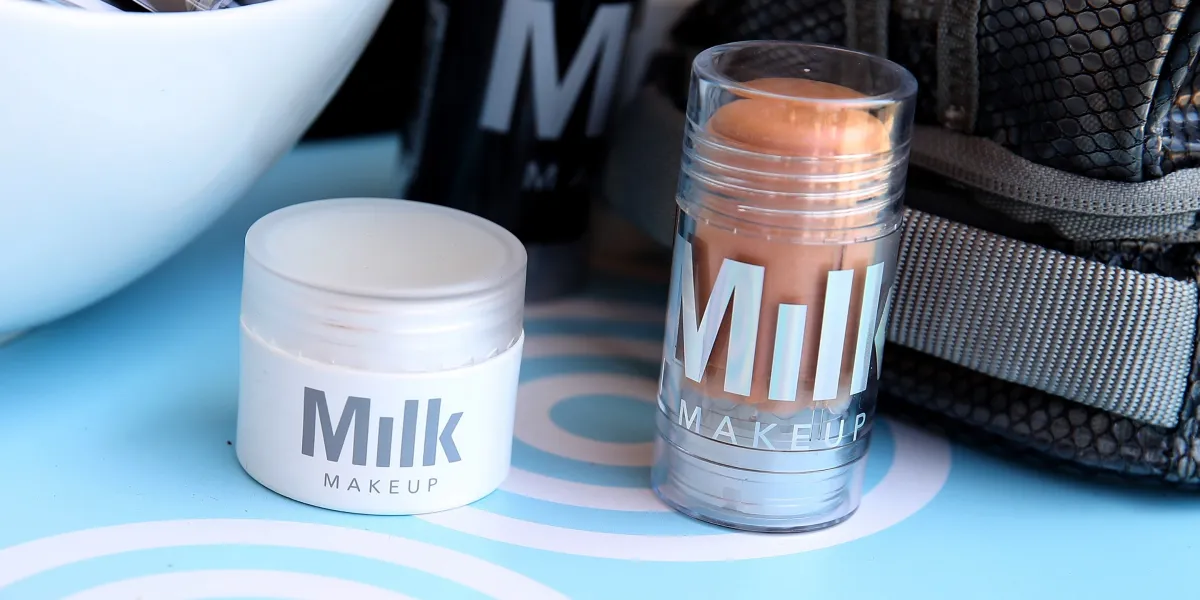
Waldencast’s plan to build a global beauty empire has narrowed to an effort to rescue Milk Makeup, after the brand’s revenue more than halved and the company prepared to leave Nasdaq.
The business was founded in early 2021 by Michel Brousset, a former group president of L’Oréal’s consumer products division in North America, and fellow beauty executive Hind Sebti. It went public through a special purpose acquisition company during the height of the SPAC boom.
Later that year, Waldencast announced a $1.2 billion three-way combination with Obagi Medical, a physician-dispensed skincare business, and Milk Makeup, a cult cosmetics brand. The transaction was completed in July 2022 as the “first step” towards a global multibrand beauty and wellness platform.
That strategy has unravelled within months. Waldencast agreed in June to sell Obagi Medical to private equity firm Bridgepoint, with the deal completing on 30 July for up to $460 million, including vendor notes and potential earnout payments.
The sale was well below the $858 million enterprise value Waldencast assigned to Obagi when the original transaction was agreed. The company had also sold Obagi’s Japanese rights to Rohto Pharmaceutical for $82.5 million in late 2025.
Brousset, Sebti and Waldencast’s chief financial officer, Manuel Manfredi, left with Obagi to lead the business alongside Bridgepoint. Executive chairman Felipe Dutra is now Waldencast’s principal executive and financial officer, leaving Milk as the company’s only operating brand.
Milk Makeup continues to occupy shelf space at retailers including Sephora and Ulta. Its financial performance, however, has deteriorated sharply.
Net revenue fell 57.1% to $26.1 million in the first half of 2026, compared with $60.9 million a year earlier, according to Waldencast’s results. The company said the previous year’s figure included about $10 million of pipeline shipments that were not repeated.
Milk also moved from an adjusted earnings before interest, tax, depreciation and amortisation profit of $9.7 million to a loss of $14.8 million. Waldencast said the first-half performance “largely reflect decisions and actions taken in 2025”.
Milk Makeup value cut as losses mount
The company has written down its expectations for Milk. It recorded a $52.3 million non-cash goodwill impairment in the first half, following a $20 million charge the year before.
The latest reduction cut Milk-related goodwill on Waldencast’s balance sheet from $115.1 million to $62.8 million. An accounting exercise used to test the brand’s value implies a fair value of roughly $180 million, based on Waldencast’s disclosed assumptions.
That figure is not a sale price or an offer from a potential buyer, and it is not directly comparable with the $382 million enterprise value Waldencast assigned to Milk in 2021. The brand’s balance sheet also included $95.8 million in intangible assets, along with inventory and other assets, as at 30 June.
Waldencast has attributed the decline to several factors, including expanding distribution faster than it could support with field education and marketing. It also said some launches in 2025 failed to attract enough new consumers or create additional demand, while an earlier generation of its Sticks products fell behind expectations on quality and value.
The brand also lacked an early-summer launch in 2026, despite having introduced four products during the same period a year earlier.
Milk co-founder Mazdack Rassi became president in November 2025 as part of a restructuring. Waldencast said in a letter to shareholders that Rassi and fellow co-founder Zanna Roberts Rassi were “now back at the centre” of Milk’s creative direction, product vision and cultural relevance.
Tim Coolican, who was Milk’s chief executive when the Waldencast transaction was agreed and remained in the role in early 2025, has since left. The company’s public filings do not state when or why he departed; by February, he had joined Blackstone as an operating executive focused on consumer businesses.
Waldencast said it could not comment on the departure of former employees.
The company’s recovery plan begins with restoring Milk’s relevance. It said the Hydro franchise now accounts for about half of the business and is growing 69% year on year, while its Sticks range was relaunched in August.
Waldencast also spent about $4 million in the third quarter installing redesigned displays in US Sephora stores. Its stated “North Star” is to double Milk’s 2025 revenue over the next five years, although it stressed that the ambition is not financial guidance.
Subject to shareholder approval, Waldencast plans to change its name to Milk Makeup plc, reflecting the fact that Milk is now its sole remaining brand.
The company has also moved to delist from Nasdaq, filing to do so four days before its first-half results were released. Its shares were expected to stop trading on or about 2 October, with the business planning to seek quotation on an over-the-counter market under the ticker MLKM.
Waldencast estimates the move could remove between 80% and 90% of its annual central headquarters costs, which total $18.5 million.
The sale of Obagi has left it with financial resources to fund the turnaround. After repaying $178.4 million of debt, including a $27 million prepayment premium, Waldencast received $149.9 million in net cash proceeds.
It had $138.6 million in cash as at 31 August after fully repaying its senior term loan. The board is still considering how to use the remaining proceeds, while the company’s future now rests on whether Milk Makeup can return to growth.
