


Democrats are retaining an advantage in the race for a narrow House majority, while also leading the national vote preference, a new midterm poll and seat model suggest. The Democratic edge is being driven by opposition to Donald Trump’s policies and weaker stated turnout intentions among Republicans.
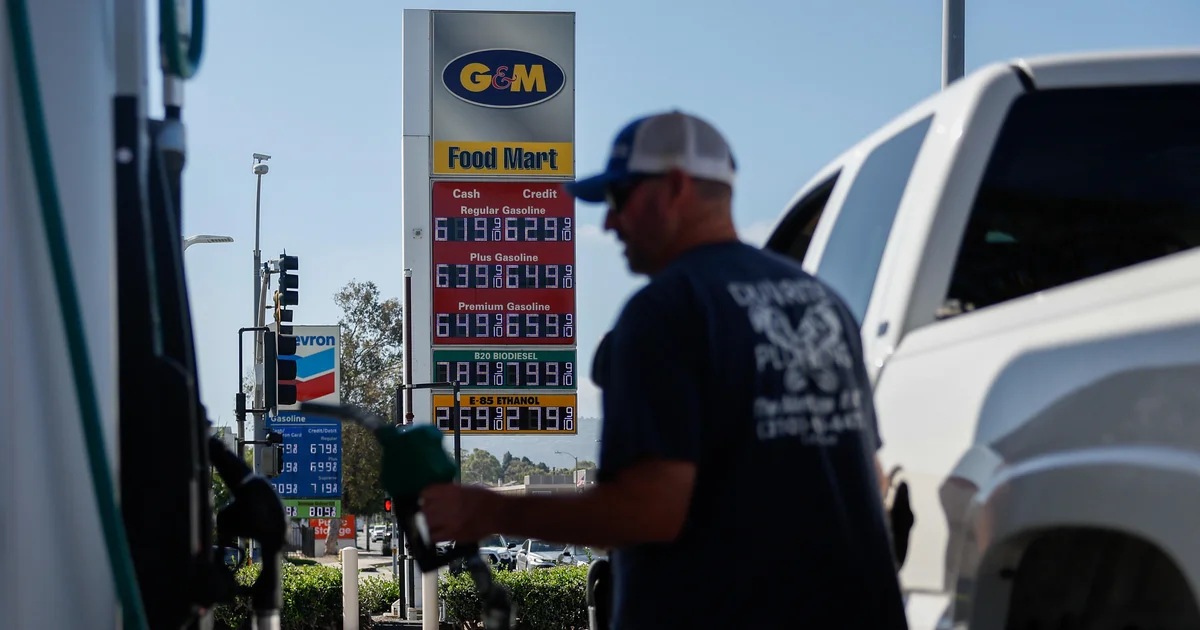
The findings point to an election shaped less by broad economic indicators than by the cost of everyday essentials, with food, groceries and petrol prices dominating voters’ assessment of the US economy.
Prices emerge as the central issue in the House race
Voters continue to cite prices as the main way they judge the economy, despite a stream of data on growth, employment, shares and mortgage rates.
Most respondents believe the Trump administration’s policies are contributing to higher food and grocery costs. A majority also believes the conflict with Iran is pushing up petrol prices and that the administration has not placed enough emphasis on reducing household costs.
Democratic candidates are drawing particularly strong support from voters who say prices have become difficult to manage or represent a financial hardship.
The poll also suggests that economic dissatisfaction could be weakening Republican turnout. Republicans who believe the administration is not focusing sufficiently on prices are less likely to say they will definitely vote, as are those who feel Republican candidates are not speaking enough about the cost of living.
Republicans who think Mr Trump is performing worse in his second term than in his first are almost 20 points less likely to say they will definitely turn out.
By a substantial margin, voters blame the current administration’s policies rather than those of former president Joe Biden for the state of the economy.
Hispanic voters could influence the size of the majority
Hispanic voters are identified as another potentially decisive group. The proportion of likely Hispanic voters supporting Republicans is below the share Mr Trump received from Hispanic voters in the 2024 presidential election.
That shift could affect several congressional districts, including areas redrawn during the past year that may be harder for Republicans to retain without maintaining the gains made in 2024.
Economic conditions and inflation are the most important issues for Hispanic voters, whose views on prices broadly resemble those of the electorate as a whole.
Immigration remains significant. Most Hispanic voters believe the administration is carrying out more deportations than they expected, while more Hispanic voters than the wider electorate say Mr Trump is placing too much emphasis on deportation efforts.
They also believe Hispanic people are being subjected to more Immigration and Customs Enforcement deportation searches than people from other racial or ethnic backgrounds.
Republican candidates face a balancing act over Trump
More voters say they are choosing candidates to oppose Mr Trump than to support him. For Republicans, however, the preferred candidate is generally someone who agrees with the president on most issues, but not necessarily all of them.
That distinction appears to matter on policy. Candidates who oppose new tariffs are finding greater support when other factors are equal, while Republican voters are more receptive to candidates who maintain some independence from the administration.
The issue that most clearly favours Republicans is transgender participation in sport. More voters prefer candidates who believe athletes should compete only for a team corresponding to their sex at birth, and those voters are predominantly Republican.
Democratic candidates are viewed as speaking about the cost of living more often than their Republican counterparts, although neither party is seen as discussing it extensively.
Democratic voters, like Republicans, do not necessarily want candidates who agree with their national party on every issue. With both parties viewed negatively, candidates willing to depart from the national line may be better placed to appeal to voters.
Support for an endorsement from self-identified Democratic socialists is mixed among Democrats and attracts little support outside the party.
Turnout remains a risk for Democrats
Although the model gives Democrats the advantage, their position depends on converting current preferences into votes. Younger voters are expected to be particularly important to a Democratic victory.
Older voters are more likely to say they will definitely turn out, and voting records show that they do so at higher rates than younger people. The turnout gap therefore presents a potential vulnerability for Democrats even as they lead in the current preference estimates.
The poll also finds that voters generally favour candidates who want the United States to restrict the use and development of artificial intelligence. Many believe AI will create more problems than it solves and will eliminate rather than generate jobs.
Those who support restrictions are voting heavily for Democratic candidates. A similar pattern is evident among voters who oppose the construction of data centres.
Iran war adds to pressure over petrol prices
The conflict with Iran is less important to voters than the economy, but it is linked to their financial concerns. Most respondents believe the war has contributed to higher petrol prices, and those voters are more likely to support Democrats for the House.
Most voters also say they would prefer candidates who favour bringing the conflict to an end, a position supported by around one-third of Republicans. More respondents believe the war would end if Democrats controlled Congress than if Republicans retained control.
The CBS News/YouGov survey questioned 2,166 US adults between September 30 and October 2, with a margin of error of 2.5 percentage points for the full sample.
The House estimates combine the poll with past voting patterns, district-level characteristics, demographics and historical trends. They represent where the parties stand at present and remain subject to statistical error as further election data become available.
