


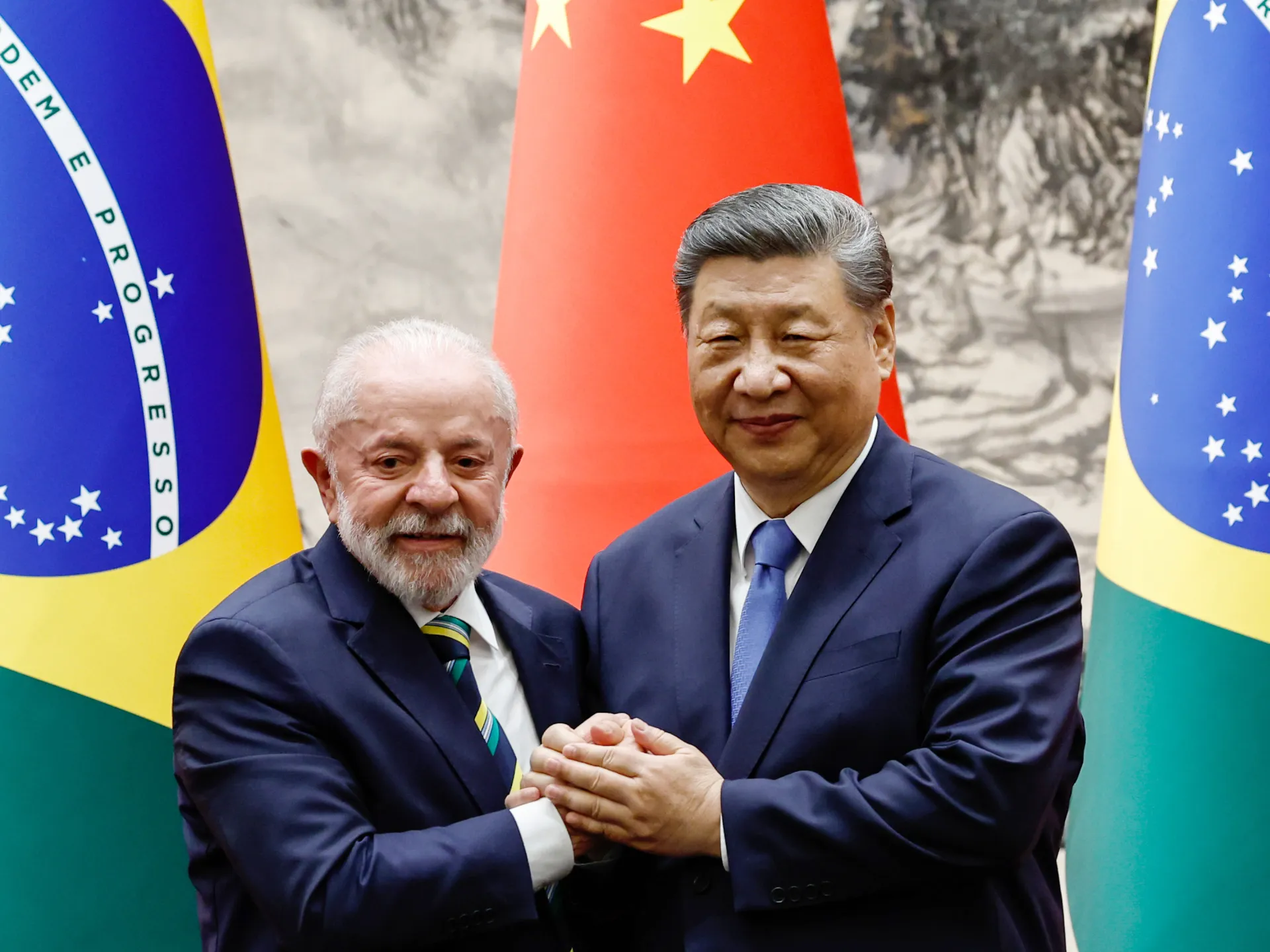
Luiz Inacio Lula da Silva’s victory in Brazil’s presidential election has intensified the contest between Washington and Beijing for influence in Latin America, while testing whether the Global South can maintain strategic independence from both powers.
US President Donald Trump questioned the result, saying: “It looked like another rigged election.” His administration granted visas to Lula’s defeated rival, Flavio Bolsonaro, and his family after they left for Miami, where Bolsonaro declared himself Brazil’s rightful leader.
Chinese President Xi Jinping congratulated Lula and described China-Brazil relations as “a model of solidarity and cooperation among Global South countries”. China is Brazil’s largest trading partner, and Lula has strengthened links with Beijing and other BRICS members while resisting pressure from Washington to bring Latin America closer to the US.
Pressure from Washington
Trump’s administration has used economic and political measures to challenge Brazil’s independent course. US tariffs on Brazilian exports have reached 50 per cent, while Supreme Court Justice Alexandre de Moraes has been sanctioned and other judges involved in the case against former president Jair Bolsonaro have faced visa restrictions.
In June, Secretary of State Marco Rubio designated Brazil’s two largest organised crime groups as foreign terrorist organisations. Flavio Bolsonaro had publicly requested the move, which could potentially allow the US to carry out military operations on Brazilian soil.
Washington is also developing the “Shield of the Americas”, a regional security structure intended to prevent major Latin American countries from moving into Beijing’s orbit without facing consequences.
The decision to issue visas to Bolsonaro and his family has added a further political dimension to the dispute. Bolsonaro left Brazil after defying a Supreme Court order to surrender his passport, and his presence in the US could provide Washington with an opposition figure to use against Lula’s government.
Lula’s narrow room for manoeuvre
Lula is not a Chinese proxy but a Brazilian nationalist who has long defended his country’s sovereignty. His victory has halted a run of seven consecutive conservative presidential victories in the region since Trump returned to office and prevented a Bolsonaro administration from joining the proposed US security framework.
However, the president faces substantial domestic constraints. Right-wing parties hold majorities in both chambers of the incoming Congress, while almost half of Brazilians say the economy has deteriorated over the past year.
High interest rates, credit-card debt and the effects of online gambling have contributed to public discontent. At 81, Lula will govern with a hostile legislature and an adversarial US administration, limiting the time and political space available to pursue his agenda.
China’s economic foothold
Brazil exported about $100 billion in goods to China last year, nearly three times the value of its exports to the US. The relationship extends beyond soya, iron ore and crude oil, with Chinese companies involved in power grids, solar parks and electric vehicle assembly plants.
Brazil and China are also examining plans for a transcontinental railway linking Brazil’s Atlantic coast with Peru’s Chinese-built Chancay port. The two countries are competing for influence over the processing of critical minerals, an area Washington wants to keep within a US-aligned supply chain.
Lula’s election allows Brazil to continue pursuing domestic processing under the critical-minerals law he signed this year. His victory also preserves a 190 billion yuan currency-swap line, worth 28.5 billion US dollars, which provides an alternative to reliance on the dollar.
Local-currency trade settlements and efforts to increase lending by the New Development Bank beyond the dollar are part of a wider de-dollarisation drive opposed by Bolsonaro. Lula’s return therefore avoids a political split within BRICS and keeps its plans for alternative payment arrangements alive.
Chinese investment is commercially driven, can be unequal and has sometimes caused resentment. But its availability gives governments facing US pressure greater room to negotiate. The central issue for Brazil is not alignment with China, but the ability to preserve autonomy from Washington.
The test beyond Lula
Brazil’s political direction will be closely watched by other Global South governments. If Washington can challenge an elected administration, sanction judges, shelter its opponents and threaten its economy without offering a comparable trade or investment package, other countries may conclude that resisting US influence carries a heavy cost.
If Brazil instead maintains its independence while expanding industrial and financial ties with China and other BRICS members, it could demonstrate that sovereignty is compatible with competition between the world’s major powers.
Lula will not remain president indefinitely, making the durability of the economic relationship more important than personal ties. Power grids, railways, processing facilities and payment systems will determine whether China’s influence survives future changes of government.
Brazil’s election has bought time, but the country’s independence will depend on whether those trade and financial links become strong enough to withstand pressure from Washington after Lula’s presidency ends.
