


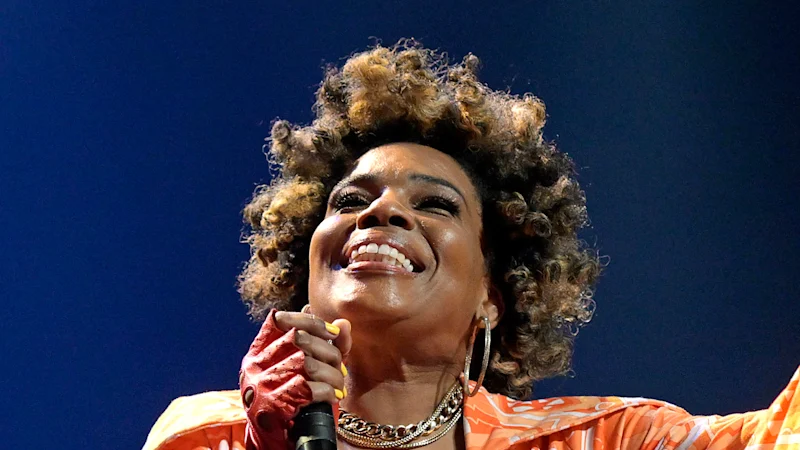
Melbourne’s latest run of cultural performances ranged from a long-awaited Macy Gray concert to a major Stuttgart Ballet production of The Sleeping Beauty, alongside recitals by Isata Kanneh-Mason and Pekka Kuusisto’s collaboration with the Australian Chamber Orchestra.
The Sleeping Beauty gives Stuttgart Ballet a four-star welcome
The Stuttgart Ballet’s production of The Sleeping Beauty at the Regent Theatre was awarded four stars, with Elisa Badenes making a commanding Aurora on opening night.
Her performance was marked by composure and exceptionally smooth turns, while Henrik Erikson brought precision to the role of Prince Désiré. Their partnership reached its peak in the grand pas de deux during the wedding celebrations, particularly in a sequence of supported turns and plunging fish dives.
Jason Reilly gave the wicked fairy Carabosse a restless, mocking energy, while Abigail Willson brought calm authority to the Lilac Fairy. The production, created by Marcia Haydée in 1987, presents their conflict as an expansive struggle between good and evil.
Riccardo Ferlito also stood out as Ali Baba, drawing attention with the height and energy of his leaps. The Stuttgart Ballet’s season continues at the Regent Theatre until October 18.
Macy Gray concert delayed before energetic finale
Macy Gray’s performance at Hamer Hall received three stars after the singer took the stage more than an hour after the advertised start, including a 15-minute late beginning to the event.
The concert was a postponed performance from September 11, when a 24-hour strike by Arts Centre Melbourne staff led to its cancellation. The industrial dispute has since been resolved after staff accepted an improved pay offer.
Gray made no reference to the postponement, instead appearing in a bright orange dress and red fingerless gloves before launching into her distinctive raspy vocals. She urged the audience to sing and dance, telling them: “this ain’t no library”.
Her band gave the original material a jazz-influenced treatment, including a reworked version of Witness. The set also featured covers of Radiohead’s Creep, Boney M.’s Sunny and I’m Too Sexy.
Some members of the audience left early after objecting to the covers, but Gray ended with her best-known song, I Try, bringing fans to their feet. The performance finished at 10.50pm.
Isata Kanneh-Mason makes Australian recital debut
Pianist Isata Kanneh-Mason received four stars for her Australian debut at the Melbourne Recital Centre, in a programme moving between Beethoven, Ravel and contemporary works by Dobrinka Tabakova.
Her recital was framed by Beethoven’s “Moonlight” and “Waldstein” sonatas. She displayed considerable control over dynamics and tone, while the finale of the “Moonlight” Sonata demonstrated her formidable technique.
Ravel’s Gaspard de la nuit brought vivid contrasts, from the watery textures of Ondine to the eerie atmosphere of Le Gibet and the mischievous menace of Scarbo.
Tabakova’s Nocturne and Halo provided a contemporary counterpoint, with repeated notes and harmonics used to evoke night and the growing brightness of a lunar halo.
Kanneh-Mason played the “Waldstein” with evident devotion, although heavier pedalling clouded some of its closing brilliance. She concluded with an exuberant arrangement of I Say a Little Prayer.
Kuusisto leads the Australian Chamber Orchestra
Finnish violinist and composer Pekka Kuusisto brought energy and playfulness to the Australian Chamber Orchestra’s Legends and Luminaries programme at the Melbourne Recital Centre, which was awarded four stars.
As guest leader, Kuusisto directed an arrangement of excerpts from Mozart’s The Magic Flute, with a fast-paced overture giving way to more lyrical passages and the Queen of the Night’s aria.
Nico Muhly’s Shrink: Concerto for Violin and Strings, written for Kuusisto and first performed with ACO Collective in 2019, placed the soloist at the centre of a technically demanding and richly textured 22-minute work.
The orchestra also gave the first Australian performances on the tour of Ellen Reid’s West Coast Sky Eternal. Its changing textures initially intrigued, although an extended pizzicato section unsettled the structure.
An arrangement of Mendelssohn’s String Quintet No. 2 brought the concert to an ebullient close before Reger’s arrangement of Bach’s chorale prelude O Mensch, bewein’ provided a more intimate encore.
