


Australian Labor is preparing to consider spending cuts as Anthony Albanese’s government faces mounting internal pressure to demonstrate fiscal restraint and ease inflationary concerns before the next election.
The cabinet’s spending committee is expected to examine options for reducing outlays ahead of the December budget update, according to ministers, MPs and Labor figures. The debate has intensified after Reserve Bank governor Michele Bullock said domestic economic pressures were a major source of inflation.
One Labor MP said the government needed to appear “more aggressive on spending” while addressing the cost of living.
“Hanson is making lots of claims about cutting spending, and we need to be seen to be conscious of the cost of living at the same time as reducing inflationary pressure,” the MP said, referring to One Nation leader Pauline Hanson.
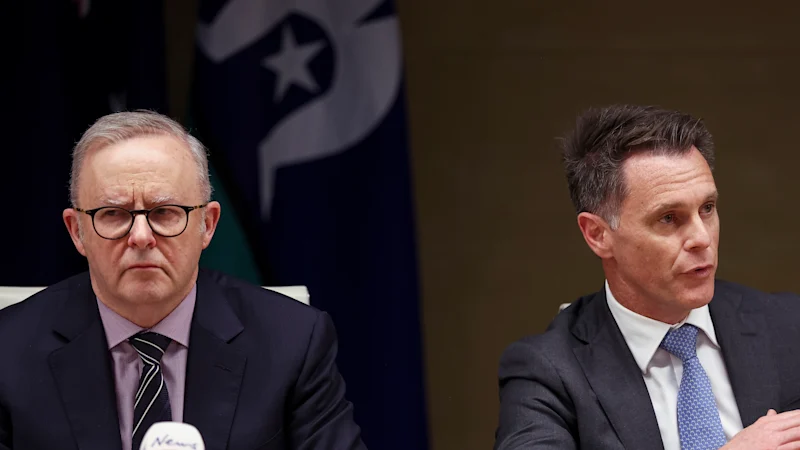
The government’s position was challenged by Chris Minns, the New South Wales premier, who declined to endorse Canberra’s fiscal approach and said governments had a responsibility to remove demand from the economy.
“I think every government has a responsibility to do what it can to take demand out of the economy,” Mr Minns told reporters. “I’m not going to make a long commentary about other governments. It’s up to them and their decisions, obviously.”
His comments created fresh difficulties for Mr Albanese, who has regularly sparred with the premier. They came after Treasurer Jim Chalmers sought to play down the appearance of a disagreement with Ms Bullock.
Reserve Bank criticism puts pressure on Labor
Ms Bullock said inflation had been driven by “domestic capacity pressures”, while price rises linked to the war in the Middle East were an additional factor. Her assessment unsettled senior Labor figures because it challenged the government’s emphasis on international forces behind rising prices.
Her comments were more direct than the Reserve Bank’s earlier written statement and placed greater emphasis on domestic spending and weak productivity, adding to concerns within Labor about the government’s economic strategy.
Mr Chalmers rejected claims that he had misled voters about the causes of inflation. He pointed to figures showing headline inflation rose to 4 per cent in August from 3.5 per cent in July, while the underlying measure used by the Reserve Bank remained at 3.6 per cent, above its 2.5 per cent midpoint target.
“The overwhelming reason why annual headline inflation has come up in August compared to July is because of the impact of higher global oil prices,” Mr Chalmers said.
He also argued that the opposition had a large unfunded policy agenda that would place further pressure on prices.
Stephen Smith, a partner at Deloitte Access Economics, said inflation in goods and services not exposed to international markets remained high at 4.5 per cent. He said the figure indicated that domestic factors were responsible for much of Australia’s inflation problem and supported the Reserve Bank’s position.
The central bank recently raised interest rates to a 15-year high, prompting criticism from political opponents, business groups and economists. Some Labor figures have argued that the decision is unfairly worsening pressure on households already facing higher mortgage costs.
Ed Husic, the Labor chairman of parliament’s economics committee, told the ABC that the Reserve Bank’s position was unfair and said Australian institutions needed to find new ways to rebuild wealth for middle-income households.
Emma Dawson, head of Labor’s Chifley Research Centre, said the bank’s approach “whacks people already under extreme pressure”. She argued that monetary policymakers and free-market economists were out of touch with voters, including those who had moved towards One Nation.
Former Victorian Labor minister Philip Dalidakis described the rate rise as an “absolutely ridiculous decision”, arguing that it would suppress demand while the conflict had created a supply problem by increasing production costs.
“The biggest spenders are state governments on infrastructure, and so state governments need to heed the warning far more than the federal government does,” Mr Dalidakis said.
Government faces difficult spending choices
Former Reserve Bank governor Philip Lowe has said Labor should be running budget surpluses because government revenues have been strong and unemployment low. Former senior officials Martin Parkinson and Ken Henry have made similar arguments.
Mr Albanese has responded by challenging the Coalition to support a proposed cut to the private health rebate for older people, which the government says would save $3 billion.
“You can’t say we want more savings and then oppose every saving,” the prime minister told reporters in Melbourne, claiming Labor had identified $178 billion in savings from hundreds of billions of dollars in unexpectedly high revenue.
Within Labor, however, there is resistance to calls for deep reductions in government spending. One cabinet minister said the government’s approach to fiscal management and productivity was rarely discussed in weekly cabinet meetings and that ministers were often unclear about the wider strategy.
The minister described Labor’s central problem as a “wicked dilemma”: voters facing higher mortgage costs were also often dependent on public services that could be affected by cuts to health and aged care.
A more junior MP said finding substantial savings would not be straightforward and expressed little objection to Mr Chalmers’s policy agenda. But the MP said the treasurer should “be more honest” and reduce the political spin surrounding the competing domestic and international causes of inflation.
The MP suggested Assistant Treasurer Daniel Mulino and junior digital economy minister Andrew Charlton should take a greater role in communicating Labor’s economic message.
Labor is nevertheless expected to announce savings in December, as the government attempts to show voters it is acting to limit inflationary pressure without undermining essential services.
