


AI filmmaking is moving from experiment to commercial proposition, with start-ups producing feature-length projects in weeks while promising to reshape how films are written, designed, shot and marketed.
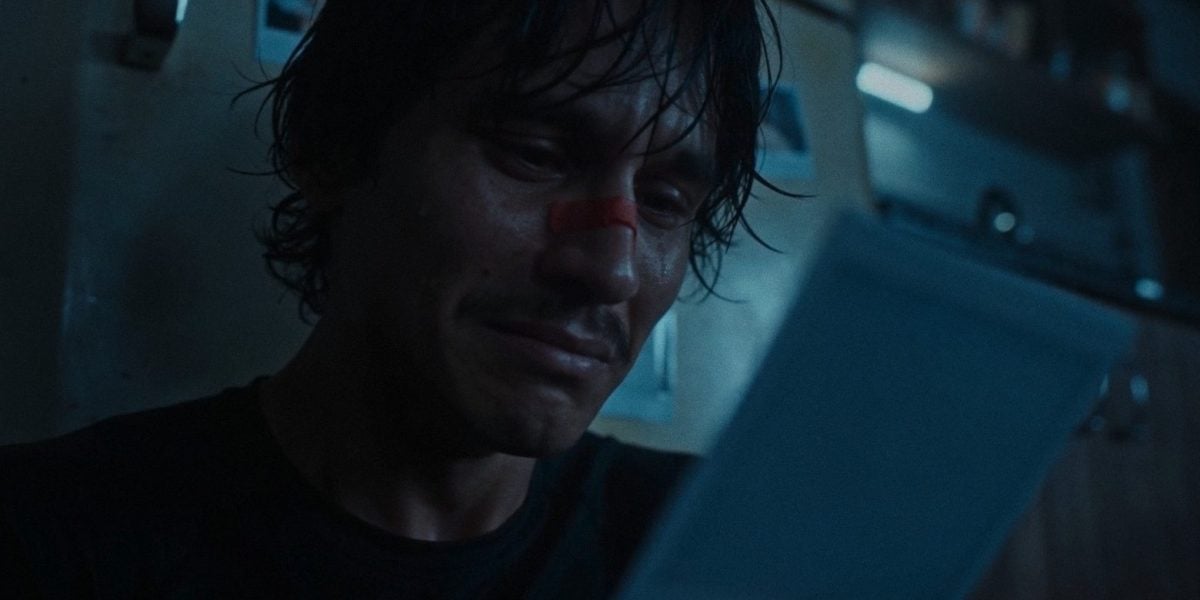
At Cannes this spring, Hell Grind attracted attention not because of a Hollywood star or an Oscar-winning director, but because it was created by artificial intelligence. A team of 15 at video start-up Higgsfield AI made the 95-minute action film in fewer than three weeks for a budget of $500,000.
About 80% of the budget was spent on computing power, with the remainder covering personnel. Its synthetic actors and visuals were generated entirely by AI.
Yet Mahi De Silva, Higgsfield’s co-founder and chief strategy officer, said the technology would not remove the need for people across the film-making process. “What we have found is that filmmaking is still an art,” she said.
AI filmmaking attracts billions in investment
Higgsfield, founded in 2023, has raised $400 million in a Series B round at a reported valuation of $5.4 billion. The funding came only eight months after an earlier $80 million round, which valued the company at $1.3 billion.
Its Cinema Studio platform gives creatives access to 33 AI models, including OpenAI’s ImageGPT, Google’s Nano Banana and Seedream, developed by TikTok owner ByteDance. De Silva said the company was continually assessing new models.
The firm is also testing where human involvement should remain central. For Cully Hill Boys, it legally licensed the likenesses of four real people, including UFC fighter Israel Adesanya, to create AI-generated characters.
Runway, another prominent AI video company, has followed a similar path of rapid technological progress. Its first model, Gen-1, launched in early 2023 and was largely limited to restyling existing footage. Its Gen 4.5 model can now create video from written prompts.
“There really isn’t a part of the production lifecycle that can’t benefit from AI,” said Jamie Umpherson, Runway’s chief creative officer.
Runway raised $315 million in a Series E funding round that valued it at $5.3 billion, and has sold an equity stake to Lionsgate, the studio behind franchises including The Hunger Games and John Wick.
Recent Runway projects include work with animator Jeremy Higgins to use AI in the production of the animated series Mars and Siv. It also helped produce the short film Rules of Horse…for Dummies in less than two weeks.
The film had an interactive element, with character sheets, prompts and details of the production process made publicly available on X so that users could create their own versions.
“Everyone thinks that AI is reducing things to sameness and a lack of originality, but we actually see it as the opposite,” Umpherson said. “These are tools that can amplify unique points of view.”
Hollywood faces questions over jobs and audience demand
Consultancy McKinsey has estimated that AI could influence as much as 20% of original film and television content spending by 2030. That could create opportunities for smaller studios, personalised projects and short-form productions, but it is also expected to put production crew and visual-effects jobs under pressure.
Audience reaction remains uncertain. Some of the biggest box-office successes of 2026, including The Odyssey and Obsession, were made using practical effects. Films that relied heavily on computer-generated effects appeared less successful at persuading audiences to spend money at the cinema.
AI was also a central issue in a new four-year agreement ratified between major studios and SAG-AFTRA, the union representing 160,000 actors, broadcast journalists, news writers and editors, and other artists. The contract introduced strict controls on the use of AI, including rules on when content and payment would be required.
Other companies are applying the technology to narrower parts of the production process. Chronicle, co-founded by chief executive Aaron Sisto, uses AI to help studios and individual creators assess how audiences might respond to planned content and to develop more targeted marketing campaigns and trailers for different audiences and international markets.
Sisto cautioned that AI could not reliably predict how every viewer would respond. “We just don’t have the models or the data to do that,” he said.
His co-founder, Scott Greenberg, said Chronicle could deploy AI agents to monitor YouTube channels and identify the types of content that perform well with a creator’s existing fanbase. But he warned against allowing data to dictate the creative process. “You never want to tell a creator what to make,” Greenberg said. “There’s nothing worse than an overly opinionated creative executive.”
Creators expected to work alongside AI
Luma, which raised $900 million in November 2025 from backers including Saudi AI company Humain and chipmakers Nvidia and AMD, launched Luma Agents in March. The system can carry out creative work involving text, images, video and audio for studios, agencies and marketing teams.
The company worked on The Old Stories: Moses, a hybrid production backed financially by Amazon Web Services and starring Oscar-winning actor Ben Kingsley.
Amit Jain, Luma’s co-founder and chief executive, said the changing technology would broaden rather than eliminate creative roles. A costume designer, for example, might be responsible not only for clothing that could be physically made but also for virtual representations in digital settings.
“The priority shifts toward doing longer and longer horizon work,” Jain said. “The job will still be done by humans, but AI will be doing parts of the task.”
