


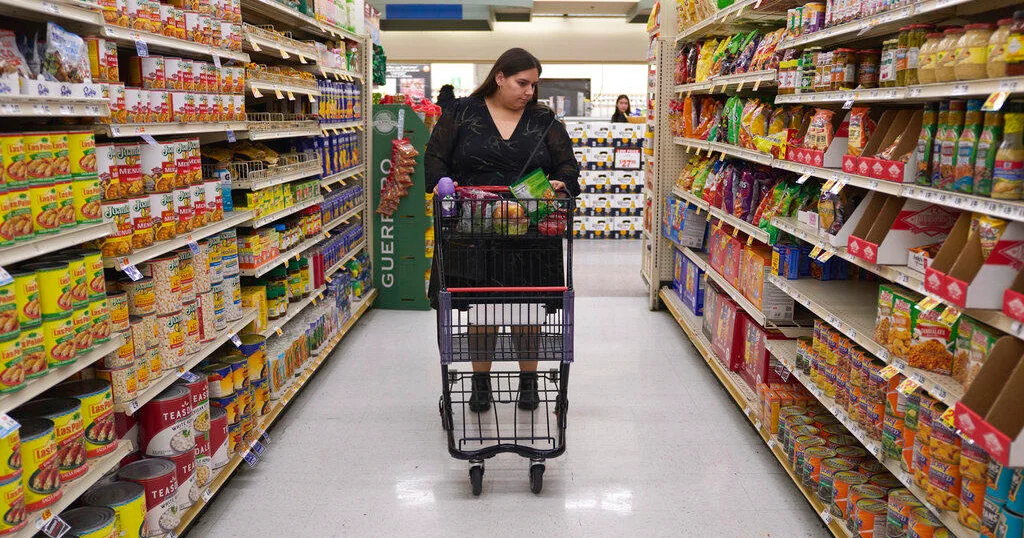
Millions have lost SNAP benefits since a sweeping US law introduced stricter work requirements, leaving recipients facing higher food costs and uncertainty over how they will manage, anti-hunger groups have warned.
About 5.2 million Americans have lost assistance since the One Big Beautiful Bill Act was enacted, according to an analysis by the Food Research & Action Center (FRAC). Enrolment in the food-stamp programme is now at its lowest level since 2019.
The law, signed by President Donald Trump on 4 July 2025, requires most recipients aged between 18 and 64 to work or volunteer for at least 80 hours a month. The previous age limit for the requirement had been 54.
For Lori Covelli, a 53-year-old unemployed social worker in Kenosha, Wisconsin, the change ended hopes of regaining the $760 a month she previously received. She had been told she might qualify again when she turned 54, only to learn that the age limit had been raised to 64.
“That’s a long way off. At this point, SNAP benefits are essentially over for me,” Ms Covelli said.
She said she was applying for about 10 jobs a week but had not found work, while the cost of groceries, utilities and other essentials continued to rise.
“It feels as though people are being punished” by the changes, she said.
In May, Mr Trump said millions of people had been “lifted off” SNAP because of a stronger economy. Anti-hunger organisations and recipients, however, say many people are struggling to find employment while coping with higher household costs.
White House spokeswoman Anna Kelly said the administration was making SNAP sustainable for future generations.
“The Working Families Tax Cuts bill restores basic work requirements, prioritizes American citizens, and implements reasonable cost-sharing measures with states to crack down on waste, fraud and abuse,” she said.
Stricter SNAP rules add pressure to states
Further changes are due to increase the burden on state agencies that administer SNAP. From 1 October, states will have to cover 75% of the programme’s administrative costs, up from 50%.
From October 2027, states with high payment error rates could also be required to pay up to 15% of benefits. Republican lawmakers have said the rates indicate fraud, while anti-hunger advocates argue that they often result from routine mistakes such as misspellings or missing addresses.
Crystal FitzSimons, president of FRAC, described the changes introduced by the Trump administration as “absolutely unprecedented”. She said tougher work rules and the new funding arrangements had caused confusion and application backlogs in several states.
“There is a lot of chaos going on in SNAP, and it is harming the people the program was designed to serve,” Ms FitzSimons said.
She warned that some states might withdraw from the programme if they could not meet the additional costs.
Alabama’s SNAP director, Brandon Hardin, has said the payment error rules could leave the state facing an extra $174 million. He said ending the food-stamp programme was one possible option if Alabama could not reduce its error rate and financial liability.
Arizona has recorded the sharpest fall in enrolment, down 53% over the past year. Its Department of Economic Security said it had been forced to overhaul its processes rapidly to administer the benefits under the new law.
The agency said enrolment had since stabilised, with 57,000 more people receiving SNAP in August than in April. A spokesman attributed the earlier decline partly to staffing shortages and outdated technology, alongside the federal changes.
Families struggle with exemptions and medical waivers
Angie Aranda, 49, from Pueblo, Colorado, is seeking a medical exemption from the work rules because she has Crohn’s disease. She has applied for about 30 remote jobs, hoping to work from home while remaining close to a bathroom.
The law also narrowed the exemption for parents. Previously, people caring for children under 18 were excluded from the work requirement; the exemption now applies to parents of children under 14.
Ms Aranda’s children are 17 and 14. She said it had been difficult to obtain clear information from the state agency about applying for a medical waiver, while her family’s monthly food assistance of about $900 was at risk.
“I went to school to not be in this situation. I did volunteer work. I did lots of stuff until I got sick,” she said. “And me being sick now, I have to prove that I’m sick over and over and over again.”
The average SNAP payment is about $6.25 per person a day, or roughly $190 a month, according to FRAC. A 2025 analysis by the Urban Institute found that the benefit was insufficient to cover a typical meal in about 99% of US counties.
Lekishia Rivera, a single mother in Fort Pierce, Florida, said she was now receiving about $300 a month, down from $546 after her daughter, who has autism, was removed from SNAP when Ms Rivera reapplied for Medicaid.
“I’m spending exactly what I’ve gotten for food,” she said. “I try my hardest not to go over the budget, which is extremely hard when you have a child.”
Grocery prices have risen 32% since early 2020, while the national average price of petrol has reached $4.46 a gallon, according to figures cited in the analysis.
Ailen Arreaza, executive director of the parent advocacy group ParentsTogether Action, said a recent survey of members receiving food assistance found that two-thirds had seen their benefits reduced over the past year.
“They aren’t filling prescriptions as much, they’re having to cut back on meals and they themselves are eating less,” she said.
Food banks report rising demand
Cyndi Kirkhart, chief executive of Facing Hunger Food Bank in Huntington, West Virginia, said demand had increased since the new SNAP rules took effect.
She said the higher age threshold was particularly difficult for people aged 54 to 64 who were caring for grandchildren while their adult children dealt with opioid addiction or other substance misuse. Limited childcare made it harder for them to satisfy the work requirements, she said.
“Maybe they qualified for benefits before, but now, because of the age increase, they don’t,” Ms Kirkhart said. “And we have very limited childcare, so they still have to provide care for their grandchildren and great-grandchildren.”
“This is the pandemic on steroids with little food and little money,” she added.
The US Department of Agriculture halted its annual food insecurity study in 2025, describing it as redundant, costly and politicised. FRAC has called for the research to be reinstated to measure the impact of the SNAP changes.
A Purdue University study released last year found that 14% of households reported food insecurity between January and October, up from 12.5% in 2024. Researchers cited inflation and reductions in SNAP benefits among the factors behind the increase.
Ms Aranda said her family was already living from one pay cheque to the next despite her husband working for the county government.
“We’re paycheck to paycheck and behind already. So you cut my benefits out with no extra income, and everything’s still increasing. I have no idea what we’re going to do,” she said.
