


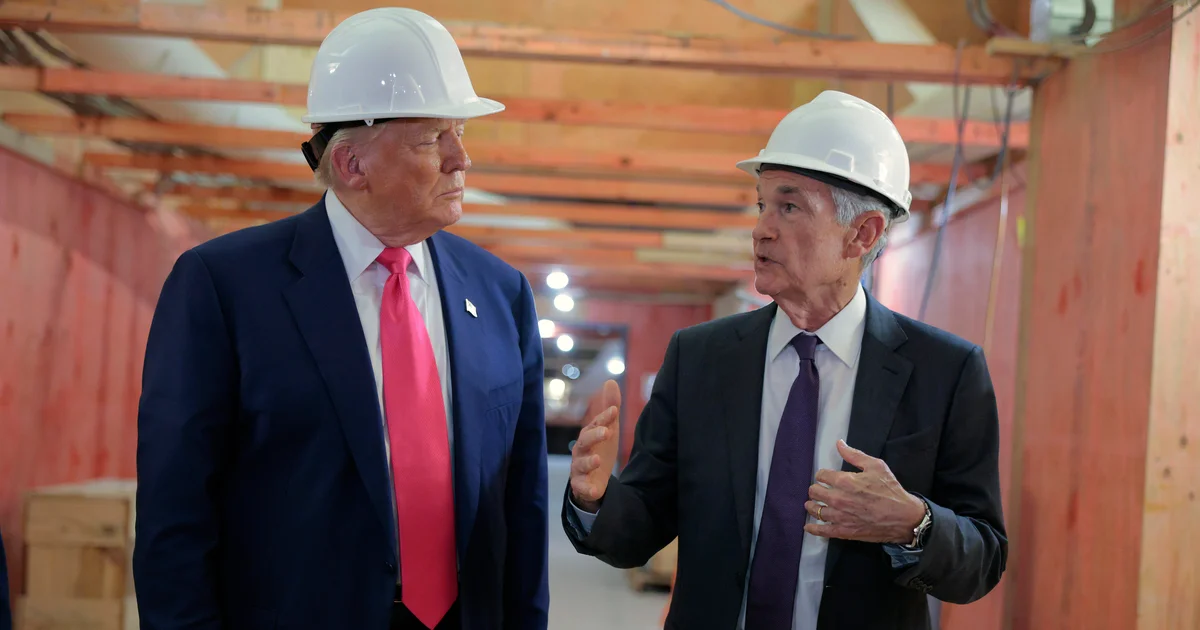
A Federal Reserve inspector general’s report has found no breach of federal law or criminal wrongdoing over the central bank’s multibillion-dollar headquarters renovation, while criticising project management for driving costs sharply higher.
The review concluded that the estimated cost of refurbishing two buildings in Washington had risen from $1.9 billion to nearly $2.5 billion because of weak oversight, inadequate planning and the failure to establish a firm cost limit with the main contractor.
Michael Horowitz, the Federal Reserve’s inspector general, said the investigation found no reasonable grounds to believe a federal criminal offence had been committed. It also found no administrative misconduct and cleared design features that had been attacked by President Donald Trump and other officials as extravagant.
The 121-page report followed an investigation lasting more than a year, begun in July 2025 at the request of Jerome Powell, then the Federal Reserve chair. Investigators interviewed board governors, senior officials, employees and contractors.
Federal Reserve renovation costs criticised
Horowitz’s office identified four areas that contributed to the increase in costs and issued seven recommendations. It said the Federal Reserve had not obtained a construction cost estimate from its general contractor and had failed to communicate a stated spending limit at the beginning of the work.
Governance arrangements were also judged “insufficient” for a project of such scale. Although officials repeatedly cited inflation as the main reason for the rising bill, the report said inflation was only one factor and that the increases had exceeded the rate of inflation.
The board did not provide the inspector general with an analysis explaining inflation’s overall impact. Instead, it supplied an assessment from two senior economists, who said that using a general construction-cost index to assess an individual project could be misleading.
The renovation was approved in 2017 and is due to be completed in 2027. The work covers the Marriner S Eccles Federal Reserve Building and the Federal Reserve Board-East Building.
Trump has described the project as a “very luxurious situation” and called spending $2.5 billion on the upgrades “disgraceful”. Russell Vought, the White House Office of Management and Budget director, previously objected to plans featuring rooftop terrace gardens, private dining rooms and lifts, water features and premium marble.
However, the inspector general concluded that features including a private lift for the Federal Reserve chair, extensive marble, a garden terrace and skylights had not materially contributed to the rise in construction costs.
Criminal investigation into Jerome Powell
The report also examined Powell’s testimony to the Senate Banking Committee in June 2025 about the renovation and found no criminal wrongdoing.
A separate Justice Department investigation had been announced in January after Powell said the Federal Reserve had received grand jury subpoenas. The subpoenas related to allegations that his testimony about the project had been deceptive, though no evidence supporting those accusations was provided.
A Washington court later quashed the subpoenas, finding they had been used as a pretext to pressure Powell to support lower interest rates or resign. Federal prosecutors ended the criminal investigation in April.
Jeanine Pirro, the US attorney who had announced the inquiry, said on Wednesday that she would review the inspector general’s report. Her office was asked whether it planned to reopen the investigation.
Kevin Warsh, who has been nominated to succeed Powell as Federal Reserve chair, has received the report. He told Horowitz that the General Services Administration would take over supervision of the renovation and report to the board and to him.
Warsh also said the board would conduct a full audit to establish the value of services that had not been delivered and seek reimbursement or credits for work that had been paid for but not completed.
As of July, the Federal Reserve Board had not established a guaranteed maximum price for the project, four years after construction began and after almost all construction contracts had been awarded.
