


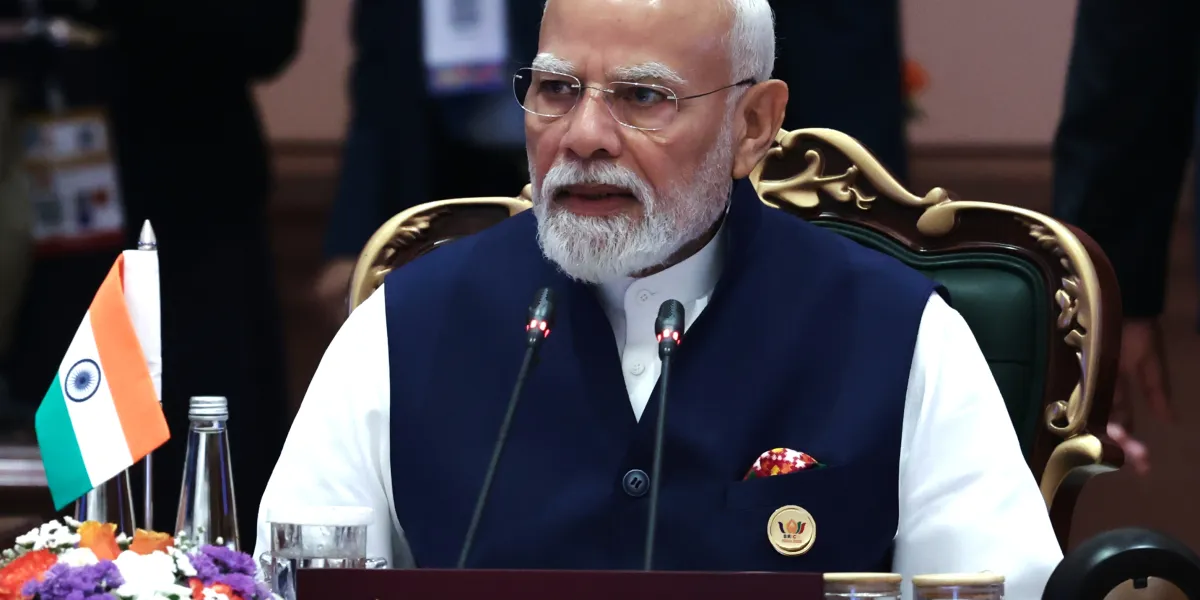
India’s Prime Minister Narendra Modi has urged BRICS countries to turn summit agreements into practical measures, warning that geopolitical tensions, disrupted supply chains and climate crises are increasingly affecting ordinary people worldwide.
Speaking on the second day of the BRICS summit in New Delhi, Mr Modi called for stronger cooperation across the Global South and cautioned that the “weaponization of technology and critical minerals” could obstruct global development and shared prosperity.
The bloc agreed to establish an integrated early warning system for infectious diseases, intended to improve preparedness and co-ordination in response to future outbreaks.
“Pandemics, climate disasters and supply-chain disruptions have shown that in today’s interconnected world, no crisis remains confined to a single region,” Mr Modi said.
He added: “The number of conflicts and tensions in the world is continuously increasing, and this is having an increasingly negative and far-reaching impact on the lives of ordinary people.”
Mr Modi made the remarks alongside Chinese President Xi Jinping, Russian President Vladimir Putin and Iranian President Masoud Pezeshkian.
In his closing remarks, the Indian leader urged BRICS members to deliver “tangible and time-bound action”, saying agreements must move from “files to real-life impact”. He said the discussions had reinforced the belief that “BRICS is not merely a group of countries, but an ecosystem of solutions”.
He also wished China success as it prepares to take over the BRICS chair for the next term.
BRICS backs closer economic and diplomatic co-operation
In a joint declaration issued on Saturday, BRICS leaders expressed concern over escalating tensions in the Middle East and Sudan, and called for disputes to be addressed through dialogue and diplomacy.
The group reaffirmed its support for a multipolar world order and reforms to the United Nations, including its Security Council, as well as to global financial institutions such as the World Bank and the International Monetary Fund.
Leaders opposed unilateral sanctions and coercive economic measures, and criticised sanctions that have not been authorised by the UN. They also warned that rising tariffs and non-tariff barriers were undermining global trade and supply chains.
The bloc backed wider use of local currencies in trade and stronger cross-border payment systems, while calling for co-operation on food security, energy, digital infrastructure, artificial intelligence and climate action.
Founded in 2006 by Brazil, Russia, India and China, BRICS now has 11 members representing about half the world’s population and a significant share of global economic output. The declaration marked a significant diplomatic breakthrough, given the competing positions of Iran, Saudi Arabia and the United Arab Emirates on key regional and geopolitical issues.
