


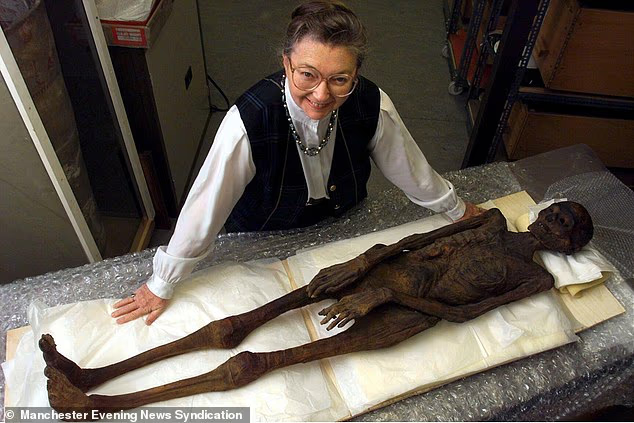
Manchester Museum has removed the 2,700-year-old Egyptian mummy of Asru from public display, saying the decision was made to “respect her wishes”.
Asru’s remains had been exhibited at the Oxford Road museum for almost 200 years. Her coffin and body are now being kept in storage while officials consider whether they should be returned to Egypt.
The museum said the decision followed discussions with Egyptian colleagues, members of the Egyptian diaspora and visitors about the care and display of mummified people.
A spokesperson said removing Asru was the option that “aligns most closely with what we understand about her own wishes”. They added that elite Egyptians of her era expected their mummified bodies to remain wrapped in their coffins and “invisible to the living”.
Asru is believed to have been about 60 when she died in 650 BC. Inscriptions on her coffin suggest she was a temple musician, or chantress, at the ancient Temple of Amun in Karnak.
She was the daughter of Pa-Kush, a name meaning a black Sudanese man. Her remains were excavated in Luxor, the site of the ancient city of Thebes, before coming into the possession of Manchester traders William and Robert Garnett in the early 19th century.
Asru was donated to the Manchester Natural History Society in 1825. Her body was carefully unwrapped in April that year and displayed at the museum, where it remained the last mummy on public view.
Last year, the museum installed a plaque asking visitors whether Asru’s body should continue to be exhibited. It noted that she had been regularly displayed for two centuries, but said the museum was now reconsidering how it cared for people.
Changing approach to mummified remains
The museum said the decision reflected changes in its responsibility towards ancestors, collections and the communities they represent.
It comes amid a wider debate over whether human remains should be displayed in museums. In 2020, Oxford’s Pitt Rivers Museum removed mummies and shrunken heads as part of a review of its colonial legacy, saying such displays could reinforce racist and stereotypical thinking.
The All-Party Parliamentary Group for Afrikan Reparations has also described the continued exhibition of human remains as unethical and called for remains held by British institutions to be returned to their countries of origin.
The group’s report, Laying the Ancestors to Rest, alleged that mummified bodies and other remains had been looted, traded and displayed as curiosities. It said their return could help the African diaspora heal from the effects of enslavement and colonial violence.
Other museums have changed the language used for ancient Egyptian remains. The British Museum said in 2023 that it would use “mummified remains” rather than “mummy” to emphasise that visitors were viewing people who had once lived.
The Great North Museum: Hancock and National Museums Scotland have also adopted terms including “mummified person”, with the latter saying the wording encouraged visitors to think of the individual rather than an object.
