


NASA has launched an unprecedented rescue mission to stop one of its most productive space telescopes from burning up in Earth’s atmosphere, in what officials say is the first attempt by a commercial spacecraft to capture and rescue an uncrewed government satellite that was never designed to be serviced in orbit.
The Neil Gehrels Swift Observatory, which has spent almost 22 years studying gamma-ray bursts and other violent cosmic events since its launch in November 2004, has been sinking through Earth’s orbit faster than expected after a recent bout of solar activity expanded the upper atmosphere and increased drag on the spacecraft. According to NASA, without intervention the observatory would have dropped below a critical altitude of around 185 miles as early as this month, the point beyond which any rescue attempt becomes impossible.
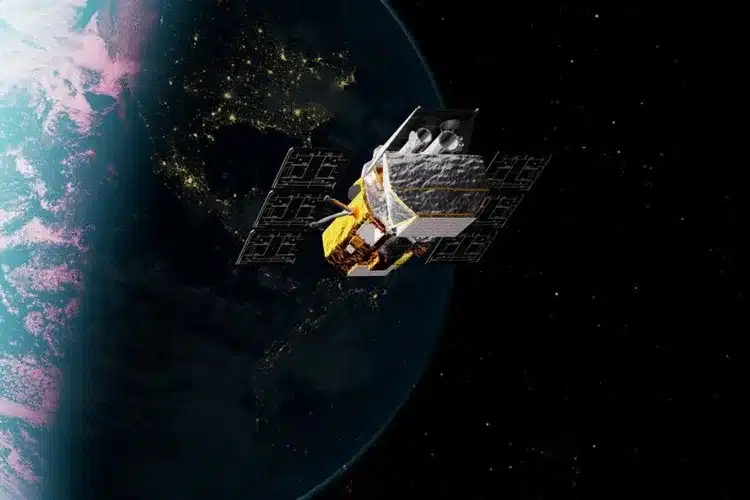
To buy time, engineers at Penn State University’s Eberly College of Science, which operates Swift day to day, altered how the telescope flies. Rather than pointing at scientifically interesting targets as usual, the team began steering it into a more streamlined position and cut its power consumption to angle its solar panels more aerodynamically, slowing its descent enough to keep the rescue mission viable into the autumn.
That rescue arrived on Friday, when a robotic spacecraft named LINK launched at 4.36am US Eastern time from Kwajalein Atoll in the Marshall Islands, in the South Pacific. LINK was carried aloft attached to a Northrop Grumman Pegasus XL rocket beneath Stargazer, a modified L-1011 aircraft, before being released at roughly 40,000 feet and fired into orbit — notably, the final flight of the historic Pegasus rocket, which first flew in 1990. The launch had already been pushed back several times by poor weather, and a software issue forced NASA to abort an attempt on Thursday before it was resolved with an update, according to CNN.
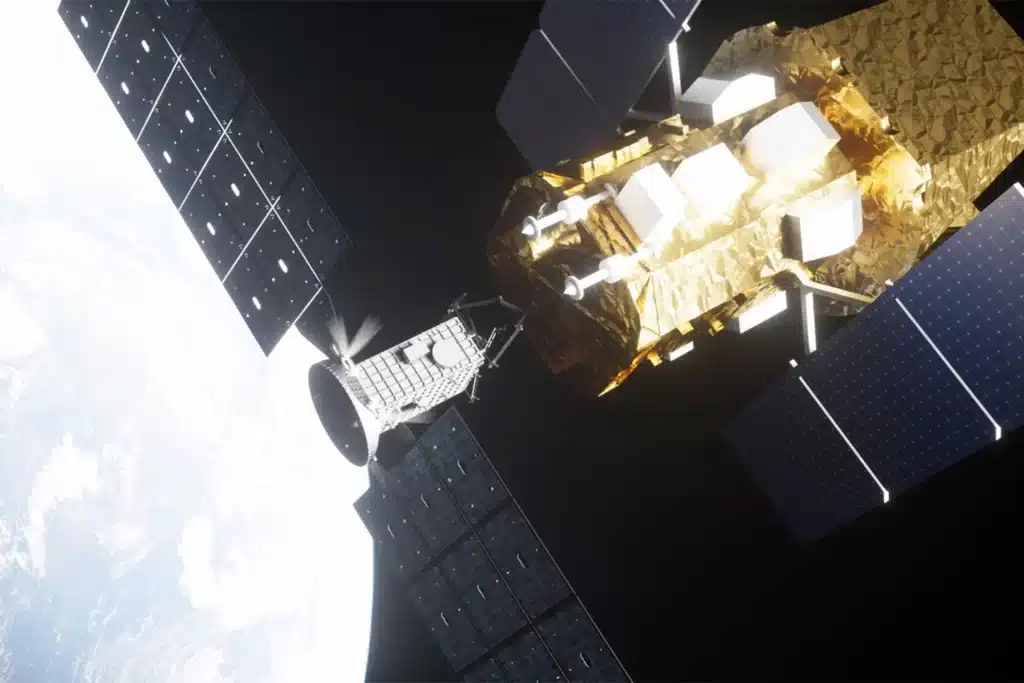
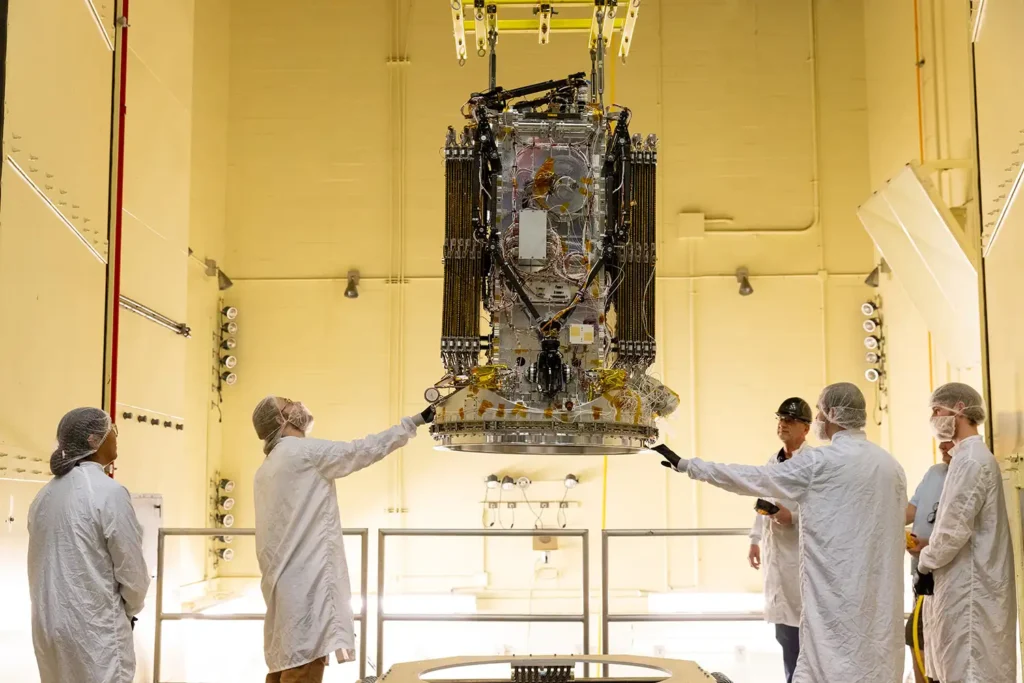
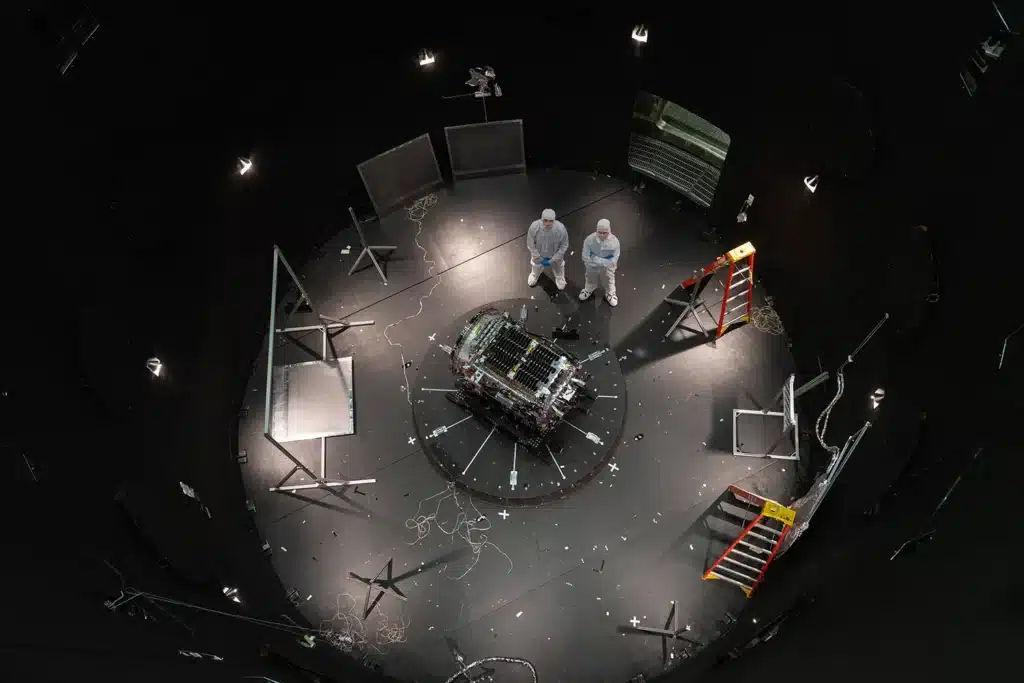
Built by the Arizona-based firm Katalyst Space Technologies, LINK is a relatively modest spacecraft — about 5 feet tall and 880lb, roughly a third of Swift’s size — fitted with around 20 feet of solar panels and three robotic arms designed to grip the observatory. NASA awarded Katalyst a $30 million contract for the mission in September, giving the young company, which had never previously flown its own spacecraft, less than a year to design, build, test and launch it, after the agency selected its proposal over competing bids. Katalyst chief executive Ghonhee Lee described the achievement in a statement reported by the BBC as “one of the most ambitious commercial servicing missions ever attempted,” while telling NASA that “Swift wasn’t designed to be serviced” and that the mission would help establish “a blueprint for servicing spacecraft that were never designed for on-orbit maintenance.”
The operation ahead is delicate and will unfold over several months. LINK will spend two to three weeks testing its navigation and sensor systems before conducting a close survey of Swift to identify the safest points to grip the telescope with its robotic arms. Once secured, it will fire a set of gentle ion thrusters to gradually raise the pair’s orbit to around 370 miles — comfortably above the roughly 250-mile orbit of the International Space Station — over the course of two to three months, after which LINK will detach and burn up in the atmosphere itself.
NASA has framed the mission as more than a simple rescue. In a statement, the agency said that while it could have allowed Swift to re-enter the atmosphere, the situation instead offered “an opportunity to demonstrate a key capability for the future of space exploration,” calling the approach both a way to extend Swift’s working life and a cheaper option than replacing its unique capabilities. S. Bradley Cenko, the mission’s principal investigator at NASA’s Goddard Space Flight Center, described Swift as “NASA’s multitool” for studying the universe, noting that it observes across a wide range of wavelengths and rapidly redirects itself toward short-lived cosmic outbursts, alerting other observatories to follow up. The telescope has no planned successor, and NASA has said its loss would significantly hamper the field.
Should it succeed, the mission could shape decisions about similar operations in future, including a potential rescue of the ageing Hubble Space Telescope, which the BBC reports faces a comparable slow decline. Kieran Wilson, LINK’s principal investigator at Katalyst, told CNN that inspections suggest Hubble’s exterior material has degraded badly with age, becoming “almost glass-like” and prone to shattering if touched — a striking contrast, he said, to the more flexible insulation blankets installed when the telescope launched more than three decades ago, and a sign of just how delicate any future servicing mission would need to be.
For now, scientists must simply wait. As Live Science and CNN both note, a lengthy chain of unprecedented steps still has to succeed in sequence for the mission to work — and researchers say they are hoping, in the meantime, that the sun stays calm enough not to accelerate Swift’s fall any further before LINK can reach it.
