


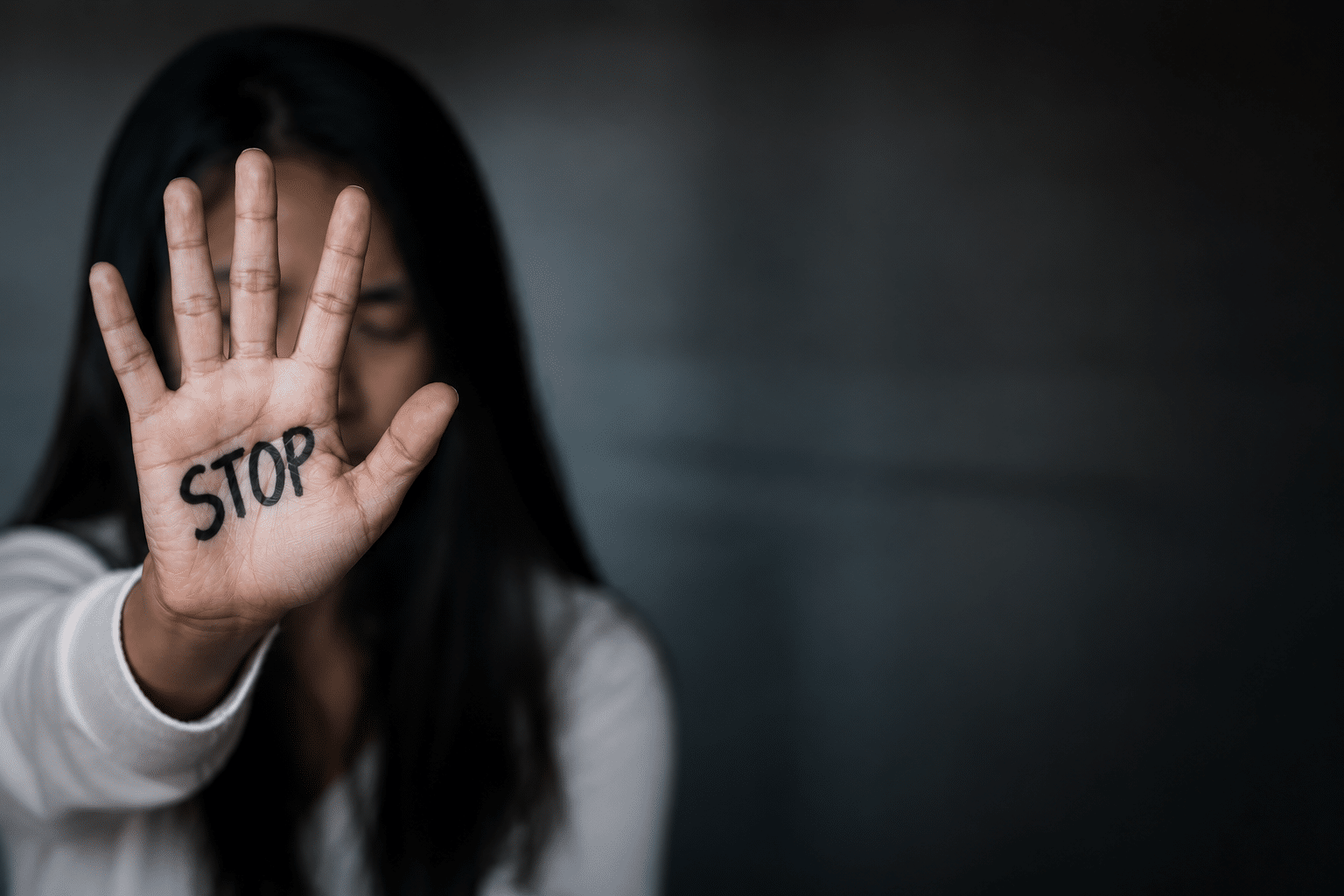
An estimated 840 million women and girls alive today have experienced physical or sexual violence from a partner or someone else at some point in their lives. That’s roughly one in three women on the planet, and it’s the newest, most complete estimate the World Health Organization has ever assembled — released just eight months ago, in November 2025. Most of what follows is an attempt to unpack that number: by country, by age, by what happens to survivors afterward, and by who is actually doing something about it.
Given what you asked for, this leans hardest on the US, UK, EU and the global totals, with a close look at South Africa and Scandinavia, since they top “worst country” lists for almost opposite reasons. It also tries to answer the two hardest questions you asked — how often this leads to suicide, and how many survivors actually recover — as honestly as the research allows, which sometimes means saying plainly that a clean number doesn’t exist.
Why “worst country” is the wrong question
Before any rankings, one thing needs to be said clearly: a country’s reported rape rate measures its reporting system as much as it measures danger. This is the biggest source of confusion in this entire topic, and any list that skips the explanation is misleading you, even when the numbers themselves are accurate.
What actually moves a country up or down these lists has almost nothing to do with how much violence happens there. It’s how broadly the law defines rape — Sweden’s 2018 consent law counts repeated abuse by the same partner as separate offences, while many countries don’t count it that way at all. It’s whether marital rape is even recognized as a crime, which it still isn’t everywhere. It’s how much victims trust the police to take them seriously, and how much stigma survivors face for coming forward in the first place.
The UN Office on Drugs and Crime, which compiles the international data almost every “worst countries” list is built on, says plainly that its own figures “should be used with caution for international comparisons.” Researchers have a name for the pattern this produces: the Nordic Paradox. Sweden, Finland, Norway and Denmark are routinely ranked among the safest, most gender-equal countries on Earth — and at the same time report some of the highest rape rates anywhere (Sweden sits at 84.4 per 100,000 people). That’s not a contradiction. It’s what happens when a country removes most of the barriers that keep victims silent elsewhere. Countries with the lowest reported rates — parts of Central Asia, the Middle East, and Sub-Saharan Africa — usually aren’t safer. They’re just places where reporting is hardest.
South Africa breaks this pattern entirely, which is why it gets its own section below: its numbers are catastrophic on every measure, not just the ones that come from a police station.
The global picture
Zoom out from any single country, and the WHO’s November 2025 report is the most complete picture available. Alongside the headline 840-million figure, it found that 316 million women — 11% of those who’ve ever had a partner — experienced intimate partner violence in just the last twelve months. Separately, and broken out for the first time ever as its own global estimate, 263 million women have experienced sexual violence from someone other than a partner since they turned 15, a number WHO itself flags as “significantly under-reported due to stigma and fear.”
The youngest victims are often the most invisible. One in five ever-partnered girls aged 15 to 19 has already experienced partner violence before turning 20 — something like 12.5 million adolescent girls globally. And the killing doesn’t stop at assault: roughly 50,000 women and girls were killed by an intimate partner or family member in 2024 alone, which works out to 60% of all women and girls killed intentionally worldwide that year.
None of this is moving quickly in the right direction. Global intimate partner violence has fallen by just 0.2% a year over two decades — barely a flicker — and the money meant to fix it is shrinking further, worsened by 2025 cuts to US foreign aid that gutted frontline health and reproductive-care services survivors in poorer countries depend on. The worst-hit region by far is the Pacific Islands (excluding Australia and New Zealand), where 38% of women experienced partner violence in the past year alone — more than triple the global average.
United States
The US just got its first full national snapshot of sexual violence in nearly a decade. The CDC’s 2023/2024 NISVS Sexual Violence Data Brief, released between December 2025 and January 2026, found that 45.1% of American women and 16.9% of men have experienced some form of contact sexual violence in their lifetime — 21% of women and 3.2% of men specifically reporting completed or attempted rape. RAINN and the Department of Justice put the annual toll at 443,635 people aged 12 and older experiencing sexual violence every year, and every nine minutes, the victim is a child.
The risk isn’t distributed evenly. Over 20% of Black women, roughly 20% of white women, more than 14% of Hispanic women, and over 80% of Native American women have experienced sexual violence in their lifetime, according to CDC and NSVRC data — Indigenous Americans are victimized at roughly double the rate of the general population. Ninety percent of adult rape victims are female, though the one in ten who are male face their own, chronically underreported, version of this. In the military, 6.2% of active-duty women and 0.75% of active-duty men experienced sexual assault in FY2018, and fewer than a third of them ever reported it.
What happens after someone reports is its own story. Of every 1,000 sexual assaults in the US, only 310 are even reported to police. Of those, 50 lead to an arrest, 28 to a felony conviction, and 25 to incarceration — meaning fewer than 3% of assaults ever end in a felony conviction, full stop. Among college women, only about a fifth of students and roughly a third of non-students report to police at all.
Harassment, meanwhile, shows up most clearly as a workplace problem on paper: the EEOC received 27,291 sexual harassment charges between FY2018 and FY2021, 78% of them filed by women, recovering nearly $300 million for victims along the way. FY2023 brought the highest number of charges in twelve years — over 7,700, a 25% jump from the year before. Independent surveys suggest the real number of women affected over a career is far higher than formal charges capture; one ROC United survey found 90% of women in the restaurant industry report some form of harassment on the job.
United Kingdom
Britain’s most recent official numbers come from the ONS Crime Survey for England and Wales, covering the year ending March 2025. Around 900,000 people aged 16 and over experienced sexual assault in that single year — 739,000 women and 162,000 men — and looking back over adult life, 7.7 million people (15.9% of the population) have experienced sexual assault since turning 16, with 1.9 million having experienced rape, including attempts. Sexual assault prevalence has actually risen over the past decade, reversing an earlier decline, and only 14.7% of rape or penetration victims ever report the most recent incident to police. More than half of those victims — 51.8% — have been assaulted more than once.
The real story in the UK, though, is what happens to a case after it’s reported. The Crown Prosecution Service’s charging rate for rape fell from 7.5% in 2016–17 to just 3.1% in 2024, and the overall conviction rate — as a share of all reported rapes — collapsed from 6.5% to 2.1% over the same decade, even though cases that actually make it to trial succeed 68% of the time. Reported rape cases nearly doubled over ten years while annual convictions stayed essentially flat, somewhere between 1,400 and 1,600 a year. Police recorded 209,079 sexual offences in that year alone, an 11% rise — but the ONS is careful to say this reflects reporting confidence and recording practice more than any real change in how much violence is happening.
Workplace harassment tells a similarly grim story. The TUC’s landmark 2016 study found 52% of women had experienced sexual harassment at work; a 2019 follow-up put the figure at 68% for LGBT+ workers; and by 2025, 68% of disabled women reported the same — rising to 78% among disabled women aged 18 to 34, the highest rate the TUC has ever recorded for any group.
European Union
Europe published its first-ever EU-wide survey on gender-based violence in November 2024 — a joint effort by the EU Agency for Fundamental Rights, the European Institute for Gender Equality, and Eurostat, covering all 27 member states, and by far the most comprehensive dataset the continent has produced on this subject. It found that around 50 million women across the EU experience high levels of sexual and physical violence at home, at work, and in public, and that 30.7% of women aged 18 to 74 have experienced gender-based violence in their lifetime — almost unchanged from 31.4% a decade earlier, in 2014. A decade, in other words, of almost no progress.
One in eight women in the EU has experienced non-partner sexual violence, including rape. One in five has experienced physical or sexual violence from a partner, a neighbour, or a roommate. And one in three has experienced sexually transgressive behaviour at work, rising to two in five among young women. Only around one in eight women who experienced violence ever reported it to police — some Eurostat figures put the true reporting rate as low as 5%.
The country-by-country spread inside the EU tells the same Nordic Paradox story as the global rankings: Finland reports the highest lifetime prevalence of any member state, at 57%, while Bulgaria reports the lowest, at 12%. Workplace harassment follows an almost identical pattern — Sweden highest at 55%, Latvia lowest at 11%. And 7% of EU women report having experienced sexual violence before the age of 15.
So who’s actually worst?
It depends entirely on what you measure. By reported police rate — the least reliable measure, and the most quoted one anyway — Grenada, the UK, Sweden, Botswana, Panama and South Africa typically sit at the top. By self-reported prevalence surveys, which are more trustworthy, Finland tops the EU, the Pacific Islands top the global regional breakdown, and South Africa tops the list of major economies on almost every independent measure available.
South Africa is worth pausing on, because it’s the one place here where the high numbers aren’t a reporting artifact — they reflect an actual, documented emergency. In the most recent full year, 42,569 rapes and 7,418 sexual assaults were reported, working out to more than 116 rapes and 20 sexual assaults every single day, and that’s only what made it into a police report. In just the first three months of 2025, police recorded 10,688 rape cases out of 13,453 total sexual offences. South Africa’s rate of intimate-partner femicide — 5.5 per 100,000 women — is almost five times the global average. Crucially, this isn’t just showing up in police data: the Human Sciences Research Council’s independent 2024 household survey found 9.8% of South African women reported experiencing sexual violence and 33% reported physical violence, numbers drawn from asking people directly, not from crime statistics. In December 2025, after sustained pressure from campaigns like Women for Change and a petition signed by over 1.1 million people worldwide, the government formally declared gender-based violence and femicide a national disaster.
The Nordic countries are the cleanest illustration of the opposite phenomenon. Denmark, Sweden, Finland and Norway rank among the very best places on Earth to be a woman by almost any safety or equality index that exists — and simultaneously post some of the highest rape rates anywhere. Researchers are essentially unanimous that this is a reporting effect, not a danger effect: broad legal definitions, high police trust, and strong survivor-support systems simply surface far more of what, elsewhere, goes uncounted entirely.
Children carry a disproportionate share of this
The single newest and largest dataset in the field arrived this April, in the journal Nature Human Behaviour — a collaboration between Georgia State University, the Childlight Global Child Safety Institute, Together for Girls, and a dozen other organizations, drawing on 1,412 studies across 147 countries, the largest evidence base ever assembled on the subject. It found that one in five women and one in six men worldwide experienced sexual violence as children, and that more than 130 million children were sexually victimized in 2024 alone.
An earlier, complementary UNICEF estimate — the first of its kind, published in October 2024 — put a lifetime number on it: more than 370 million girls and women alive today, one in eight, experienced rape or sexual assault before turning 18; that climbs to 650 million, one in five, once non-contact forms like online or verbal abuse are counted too. Boys and men are affected far more than usually acknowledged — an estimated 240 to 310 million, roughly one in eleven, experienced rape or sexual assault in childhood, rising to as many as 530 million including non-contact forms. Sub-Saharan Africa carries the largest raw number of survivors, at 79 million, but by rate, Oceania is worst — a full third of all girls and women there. In fragile or conflict-affected settings, the risk jumps to slightly more than one in four.
That risk multiplies further in active war zones, where sexual violence follows a different, more deliberate logic: it’s used as a weapon, to terrorize and displace. The UN verified more than 3,600 cases of conflict-related sexual violence in 2023 alone, a 50% jump from the year before, with the worst documented totals in Ethiopia (835 cases) and the Democratic Republic of Congo (733); 95% of verified victims were women and girls. Over the past decade the UN has verified more than 51,000 cases total — a figure every agency involved calls a severe undercount. In Sudan, UN Women recorded a 288% surge in demand for emergency support following rape and sexual violence incidents in a single month of 2025.
A newer front: harassment goes digital
There’s also a front to this that barely existed as a measurable category a decade ago. A UN Women and UNESCO report published in May 2026, timed to World Press Freedom Day, surveyed women journalists and public figures and found that 12% had experienced the non-consensual sharing of intimate images, 6% had been targeted by deepfakes, and nearly a third had received unwanted sexual advances through direct messages. The findings on AI-generated abuse are the starkest part: deepfake pornography now makes up roughly 98% of all deepfake video online, and around 99% of the people depicted in it are women.
The consequence is a quiet kind of censorship. Forty-five percent of surveyed women journalists now self-censor on social media because of this abuse, up from 30% in 2020, and nearly a quarter have been diagnosed with anxiety or depression connected directly to what they experienced online. Fewer than 40% of countries have any law on the books protecting women from cyber harassment or cyberstalking at all — meaning the fastest-growing form of this problem is also the least regulated.
The hidden cost: suicide risk
This is the hardest number in the entire piece to get right, so it’s worth being precise about what actually exists. There is no reliable global count of “X suicides per year caused by sexual assault” — suicide is almost never attributable to a single cause in official records, and no health agency anywhere publishes a figure like that. What does exist is a large, remarkably consistent body of research on elevated risk, and it doesn’t leave much room for doubt.
A meta-analysis spanning 200 independent studies and more than 230,000 participants — forty years of combined research, published in Clinical Psychology Review — found that sexual assault survivors face significantly elevated risk of suicidality, PTSD, depression, anxiety, and substance use disorder, consistently across age, race, and gender. Women who’ve experienced sexual assault are three to four times more likely to attempt suicide than those who haven’t, according to a cohort study of 706 survivors; other analyses put the figure as high as ten times. More than a third of women rape survivors report having contemplated suicide at some point afterward, and roughly 13% have attempted it. Survivors first assaulted before age 16 attempt suicide at three to four times the rate of those assaulted later in life.
Men aren’t exempt either — those sexually assaulted as children or adults show significantly elevated risk of suicidal thoughts, attempts, and death by suicide, though researchers note a real gap here: almost no suicide-prevention programs anywhere are designed specifically for male survivors. One joint study from UNC Chapel Hill and the Injury Prevention Research Center identified intimate partner violence as a precipitating factor in 4.5% of individual suicides. And sexual assault produces moderate-to-severe psychological distress in about 70% of victims — a higher share than for any other category of violent crime that’s been studied.
Recovery: what the data actually shows
The closest thing researchers track to “how many survivors get their life back” isn’t a normal-life metric at all — it’s clinical recovery from PTSD, mapped out in a 2023 meta-analysis of 22 studies and over 2,100 survivors (Dworkin et al., Trauma, Violence & Abuse). The trajectory looks like this:
| Time since assault | Still meeting full PTSD criteria |
|---|---|
| 1 week | 81% |
| 1 month | 75% |
| 3 months | 54% |
| 12 months | 41% |
In plain terms, roughly three in five survivors no longer meet full diagnostic criteria for PTSD a year on — though that doesn’t mean symptom-free, just below clinical threshold — while about two in five still do. The researchers’ central finding is that most recovery happens in the first three months, after which the pace slows sharply but doesn’t stop entirely. Evidence-based treatments like Prolonged Exposure Therapy meaningfully speed that recovery, though they carry high drop-out rates — 28% to 68% across different studies — largely because confronting the trauma head-on is, understandably, hard to sustain.
Who’s helping
None of this exists in a vacuum — there’s a real, if chronically underfunded, infrastructure of people working on it. Here’s where to find them, by region.
Global — WHO sets the research standard and runs the RESPECT Women prevention framework. UN Women maintains the Global Database on Violence against Women and Girls, covering 10,000+ measures across 194 countries. UNFPA runs GBV response programs in over 150 countries and territories. UN Action Against Sexual Violence in Conflict coordinates more than 20 UN agencies on wartime sexual violence. Childlight Global Child Safety Institute and Together for Girls lead the research on child sexual violence specifically, and WAVE Network is the main pan-European NGO network.
United States — RAINN (Rape, Abuse & Incest National Network) is the country’s largest anti-sexual-violence organization and has helped over 5 million people since 1994. Its National Sexual Assault Hotline is 800.656.HOPE (4673), or text “HOPE” to 64673. The National Sexual Violence Resource Center handles research and prevention, the CDC runs the NISVS survey itself, and the DoD Safe Helpline covers military-specific cases.
United Kingdom — Rape Crisis England & Wales runs 36 member centres and a 24/7 Support Line at 0808 500 2222. Survivors UK offers dedicated support for male survivors aged 18 and over. Safeline runs the #5MillionMen National Male Survivors Helpline at 0808 800 5005. Samaritans provides 24/7 general emotional support at 116 123. The Survivors Trust is the umbrella network for specialist services UK-wide, and NAPAC supports adult survivors of childhood abuse specifically.
South Africa — Rape Crisis Cape Town Trust supported over 15,000 survivors in the past year alone. TEARS Foundation handled over 91,000 requests for help in a single year. Government-run Thuthuzela Care Centres offer “one-stop” survivor care, though there are still far too few of them relative to need.
Europe (institutional) — FRA and EIGE are the two agencies behind the EU’s official survey data.
What’s actually new this year
You specifically asked if anyone had updated this in 2026, and it’s genuinely been an unusually active year for this data. The CDC closed an eight-year gap in December 2025 and January 2026 by publishing its first comprehensive US sexual violence survey since 2016/2017, followed by a companion intimate partner violence brief in February. In April, the largest-ever global study of child sexual violence was published in Nature Human Behaviour. WHO released its most detailed global violence-against-women estimates ever in November 2025 — the first to isolate non-partner sexual violence as its own standalone global figure. UN Women and UNESCO published new research on AI-driven and deepfake-based harassment in May. And in December 2025, South Africa formally declared gender-based violence and femicide a national disaster.
Reading numbers like these in one sitting is heavy, especially if any part of it lands closer to home than expected. If it does, please don’t sit with it alone — the hotlines above are free, confidential, and staffed by people trained specifically for exactly this. You deserve support, not just data.
Sources: World Health Organization (2025); UN Women; UNFPA; UNICEF; US CDC (NISVS 2023/2024); RAINN/US DOJ Bureau of Justice Statistics; US EEOC; UK Office for National Statistics (year ending March 2025); UK TUC; Rape Crisis England & Wales; Eurostat/FRA/EIGE EU-GBV Survey (2024); UNODC; South African Police Service; Human Sciences Research Council; Amnesty International; Childlight Global Child Safety Institute/Georgia State University (Nature Human Behaviour, 2026); Dworkin et al., Clinical Psychology Review and Trauma, Violence & Abuse; UN Women/UNESCO/ICFJ “Tipping Point” report (2026); UN Office of the SRSG on Sexual Violence in Conflict.
