


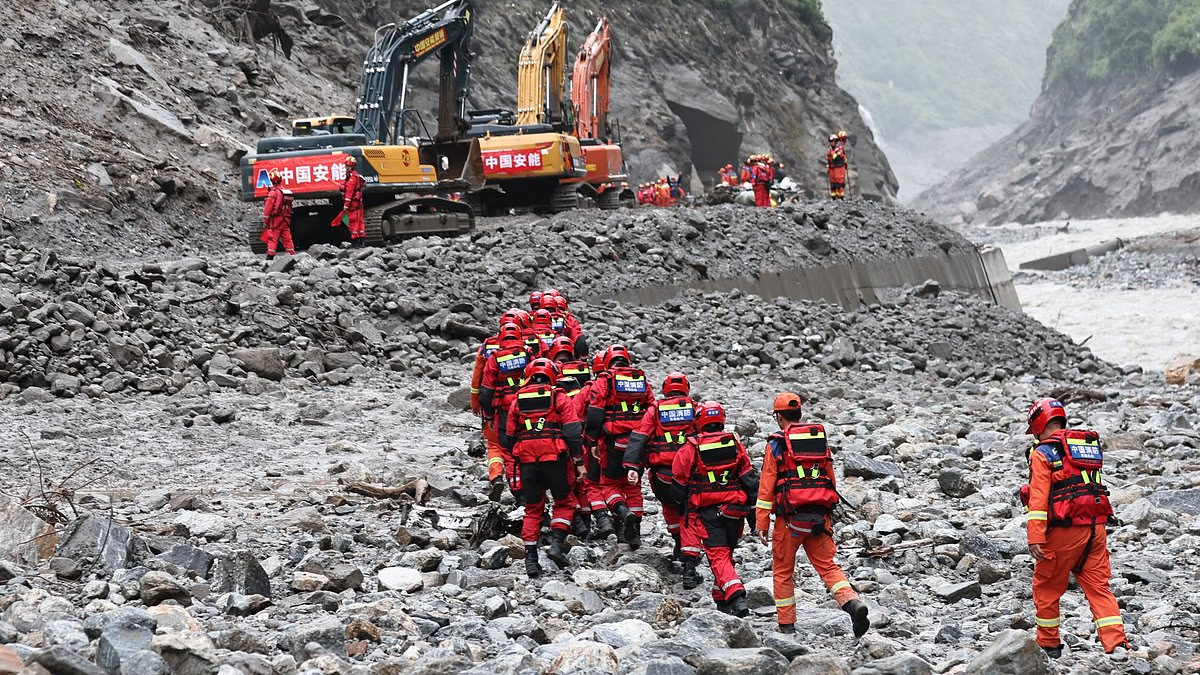
More than 30 British nationals are among thousands of people missing after catastrophic flooding in Nepal, as rescue teams continue searching areas buried by mud and debris along the border with Tibet.
The Foreign, Commonwealth and Development Office is sending a Rapid Deployment Team to Kathmandu to reinforce the British embassy’s response. The specially trained staff are due to arrive on Saturday and will help British nationals travelling through the airport, support families seeking information and liaise with Nepali officials and emergency responders.
The team will also work with relatives in the UK who are waiting for news of loved ones caught up in the disaster.
Nepal’s figures have continued to change as rescue workers reach isolated communities and bodies are recovered from rivers. The country’s disaster agency said on Saturday that 669 people had died and 2,426 remained missing. Nepal’s foreign ministry gave a lower figure of 626 recovered bodies in a briefing later in the day, warning that casualty figures were still being checked.
Together with seven deaths reported in Tibet, the overall toll has been put at more than 675.
The floods struck on Wednesday, August 26, after a collapse in the high Himalayas sent water, rock and mud into the Bhote Koshi River. The surge swept through Rasuwa and then travelled downstream into several other districts, destroying homes, roads, bridges and hydropower facilities.
Officials have warned that many of the bodies recovered so far cannot yet be identified. Authorities in Chitwan began burying 229 unidentified victims on Saturday after taking photographs and DNA samples, with the aim of allowing relatives to identify them later. The move was also prompted by a shortage of morgue space and concerns about the condition of the remains.
Nepal’s foreign ministry said more than 4,450 people had been rescued, including at least 187 foreign nationals. It said operations were continuing across Rasuwa, Nuwakot, Dhading and Chitwan, while river systems downstream remained under close observation because of the risk of further flooding.
Rescuers are facing their most difficult operation at a series of hydropower projects in Rasuwa. More than 100 workers are believed to remain trapped in a tunnel at a construction site, where the entrance has been blocked by mud, stones and boulders.
The Nepal Army has already brought hundreds of people to safety from hydropower tunnels, but poor weather and unstable ground have slowed efforts to reach those still missing. India has sent an 11-member technical reconnaissance team to help with tunnel rescues, while Chinese specialists are also expected to assist.
Nepal’s government has established an emergency control room to coordinate information about missing foreign nationals with embassies, families and local authorities.
Foreign Secretary Ed Miliband said the welfare of British nationals was the Government’s “top priority”.
“Our staff are working closely with the Nepali authorities, emergency responders and our embassy in Kathmandu to ensure those affected can access the assistance and information they need,” he said.
The UK has also pledged £5 million in humanitarian support for Nepal’s relief and recovery operation. The funding will be channelled through United Nations agencies, the Red Cross and non-governmental organisations supporting emergency response efforts.
The scale of the destruction has left communications cut off in parts of the worst-affected region, with roads and bridges washed away and several hydropower sites damaged. Rescue teams are using helicopters, drones and heavy machinery to search riverbanks, settlements and underground structures.
Nepal’s authorities have urged the public and international media to rely on verified casualty figures, warning that the number of dead and missing is likely to change as search operations continue.
