


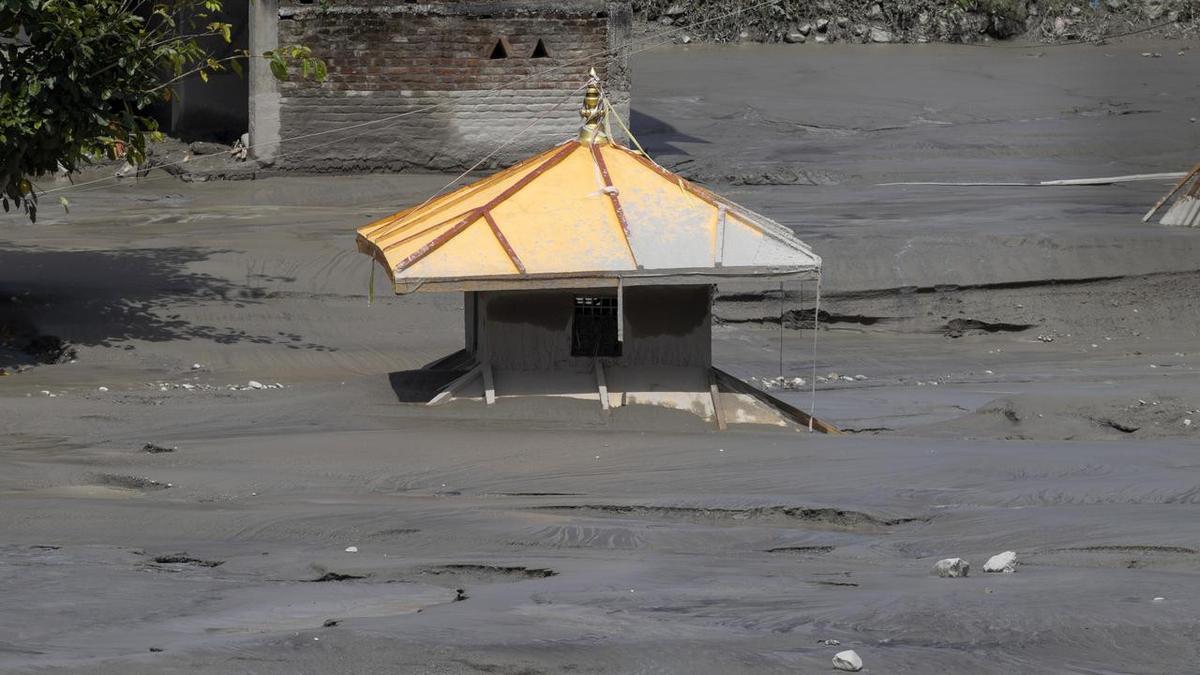
Rescuers race to reach workers trapped in Nepal hydropower tunnel after deadly floods
Nepal’s army has airlifted heavy machinery by helicopter to a hydropower construction site in the Himalayas as rescuers battle mud, debris and rising water to reach workers trapped underground following catastrophic floods along the Nepal-China border.
The disaster began on Wednesday, 26 August, when a torrent of ice, rock and debris swept through mountain valleys, killing at least 788 people in Nepal and leaving 2,502 missing, according to the country’s disaster management authorities. Chinese authorities have reported a further 16 deaths and 546 people missing on the Tibetan side of the border.
The flooding damaged or inundated several hydropower projects and knocked out roughly 10 per cent of Nepal’s power-generation capacity. Rescue operations are under way at five projects, including the Upper Trishuli complex in Rasuwa and Nuwakot districts.
About 10,000 Nepali troops have been deployed for rescue work, supported by specialist teams from China and India. Dharam Raj Uprety, chief executive of Nepal’s National Disaster Risk Reduction and Management Authority, said the operation was exceptionally difficult because the tunnels were filled with debris and rescuers could not safely use explosives to clear a route.
At the Upper Trishuli site, officials initially said information from local communities suggested that as many as 350 people could be trapped inside a tunnel. Rescuers later succeeded in bringing 350 workers and local residents to safety, while the army said more than 100 people were still believed to be trapped in another section of the tunnel complex. Nepal’s Electricity Authority said a dedicated helicopter had also been assigned to the operation and that two additional people were rescued from inside the tunnel on Friday.
The Nepali Army has been working around the clock in difficult weather and on unstable terrain. Heavy equipment was flown to the site after flooding and debris made road access impossible, while rescue teams prepared oxygen supplies, cameras and other equipment to enter the tunnel and assess conditions.
Officials said rescuers reached the entrance to one tunnel on Sunday and began clearing the obstruction, a development that could provide the first direct indication of the condition of anyone still underground. The army has released images of two men covered in mud after they were pulled from a tunnel entrance.
Nishesh Shrestha, an aide to Nepali politician Sagar Dhakal who is at the site, said local information indicated that between 35 and 40 people might still be trapped in Tunnel 3A. He stressed that the estimate had not been independently confirmed. Officials believe the main working area is about 180 metres inside the tunnel.
The wider rescue effort has been complicated by renewed flooding risks. Nepal issued fresh warnings on Sunday after China reported increased water flow upstream in the Bhotekoshi River. A lake formed in the mountains after the initial ice-and-rock avalanche had largely drained, but Chinese authorities said a nearby crater containing an estimated 1.4 million cubic metres of water still required close monitoring.
More than 3,700 people have been rescued in Nepal, while thousands remain unaccounted for across Nepal and Tibet. Nepalese authorities have also airlifted more than 3,200 people from affected areas, as rescue crews continue clearing roads and reaching communities cut off by collapsed bridges, mud and floodwater.
