


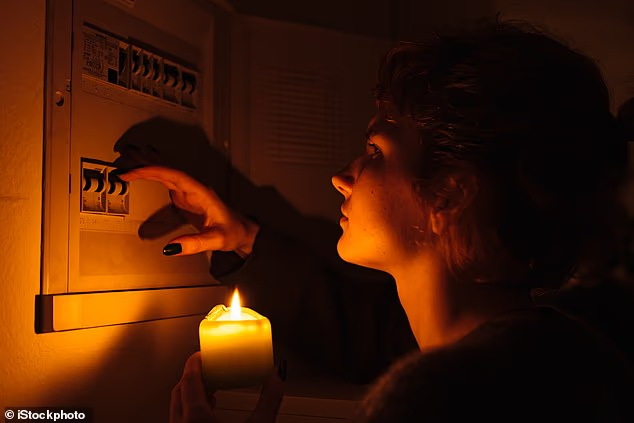
A brief power cut at Peter Hitchens’s home in an Oxford suburb has prompted a warning that Britain’s electricity system is increasingly vulnerable to a wider blackout.
The interruption, which happened early in the morning, left the journalist unable to work and raised concerns about the country’s ability to maintain a reliable supply as more conventional power stations are taken offline.
Hitchens said the outage was eventually traced to damage to a mains cable and affected only a local area. Electricity was restored after several hours.
After contacting his supplier, he was told simply: “You have a power cut.” The cause was later described as someone having cut into the cable, although it was not clear who was responsible.
The incident led Hitchens to reflect on the consequences of losing power in a society dependent on computers, refrigeration, heating and communications. He also recalled seeing the effects of unreliable electricity during visits to Baghdad and Mogadishu.
In Baghdad, he said, a generator at his hotel started within seconds of the main supply failing. In Mogadishu, people with their own electricity were, he wrote, separated from those left without power.
Warning over Britain’s electricity grid
Hitchens argued that the national grid is now more exposed to disruption than it was in the past, pointing to a power transmission crisis on June 23 as evidence of the system’s vulnerability.
At the time, Sizewell B nuclear power station was offline, while part of the Dinorwig hydro-electric facility in Snowdonia was undergoing maintenance. Gas generation was also struggling during hot weather, when demand for electricity was high.
Some power lines were already carrying too much electricity to allow energy to be transferred from Scotland to the south. Large batteries could provide emergency power, but only for limited periods.
The situation was ultimately stabilised by importing electricity from France, including power generated by nuclear stations and hydro-electric facilities. Hitchens said the incident had passed through several safeguards and could have ended differently if another problem had occurred or French assistance had not been available.
He warned that similar conditions could arise again, with no guarantee that the same measures would be sufficient.
Hitchens linked the risk to the closure of coal-fired power stations under policies aimed at reducing carbon emissions. He said 19 stations had been closed and, in many cases, demolished, removing capacity he regarded as an important safeguard.
He also argued that coal, gas, nuclear and hydro-electric generation provide stability to the grid that wind and solar power do not. In his view, the loss of that stability contributed to the serious blackout of August 9, 2019, which affected about one million customers and disrupted train services.
The power cut at his home was local and short-lived, but Hitchens said it had reinforced his longstanding concern about the consequences of a much larger failure. He concluded that he should install a generator as a precaution.
