


New protests in France have prompted the closure of major Paris museums and a large-scale police deployment, as authorities seek to prevent a repeat of the violence that followed last week’s demonstrations.
Interior Minister Laurent Nuñez said up to 70,000 officers would be deployed nationwide, supported by helicopters, armoured vehicles and water cannon. More than half a million people took part in protests last week, and another substantial turnout is expected.
The Louvre, Orsay Museum, Picasso Museum and Grand Palais were among the institutions closed in Paris on Saturday. The Grand Palais is currently hosting an exhibition of works by Cézanne.
Art Basel, one of the world’s leading contemporary art fairs, opened to the public on Friday but cancelled its weekend programme because of the risk of further unrest.
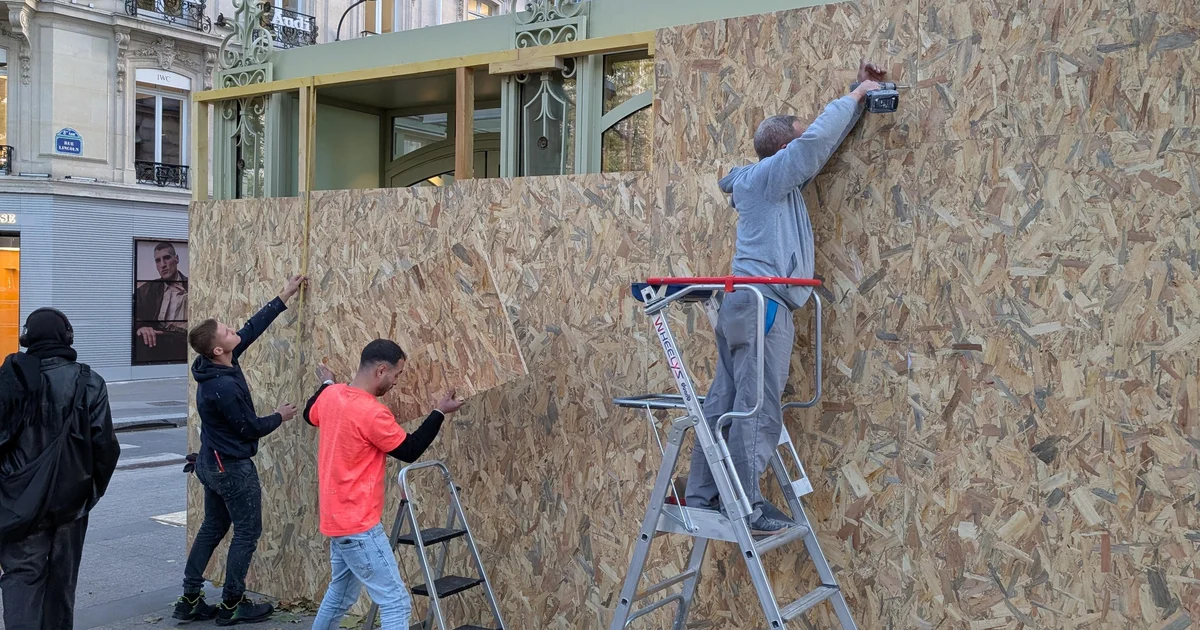
Businesses in the capital have spent the week reinforcing their premises. Near Place de la République, where violence was reported last weekend, a bank and other shops were boarded up with wooden panels amid fears of looting.
About 3,000 shops across France were damaged or looted during the previous unrest. The protests began last month when high school students in the south-east of Paris demonstrated over conditions, before spreading nationally as the focus widened to the rising cost of living.
Marches were due to take place in Paris and Marseille, while local authorities banned demonstrations in several other cities, including Lyon, Nice and Montpellier. Limoges was among the places affected outside the capital, after a suspected arson attack nearly destroyed its 19th-century city hall.
Separately, around 50 organisations have called a demonstration against the far right during the two-day congress of Marine Le Pen’s nationalist, anti-immigration party. The groups involved include trade unions, left-wing parties and student organisations, with the congress taking place ahead of next spring’s presidential election.
