


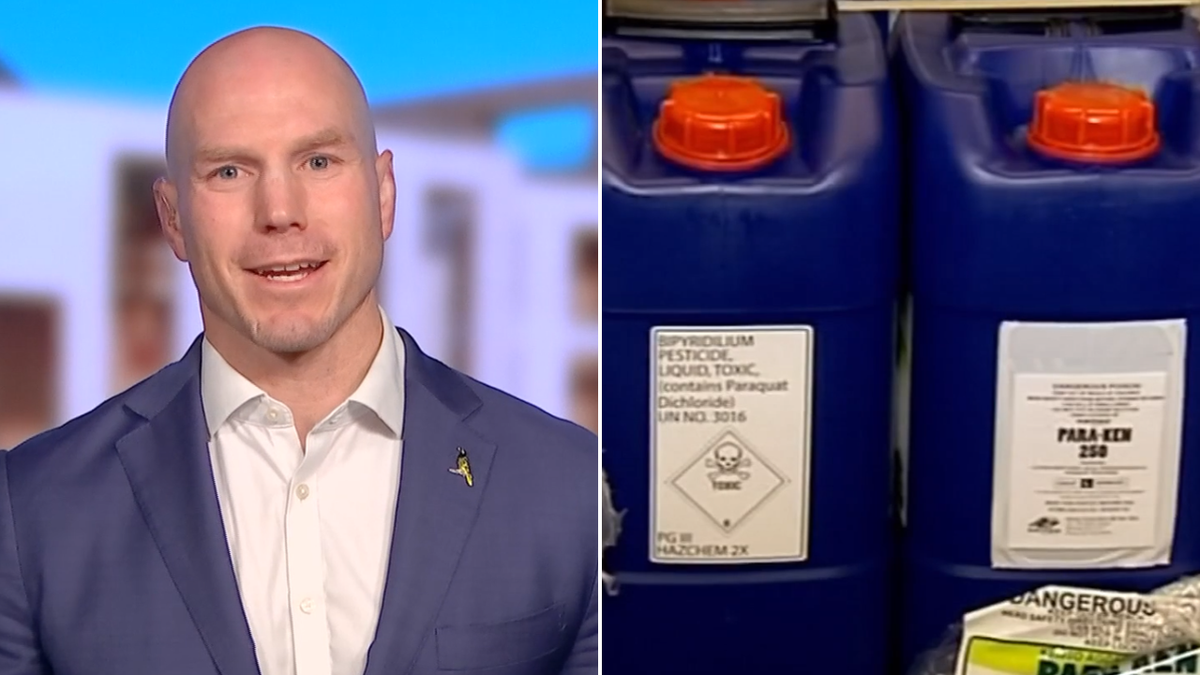
Independent Senator David Pocock is seeking a public hearing into Australia’s decision to keep paraquat on the market, despite the herbicide being banned in more than 70 countries and research linking exposure to an increased risk of Parkinson’s disease.
The Australian Pesticides and Veterinary Medicines Authority (APVMA) decided not to prohibit paraquat, which is used in agriculture to control weeds. Pocock said the decision required greater scrutiny and that a Senate motion to allow public hearings would be put to a vote on Thursday.
“Their argument is that the evidence says that it can be safely used. That is not what 70 countries around the world think,” Pocock said.
He said public hearings would allow experts and the regulator to answer questions, while giving farmers and people affected by the herbicide an opportunity to be heard.
Calls for scrutiny of paraquat decision
“It’s really important that when we have these Senate inquiries, that there is an element that is public, where experts can speak, the regulator can answer questions,” Pocock said.
“Really critically, farmers and those affected can actually have their voice heard.”
Queensland farmer Greg Smith, who is living with Parkinson’s, has also backed calls for a ban. His warning to others was: “Don’t end up like me.”
Olivia Nassaris, chief executive of Parkinson’s Australia, said the organisation had identified gaps in the APVMA’s assessment and was presenting its concerns to the inquiry.
“It says in their report that it’s toxic to mammals and birds. And the last time that I checked, we’re actually mammals so it is not safe,” she said.
Nassaris said researchers, neurologists and other experts had raised concerns about paraquat’s safety. She also called for financial support to help farmers move towards alternative methods of weed control, saying this could protect human health, soil and the land.
The APVMA’s revised controls on paraquat and the related herbicide diquat include tighter restrictions on permitted uses, application rates and handling requirements. The parliamentary inquiry will examine the evidence surrounding paraquat and its relationship with Parkinson’s disease.
