


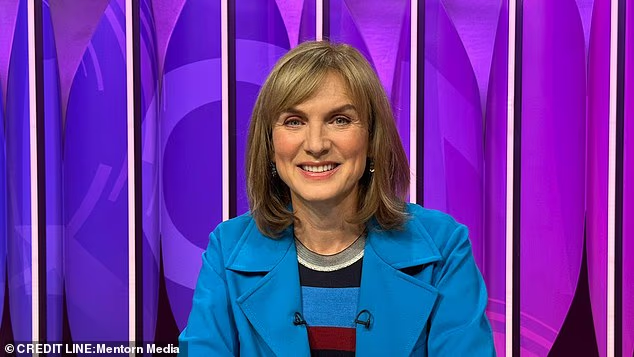
Fiona Bruce is alleged to have acknowledged that critics of Reform UK had entered the audience for BBC Question Time by claiming to support the party, only to challenge its panellist during the programme.
The BBC presenter is said to have made the remarks to panellists and Westminster aides after Thursday’s recording. A source claimed that people opposed to Reform had told producers they backed the party in order to secure a place in the audience.
The BBC rejected the account, saying it did “not recognise that characterisation” of events.
The allegation follows a tense edition of Question Time in which Reform MP Suella Braverman faced hostile exchanges over her comments on migration and identity.
Ms Braverman, who was born in London, said she did not consider herself English and instead described herself as British and of Asian ethnicity. She was subsequently accused by audience members of “reinforcing the racist argument” and of being “racist against herself”.
A source claimed that Ms Bruce had said audience members were misleading BBC producers about their political allegiance before confronting the Reform panellist once filming had begun.
The source quoted her as saying: “It’s not our fault if people lie and say they’re Reform supporters to get themselves into the audience.”
A Reform UK source criticised the programme’s audience selection process, arguing that claims of political balance were not reflected in practice.
“The producers of Question Time claim to have a politically balanced audience, but when the cameras stop rolling even the programme’s host, Fiona Bruce, admits that this isn’t true,” the source said.
The source also accused the programme of operating a “slipshod vetting system” and said a Reform UK government would scrap the television licence fee.
The BBC said every Question Time audience applicant was vetted, while acknowledging the possibility that someone could apply under false pretences. Applicants are spoken to by a researcher and required to provide links to their social media accounts, with further background checks carried out to help ensure a representative audience with a range of views.
A BBC spokesman said the programme did not recognise the alleged account and that Ms Bruce was “always clear” about the robust processes in place to establish that audience members are who they claim to be.
