


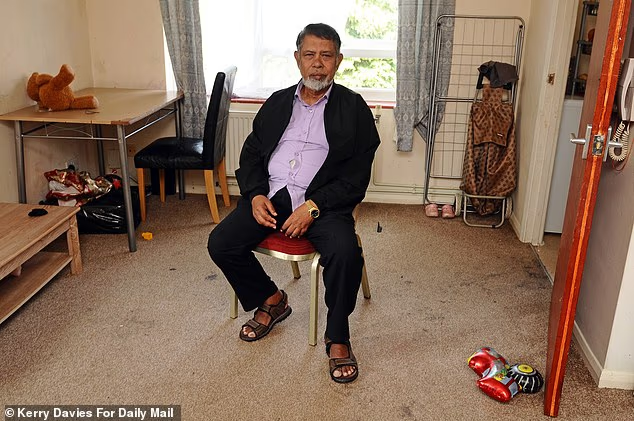
A family has moved out of a one-bedroom retirement flat in Reading after a two-year dispute over their occupation of the property, following an out-of-court agreement with Southern Housing.
Shahidul Haque, 59, moved into the flat at David Smith Court in July 2024. His 28-year-old wife and their three-year-old twin daughters joined him several months later, despite the accommodation being intended for single occupancy by people aged over 55.
Southern Housing later sought to evict Mr Haque, but he said he would not leave unless alternative, larger accommodation was found for his family. He also argued that removing them would breach his rights to family and private life under Article 8 of the European Convention on Human Rights.
Mr Haque further said he had not understood the original agreement because it was not written in his native Sylheti, despite having lived in the UK since 1997.
The family’s departure has brought relief to residents, some of whom had complained about noise and alleged anti-social behaviour in the retirement block.
One 63-year-old resident, who moved in about a year before the family, said: “They made my life hell for two years. It was horrendous.”
He added: “I never got to bed before 1am. Nothing but noise, kids banging about, shouting and screaming. From the moment they woke up at 10am to 1am the next morning.”
The resident said he had contacted the housing management several times and claimed the matter had not been dealt with quickly. He also alleged that, when he asked the family to be quieter, they accused him of making threats.
Southern Housing had described the family in court documents as a “source of excess noise levels and anti-social behaviour”. The documents also referred to the alleged misuse of safety features and “generally rambunctious behaviour”, including an emergency assistance cord being pulled nine times in one day in December 2024.
Leslie Smith, who has lived at the development for 12 years, said residents were relieved when the family left. She said the children had run through the corridors and could be heard when returning from nursery.
“It wasn’t suitable for them at all,” she said. “We had some of our neighbours die – there’s been people carrying dead bodies out. Kids shouldn’t be seeing that.”
Mr Haque’s legal representative told Reading County Court that he was disabled, had limited English-language skills and was on a low income. The lawyer argued that eviction would have a serious impact on his health and wellbeing, while separating him from his wife and daughters would disproportionately affect his family life.
Mr Haque previously said he would leave only if Southern Housing or West Berkshire Council found the family somewhere else to live. He had also complained that the property was too small, with all four family members sharing a single bedroom.
The court case is thought to have led to thousands of pounds in legal costs being paid by the taxpayer. At the hearing, Mr Haque’s representative argued that he should receive his costs, while Southern Housing’s barrister, Ben Leb, described the claim as “nothing more than opportunistic” and said the housing organisation had made “significant concessions” outside court.
Judge Catherine Fisher ruled that it would “not be appropriate” to award costs to either side.
Mr Haque previously worked in Bangladeshi restaurants in London and receives disability benefits for depression and sleep apnoea. The payments enabled him to cover the flat’s rent of £110.70 a week.
He became homeless after divorcing his first wife and leaving a four-bedroom home in east London, before being placed in social housing in Newham and later transferred to Berkshire.
His daughters were born in Bangladesh but are British citizens, while his wife is in the UK on a spousal visa. Southern Housing has been approached for comment.
