


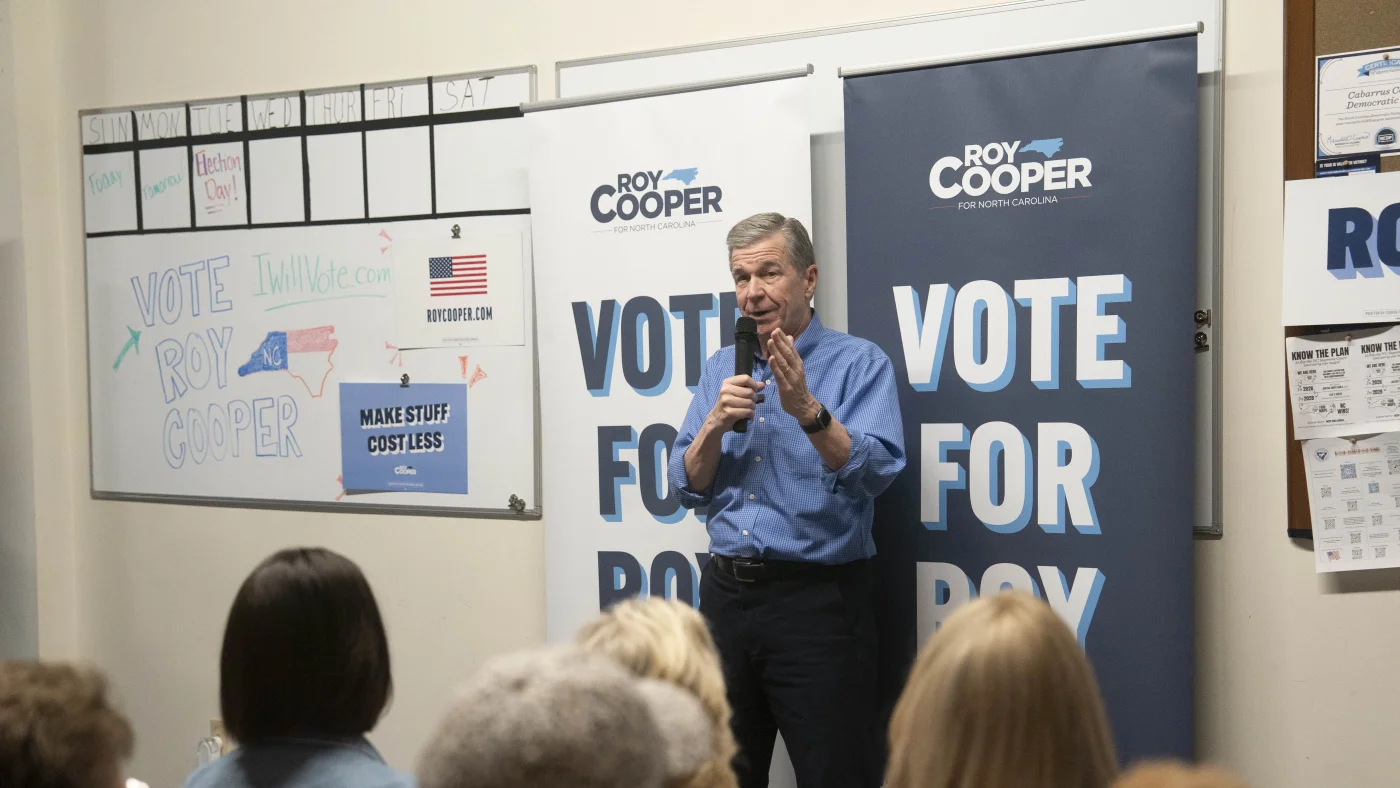
Roy Cooper has won North Carolina’s open US Senate seat, giving Democrats a crucial gain and making him the first Democrat elected to the state’s Senate seat since 2008.
The Associated Press called the race for the former governor, who defeated Michael Whatley, the former Republican National Committee chairman chosen by President Trump to replace retiring Republican senator Thom Tillis.
Cooper, who served as North Carolina governor from 2017 to 2024, made the cost of living the central theme of his campaign. His appearances across the state were promoted as the “Make Stuff Cost Less” tour.
Whatley, in his first campaign for elected office, focused on crime and immigration. He attacked Cooper over a legal settlement during the Covid pandemic that led to inmates being released from state prisons to ease overcrowding.
But polling suggested the economy was the leading concern among North Carolina voters. Patrick Sebastian, a Republican strategist who was not involved in Whatley’s campaign, said the party’s candidate should have placed greater emphasis on the issue.
“Really it’s the economy is Issue A and then Issue B is probably government corruption, that people are following the most,” Mr Sebastian said. “So when we’re not talking about those issues, it’s going to be hard to connect with people that go to Walmart for their groceries and can only get 80% of what they used to buy because the prices have gone up.”
The contest had initially been expected to be among the most competitive and expensive Senate races in the country. Whatley never led in polling, however, and Cooper’s advantage grew as the campaign progressed.
Democratic organisations and the Cooper campaign significantly outspent their Republican opponents. National Republican groups withdrew television advertising from North Carolina several weeks before the election and redirected the money to other battlegrounds, including Kansas.
Trump and Vice President Vance held several rallies in North Carolina during the final weeks. Mr Sebastian said the visits probably helped Republican turnout, but were not enough to rescue Whatley’s campaign as support from pro-Whatley television advertising largely disappeared in October.
Mr Tillis announced in 2025 that he would not seek re-election after Trump threatened to back a primary challenger against him for opposing the president’s tax-cut and spending legislation. Rather than campaign for Whatley, Mr Tillis has been promoting a new book criticising fellow Republicans.
