


Prosecutors have accused Russell Brand of acting as a “ruthless” sexual predator who assaulted six women over a decade, as his trial opened at Southwark Crown Court.
Brand, 51, denies three counts of rape, three counts of sexual assault and one count of indecent assault. The alleged offences are said to have taken place between 1999 and 2009.
Riel Karmy-Jones, opening the case for the prosecution, told jurors that the alleged assaults occurred in a hotel room, workplaces, a bar toilet cubicle and at Brand’s home.
She said the women did not know one another and alleged that Brand had an “indiscriminate and voracious” desire for sexual contact, with women treated as “simply a means to an end”.
“He was ruthless, he was calculating, he was manipulative. And, the prosecution say, he was a sexual predator,” Ms Karmy-Jones said.
The court heard that Brand could be funny and charming, and was described by the prosecutor as “a flirt with a huge sexual appetite – childlike in his expectation that his every desire should be met”.
One woman alleges that Brand raped her in a hotel room during the Labour Party’s annual conference in Bournemouth in 1999, when he was a rising stand-up comedian performing at a fringe cabaret event.
Another woman alleges that he tried to drag her into a men’s toilet at her workplace in 2001. A third alleges that Brand raped her orally in the toilets of a London bar in 2004 and told her, “Don’t be a spoilsport”, when she asked him to stop.
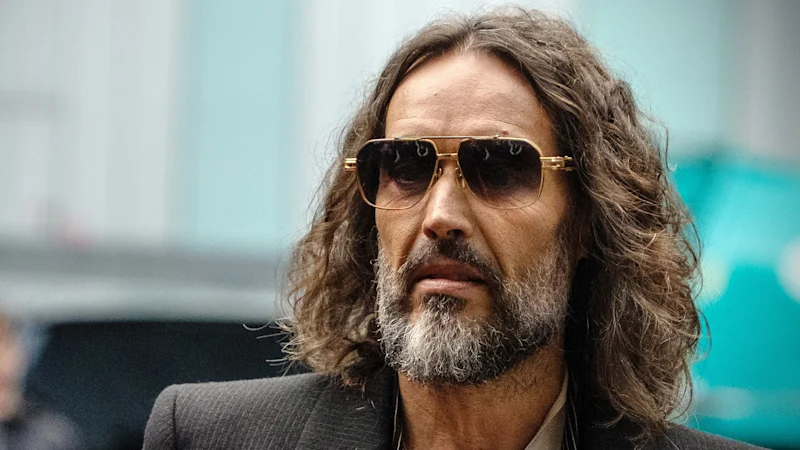
Brand listened from the dock as the allegations were outlined to the jury. He arrived at court on bail amid a crowd of photographers and video journalists.
Speaking outside, Brand said he felt “blessed”. He added: “I feel, of course, concerned but hopeful that this process will lead to good outcomes for everybody involved. That’s my prayer.”
Brand became prominent in the early 2000s through risqué stand-up comedy, television work and his BBC radio show. He also appeared in films including Forgetting Sarah Marshall and Get Him to the Greek.
In recent years, he has moved away from mainstream media, relocated to Florida and developed a large online following through videos about wellness, conspiracy theories and his religious devotion.
The women involved in the case cannot be identified under British law, which protects the identities of alleged victims of sexual violence for life.
