


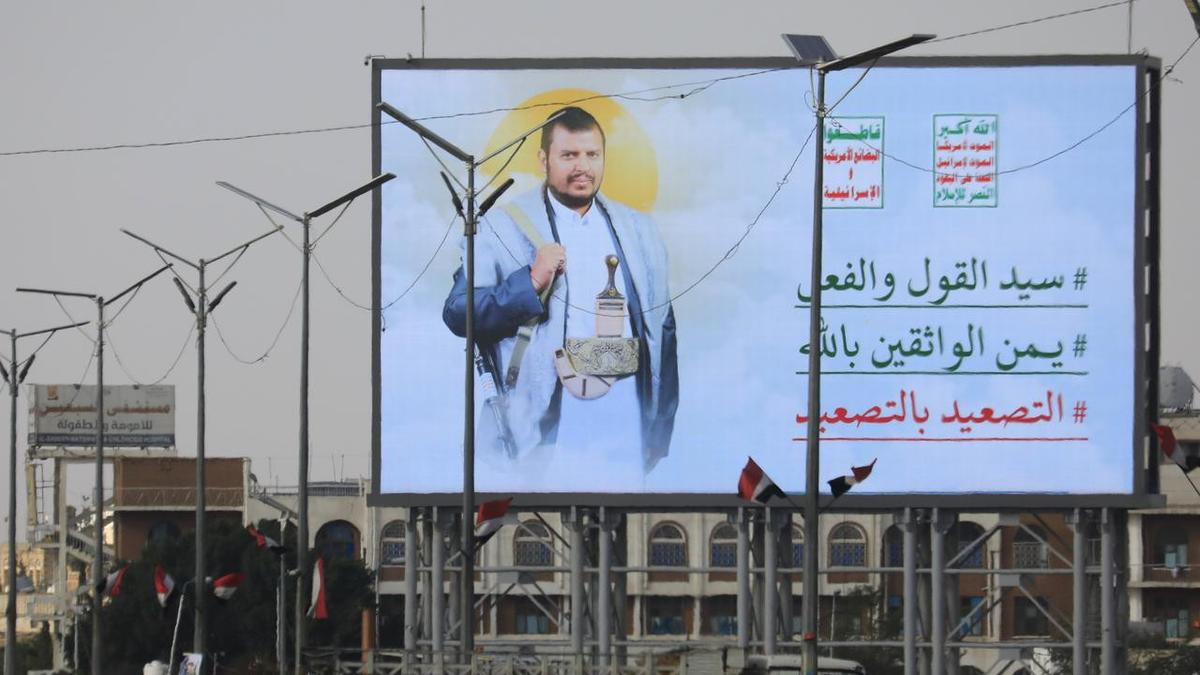
Saudi Arabia and Yemen’s Houthi rebels have exchanged threats of further strikes, after the Saudi-led coalition warned civilians to leave an area of Sanaa ahead of a possible attack.
The coalition urged people to evacuate the site of the Yemeni Oil Company and nearby storage facilities in al-Subaha, in western Sanaa, which is controlled by the Houthi movement.
Al-Subaha is situated on a hill overlooking the capital and is not a densely populated area, although a nearby petrol station is used by the public.
Houthi military spokesman Brigadier General Yahya Saree said any Saudi strike on Sanaa would be met with a “firm and painful” response in Riyadh.
The warnings come as Saudi Arabia investigates how its air defences failed to stop a barrage of missiles and drones launched by the rebels. The attacks included a strike on Riyadh’s international airport on Saturday, which reportedly killed at least 13 people and wounded more than 300.
Houthi warning over Saudi airspace
The Iran-aligned Houthi militia renewed its warning against the use of Saudi airspace on Tuesday, according to media outlets controlled by the movement.
In a statement carried by the Houthi-controlled SABA news agency, the group’s foreign ministry called Saudi Arabia the “Kingdom of the Horn of Satan”. It said the kingdom “must realise that security, stability and sovereignty must belong to everyone; otherwise, no one will enjoy them”.
Several airlines have suspended services to Saudi Arabia because of the Houthi attacks on airports.
The Saudi-led coalition said three drones had been intercepted north of Riyadh on Tuesday. That claim could not be independently verified.
Egyptian Foreign Minister Badr Abdelatty called on the Houthis to stop their attacks during a telephone conversation with Iranian Foreign Minister Abbas Araqchi.
“There is no justification for these attacks, and they cannot be accepted,” Mr Abdelatty said, according to an Egyptian account of the call. He also urged diplomacy and a political solution to the conflict between Iran and the United States to prevent further escalation and instability in the region.
The latest fighting began last month after the Houthis seized key areas along the Bab el-Mandeb Strait, a vital route for Gulf oil and other goods at the southern end of the Red Sea off Yemen.
The Saudi-led coalition is backing forces aligned with Yemen’s internationally recognised government and has been attempting to retake the territory.
Saudi Arabia has asked the United States for more direct military support against the rebels. Washington has provided intelligence sharing, target identification and planning for the coalition’s offensive, but has so far stopped short of carrying out strikes against the Houthis.
Any US intervention could lead the Houthis to try to disrupt shipping through the Bab el-Mandeb, restricting the flow of oil from the Persian Gulf.
US President Donald Trump said on Monday that the Houthis were “misbehaving very badly”, but did not indicate whether Washington would respond to the attacks.
