


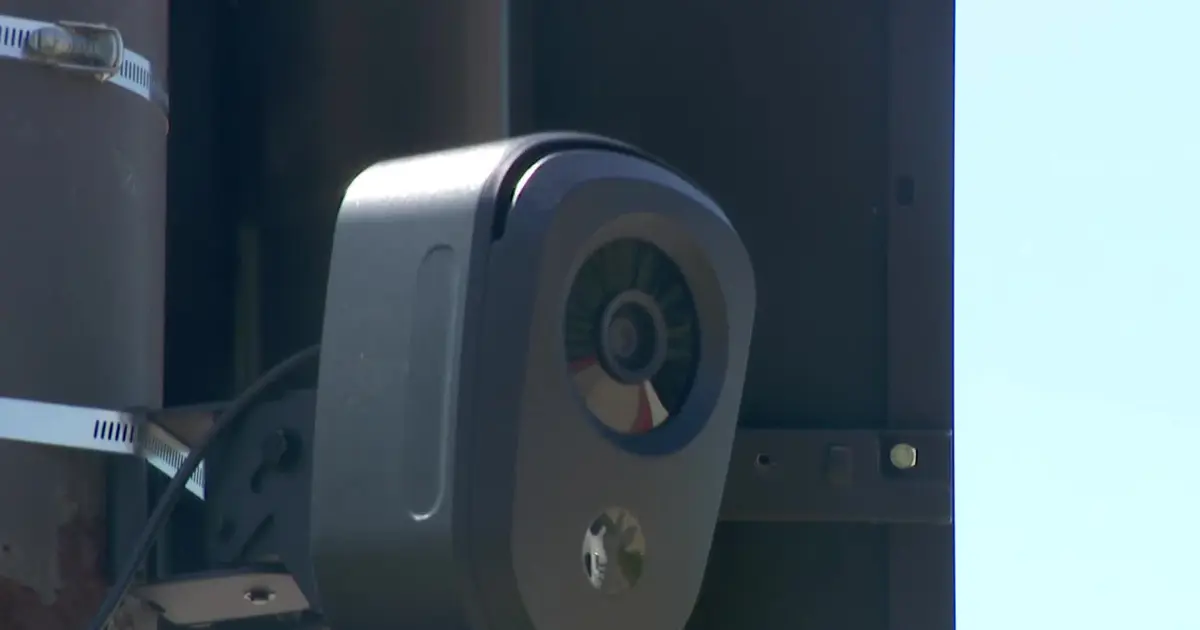
Officials in Shakopee, Minnesota, have mounted a defence of the city’s Flock number-plate camera programme, accusing critics of spreading “misinformation” ahead of a council workshop on Tuesday, September 1.
Documents prepared for the Shakopee City Council describe automated number-plate readers as a narrowly defined policing tool, while acknowledging growing public concern about the technology and its use by law-enforcement agencies across the United States.
No decision on the future of the cameras is expected at the 7pm meeting. Instead, councillors are due to hold a workshop discussion after a series of Minnesota communities suspended or abandoned similar schemes.
Shakopee officials defend Flock cameras
The council papers say online debate about automated licence-plate readers, commonly known by the Flock brand name, has been driven in part by “social media outrage campaigns”. They claim that much of the concern is based on inaccurate information rather than the technology’s actual operation.
According to the documents, the cameras capture a vehicle’s number plate as it passes a fixed location, recording the time and limited details about the vehicle. The system does not provide officers with a continuous video feed, officials say.
Shakopee’s police department currently operates seven Flock cameras. Information published by the city says the devices capture still images when vehicles pass, rather than recording continuously, and that ordinary data is automatically deleted after 30 days.
The city also says the system does not use facial recognition or collect biometric information. Searches must be linked to a legitimate law-enforcement purpose, with users required to enter an offence type, case number and reason for accessing the information.
Shakopee police say only authorised supervisors and investigators can conduct searches. The department’s most recent independent audit found it was complying with Minnesota requirements covering data protection, access controls, accuracy and breach notification.
The city’s transparency material states that Shakopee controls its own data and does not give direct access to federal agencies including Immigration and Customs Enforcement. Prior Lake Police Department is identified as the only outside force with direct access to Shakopee’s system.
Police cite crime investigations
Shakopee Police Chief Jamie Pearson has supplied the council with examples of cases in which officers say Flock information assisted investigations.
They include the identification of a suspect vehicle in an attempted murder and shooting investigation in November 2025, the recovery of stolen vehicles, and the location of a vehicle linked to a homicide less than an hour after the killing in May 2026.
In August, officers used a Flock alert linked to a KOPS notification to locate a vehicle whose driver had previously fled from Burnsville police. The driver was arrested and charged with felony drug possession, according to the council material.
The city administrator’s briefing says the cameras are used to help solve crimes, locate stolen vehicles and find vulnerable people through Amber and Silver Alerts. It also says cameras at two major parks are intended to help prevent repeated damage to those sites.
The defence comes amid a wider backlash against Flock cameras. The St Paul City Council has called for the city and county to end their relationship with the company, while Dayton councillors voted to suspend their programme after cameras were damaged.
Police agencies in Duluth, West St Paul, Columbia Heights, North Branch, Isanti County and Sherburne County have also dropped or suspended their schemes in recent months. Other law-enforcement leaders, including Ramsey County Sheriff Bob Fletcher and the Anoka County Sheriff’s Office, have continued to argue that the technology can help solve serious crimes.
