


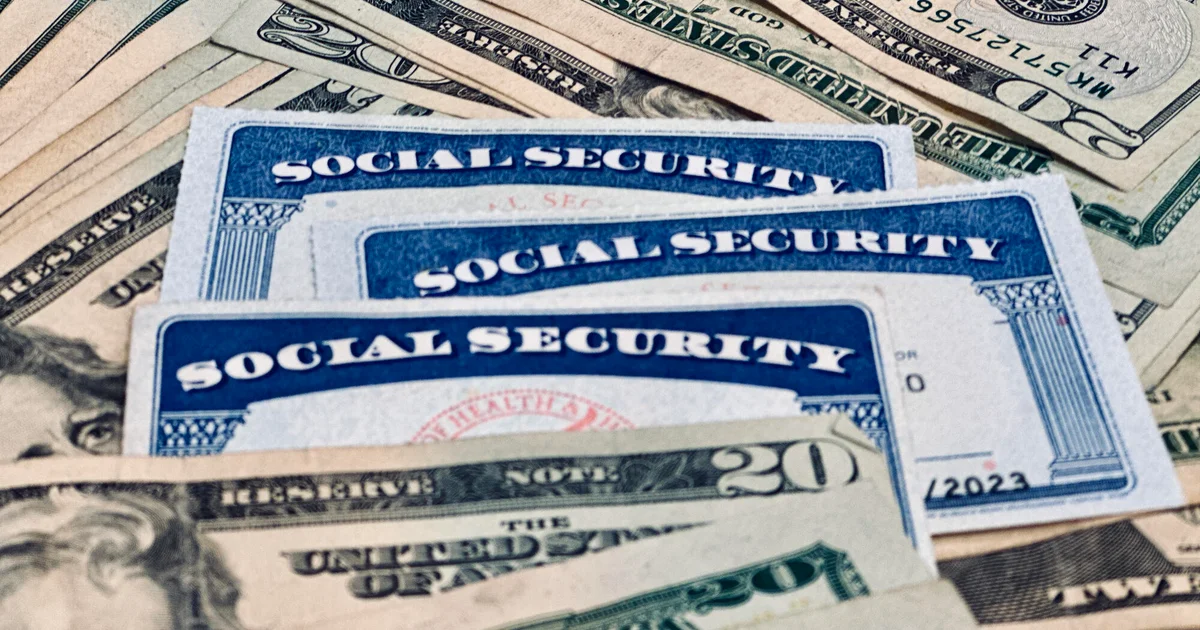
More than 75 million Americans will receive a 3.6% Social Security cost-of-living adjustment in 2027, the largest annual increase for beneficiaries in four years.
The rise, announced by the Social Security Administration, will increase the average monthly payment by about $75 to $2,170 from January.
About 7.3 million people receiving Supplemental Security Income will see the adjustment reflected in payments issued from 31 December 2026.
The increase follows higher inflation, with the Consumer Price Index rising by 3.7% in September. Fuel prices have also climbed sharply this year, partly because of the war in Iran.
The annual adjustment is intended to help older people, disabled Americans and other beneficiaries maintain their purchasing power as prices rise. But campaigners said the increase would not make up for ground lost in previous years.
“While a 3.6% COLA is certainly welcome, it wouldn’t necessarily restore the purchasing power seniors have already lost,” said Shannon Benton, executive director of the Senior Citizens League.
“The COLAs are designed to keep pace with inflation, not make up for years of falling behind,” she added. “The bottom line is that seniors aren’t getting ahead. They’re getting a slightly bigger check to pay bills that have gotten even bigger.”
How the Social Security cost-of-living adjustment is calculated
The Social Security Administration calculates the adjustment using inflation data from July to September, measured by the Consumer Price Index for Urban Wage Earners and Clerical Workers, known as CPI-W.
Advocates for older people argue that the measure does not accurately reflect the spending patterns of seniors, who generally spend more on healthcare than younger workers. Healthcare costs have tended to rise faster than overall inflation.
Nancy Altman, president of Social Security Works, said the 3.6% increase lagged behind September’s inflation figures. “People are getting crushed by prices,” she said. “As important as the Social Security COLA is, it is not keeping up with prices.”
Max Richtman, president of the National Committee to Preserve Social Security and Medicare, backed calls for the CPI-E measure, which is designed to calculate inflation’s effect on older people’s living costs.
“Without adopting a more adequate COLA formula, seniors likely will continue to tread water or fall behind rather than ‘catch up,’” Mr Richtman said.
Social Security remains the largest anti-poverty programme in the United States, according to the Census Bureau. However, the poverty rate among older people rose to 15.4% last year, from 14.2% in 2022.
Experts have attributed the increase partly to rising healthcare costs, Social Security payments that have not kept pace and inadequate retirement savings. An AARP survey found that about three-quarters of older Americans believed a 3.5% adjustment would not be enough to cover rising prices.
The programme’s trust fund is projected to become insolvent in six years. Without action by lawmakers, all Social Security recipients are expected to face benefit cuts of more than 20% in 2032.
