


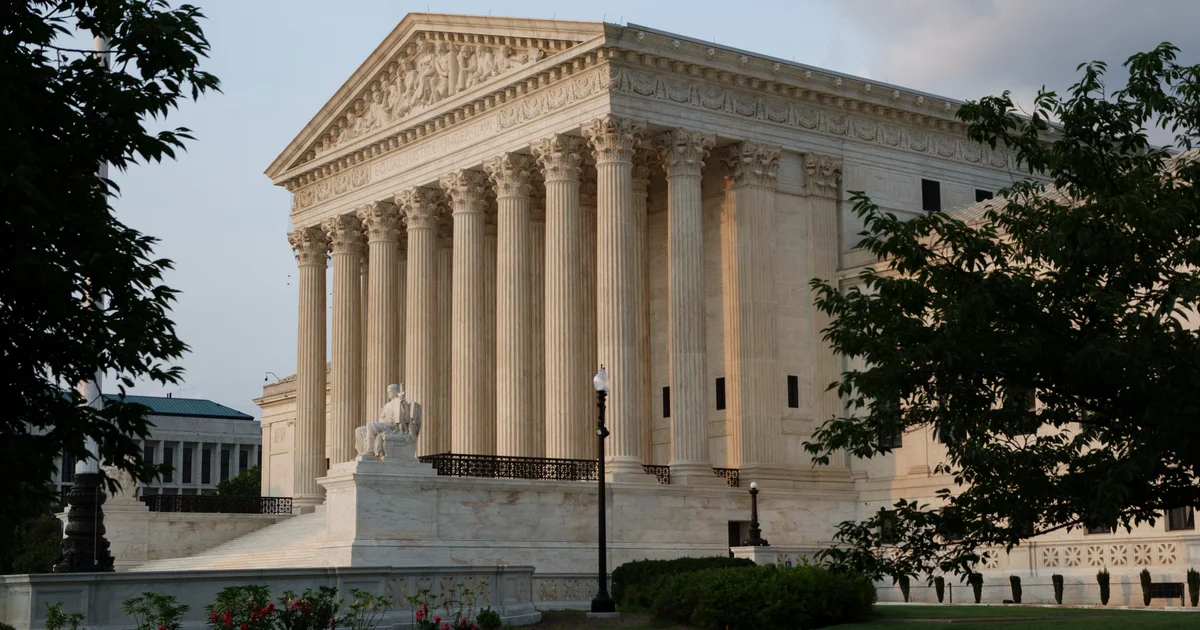
The Trump administration has asked the US Supreme Court to temporarily revive a Bureau of Prisons policy that would end certain medical treatments and social accommodations for transgender inmates.
The emergency appeal follows a ruling by US District Judge Royce Lamberth, who ordered the administration to continue providing care to a class of prisoners diagnosed with gender dysphoria and barred the bureau from enforcing its revised rules.
The Justice Department’s request came after the US Court of Appeals for the District of Columbia Circuit declined earlier this month to restore the policy while the legal proceedings continue.
The dispute began after a group of federal inmates with gender dysphoria brought a legal challenge last year. Their case followed an executive order issued by Donald Trump at the start of his second term, which prohibited the use of federal funds for medical procedures or treatments for transgender inmates in the federal prison system.
Following that directive, the Bureau of Prisons issued guidance restricting staff from approving requests for certain clothing accommodations and preventing federal money from being used for medical interventions.
The bureau introduced a further policy in February which it said was separate from the executive order. It allowed mental health services for inmates diagnosed with gender dysphoria, but excluded surgery, hormone therapy and social accommodations including chest binders, wigs and breast padding.
Judge Lamberth blocked the policy in June and ordered the Bureau of Prisons to continue providing medical treatment to transgender inmates. He later extended the order preventing enforcement of the rules, finding in part that the policy had been “reverse engineered” to implement Mr Trump’s executive order.
In its Supreme Court application, the Justice Department accused the district court of “substituting its own policy judgment for that of the agency”. Solicitor General D John Sauer said the Bureau of Prisons had determined that its approach to medical treatment for transgender inmates was “necessary to maintain institutional security”.
Mr Sauer warned that the lower court’s ruling “nullifies” that determination and said it broadly prevented the administration from applying its chosen policy.
