


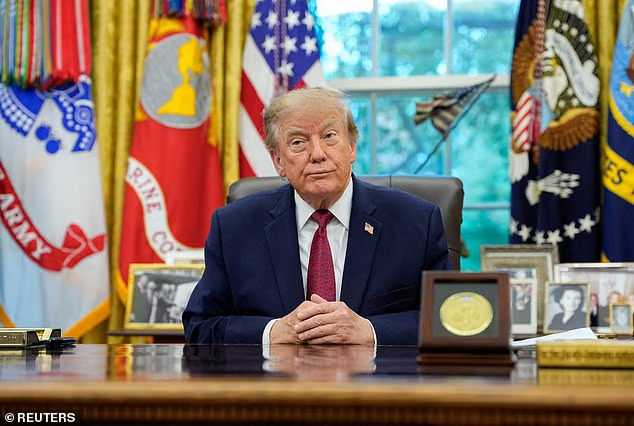
Donald Trump is considering renewed strikes on Iran as his administration weighs a new nuclear proposal from Tehran and attempts to secure a diplomatic agreement.
The US president met his national security team at the White House on Wednesday and Thursday to discuss whether military operations should resume. It was the first such meeting since Democrats won control of both chambers of Congress in Tuesday’s elections.
Trump told reporters in the Oval Office that Washington would “make a decision” on whether to restart the war. Asked whether the United States should go further to ensure Iran’s nuclear programme was permanently destroyed, he replied: “You’ll know soon enough.”
He said he would prefer not to destroy more of Iran if that could be avoided, “but maybe I will have to”.
Iran has since passed a fresh proposal on its nuclear programme to the White House through Qatari mediators, leaving Trump facing a choice between negotiations and further attacks.
US officials have also been told that a new moon over the Middle East on Monday would provide little moonlight, potentially offering favourable conditions for air operations. Central Command has prepared strike plans which could have been launched shortly after the election, while thousands of American troops remain in waters near Iran enforcing a blockade.
Tehran is said to fear that any further American assault could target Pickaxe Mountain, a nuclear complex near Natanz buried up to 100 metres beneath granite.
Iran has reportedly been distributing iodine tablets to families living within two miles of its nuclear sites and instructing them on how to respond to a blast.
Iran sets conditions for talks
Iran’s top security official, Mohsen Rezaei, said on Thursday that the Strait of Hormuz would not be reopened and talks would not begin until Washington met seven conditions.
The demands include the lifting of US sanctions, the release of frozen Iranian assets and reparations for the war. Tehran now says the process has been condensed and could be completed within two days.
Trump rejected an earlier seven-point version of the proposal in September, responding by posting a map which labelled the waterway “Trump Strait”.
Vice President JD Vance is leading advisers who favour an agreement, while CIA Director John Ratcliffe and Treasury Secretary Scott Bessent are pressing for the naval blockade to remain in place.
Iraqi Prime Minister Ali Faleh al-Zaidi also warned Trump during a phone call that Iraq could not be used as “a launchpad for aggression against neighboring countries”, according to a statement from his office.
The debate over Iran comes after Democrats captured the House and Senate, taking seats in Texas, Kansas and other traditionally Republican states. Vance wrote that “the reason we lost is the war”, a view Trump described as “largely true”, although the president blamed the result primarily on high petrol prices.
Trump repeated that “You can’t let Iran have a nuclear weapon”. Drivers paid an average of 4.15 dollars a gallon on election day, while rising energy costs were estimated to have reduced the average American household’s income by nearly 1,230 dollars.
The Strait of Hormuz, which carries a quarter of the world’s traded oil and a fifth of its liquefied natural gas, remains effectively closed.
