


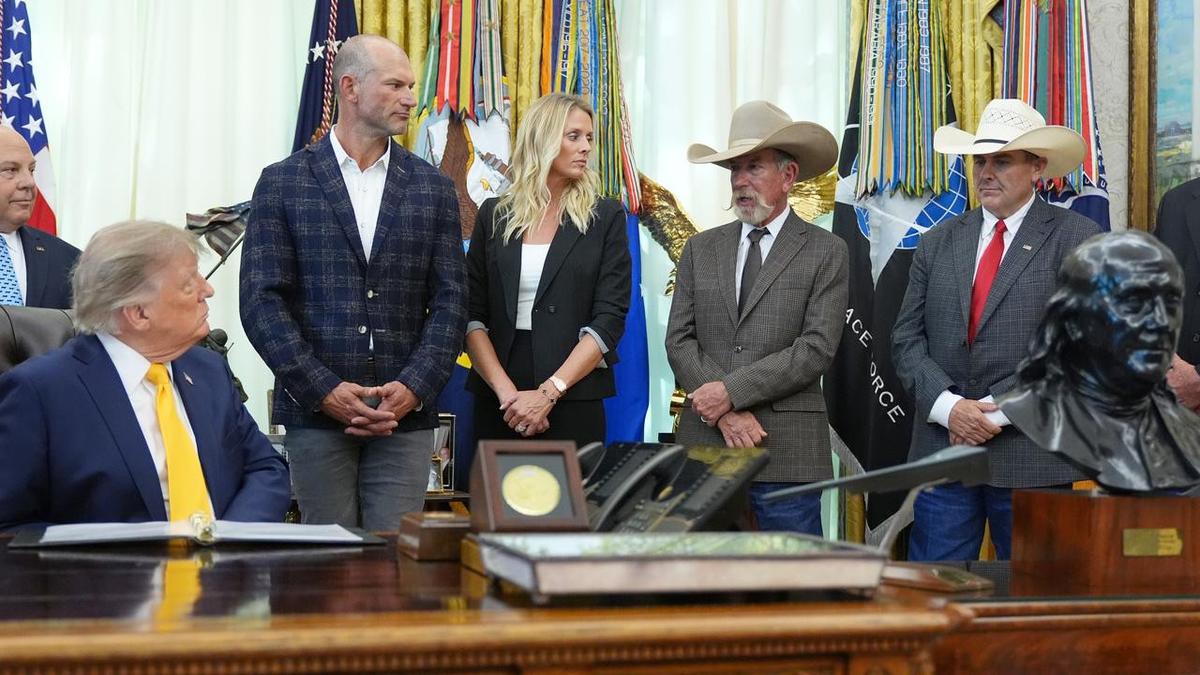
Donald Trump has signed executive orders to help US cattle ranchers protect their herds from grey wolves, expand smaller-scale meat processing and pursue country-of-origin labelling for beef, as his administration grapples with record prices at the checkout.
The measures were announced during a signing ceremony in the Oval Office. They are intended to support domestic producers while increasing supplies and easing pressure on consumers facing higher beef costs.
One order will give ranchers greater scope to protect cattle from wolves, which producers say can kill livestock, particularly calves, and increase the cost of monitoring and safeguarding herds.
Grey wolves remain protected under the federal Endangered Species Act across much of the United States, although the level of protection differs between regions.
Beef country-of-origin labelling
Trump’s move on country-of-origin labelling stops short of restoring mandatory requirements for beef. The president said further action would be needed, including approval from Congress, to give shoppers more information about where their meat was produced.
“It will be easy,” Trump said.
Mandatory country-of-origin labelling for beef and pork was repealed by Congress in 2015 after challenges at the World Trade Organisation by Canada and Mexico. Under current rules, companies may use a “Product of USA” claim voluntarily, provided it meets federal requirements.
The labelling push comes as the administration also seeks to increase beef imports to address a shortage in domestic supplies. The US cattle herd has fallen to its lowest level in 75 years, while drought and wildfires have contributed to a contraction in production.
The administration recently expanded access to lower-tariff imports of lean beef trimmings by 300,000 metric tonnes for three months. Officials have argued that the additional supplies are needed to reduce prices, particularly for ground beef.
The policy has angered some cattle producers, who fear cheaper imports could weaken US cattle prices and discourage ranchers from rebuilding the national herd. They argue that consumers should be able to distinguish clearly between domestic beef and imported meat.
Trump has said imports can provide short-term relief while his administration works to expand the US herd. His government has also announced measures aimed at smaller meat processors, including efforts to make it easier for farmers and ranchers to process and sell cattle from their own operations.
The changes are intended to challenge the dominance of the country’s largest meat-packing companies, but leave the administration balancing competing demands: reducing grocery bills quickly while protecting the long-term prospects of American cattle producers.
