


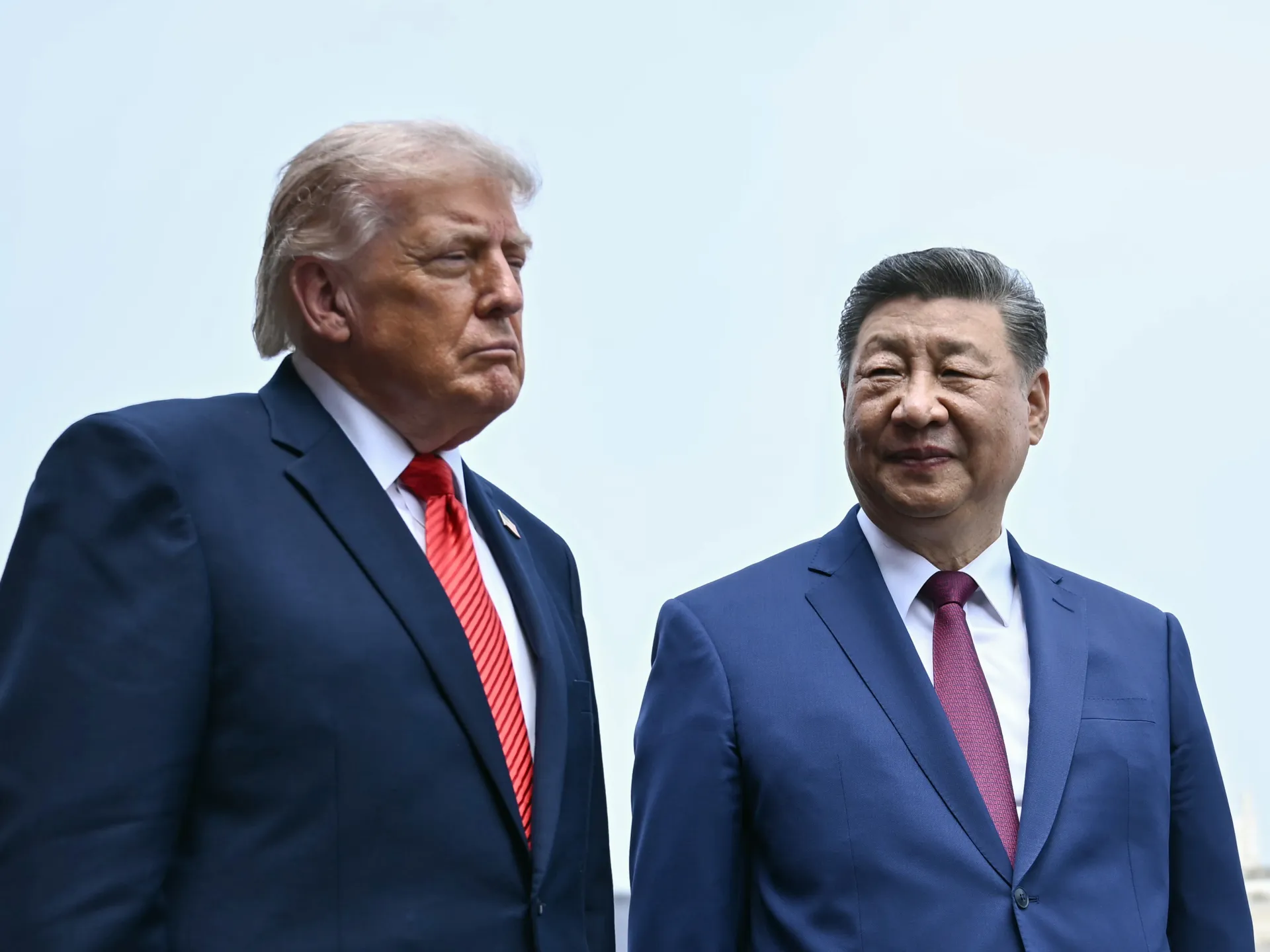
A proposed Trump, Xi and Putin summit on the sidelines of this month’s Asia-Pacific Economic Cooperation (APEC) meeting in Shenzhen could bring the leaders of the United States, China and Russia together for the first time.
The meeting is tentatively scheduled for November 18 and 19, although arrangements have not yet been completed. China said it was in contact with the relevant parties, while the Kremlin said co-ordination was under way and expressed hope that the plans would be finalised within days.
The three presidents have met separately, but have never held formal talks together. Donald Trump has said he would be willing to discuss nuclear weapons with Xi Jinping and Vladimir Putin.
What would the Trump, Xi and Putin summit achieve?
For Moscow, the gathering would offer an opportunity to place Mr Putin at the centre of discussions about the future of European security after the war in Ukraine.
Alexander Bratersky, a Moscow-based journalist and political analyst, said the meeting would be “a big event” and could allow Russia to portray its president as “first among equals”.
He said some Russian officials had compared the prospect with the 1945 Yalta conference, where the leaders of the Soviet Union, the United States and the United Kingdom helped shape the post-war order in Europe.
Mr Bratersky said a meeting alone would be a success for the Kremlin, giving Mr Putin a major image to promote domestically. But he added that its significance would depend on whether it produced tangible results within the following month.
If no progress emerged before Christmas, he said, the gathering would amount to “just a photo op”. A further meeting could potentially take place at the G20 summit in Miami in December, he added.
Mr Trump would also have political incentives to attend. Inderjeet Parmar, professor of international politics at City St George’s, University of London, said the president wanted “a personal, high-drama encounter” that would allow him to present himself as the central deal-maker between the world’s major powers.
The talks could be used to promote possible agreements on Ukraine, trade, energy or arms control, Professor Parmar said. A photograph of Mr Trump with Mr Xi and Mr Putin could also be presented as evidence that American influence remained decisive, even if the practical outcome were limited.
He said the need for a foreign policy success had become more important after the midterm elections, in which Democrats won control of both chambers of Congress. That could reduce Mr Trump’s leverage if lawmakers began sending further money to Kyiv, Mr Bratersky said.
China is unlikely to make Ukraine the focus
Beijing appears unlikely to support making the Russia-Ukraine war the principal subject of the summit. German President Frank-Walter Steinmeier said Xi had indicated that the conflict was a European issue and that European countries should be represented at the negotiating table.
China is also expected to resist pressure to join trilateral nuclear disarmament negotiations. Its Foreign Ministry has said it would be “neither fair, reasonable nor realistic” to ask China to take part at this stage.
Any three-way meeting would therefore risk raising expectations that cannot be met, particularly over Ukraine. Professor Parmar said the countries’ interests remained sharply different on Ukraine, Taiwan, technology and the rules governing the international economy.
He said the larger concern was not the creation of a formal “G3”, but the growing possibility of major powers making agreements without consulting the countries most affected by them.
Such a summit would mark a departure from the post-1945 pattern in which the United States worked closely with its European and Asian allies before engaging with Moscow or Beijing, Professor Parmar said.
A standalone meeting could leave those allies treated as secondary players whose interests were addressed afterwards, or even exchanged as part of wider negotiations. The eventual outcome of the proposed Trump, Xi and Putin summit will depend on whether the leaders produce agreements rather than simply an image of co-operation.
