


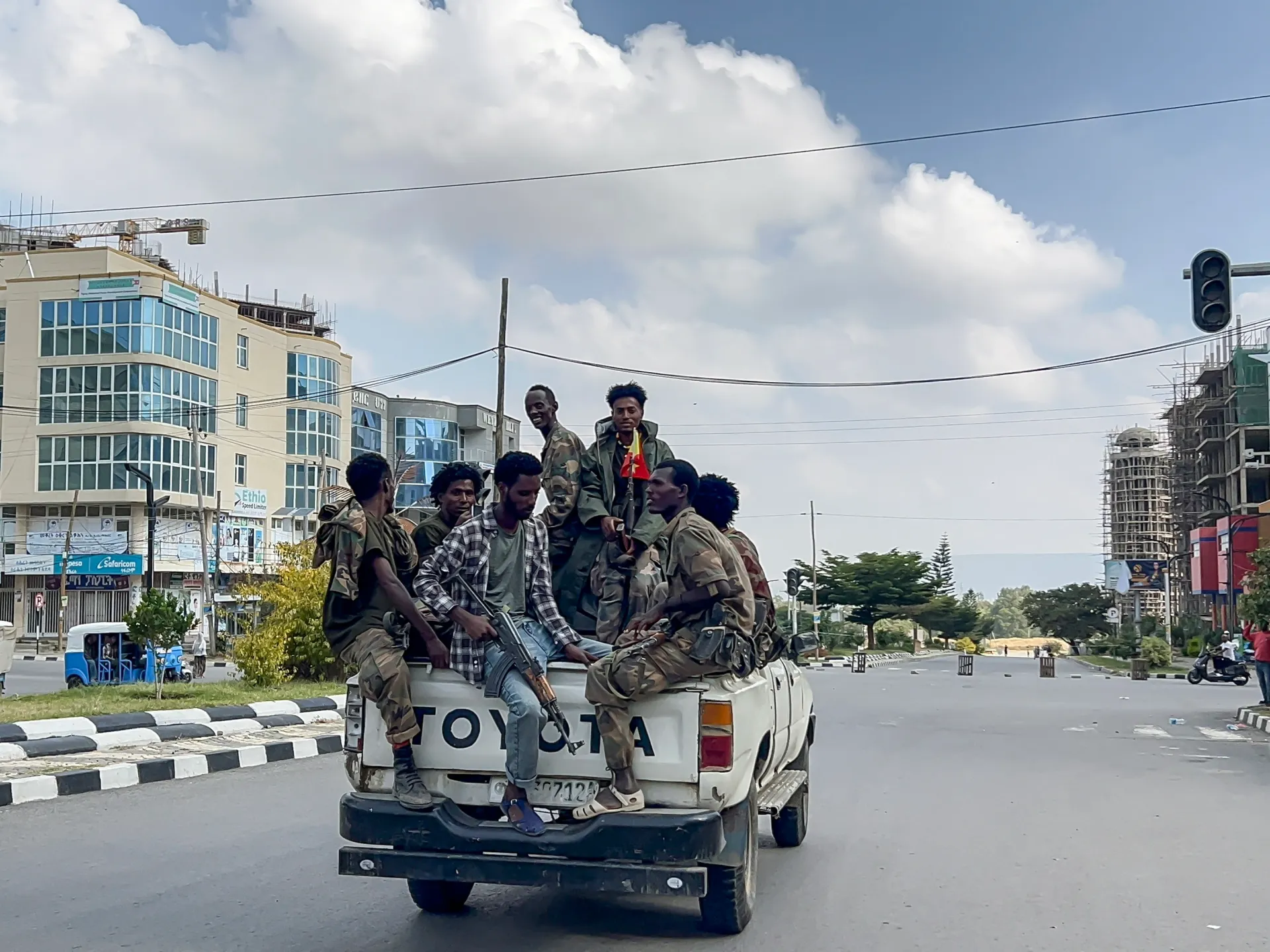
Renewed fighting in Ethiopia’s Tigray region is putting the spotlight on the contrasting roles of the United Arab Emirates and Saudi Arabia as fears grow that the conflict could destabilise the wider Horn of Africa.
Abu Dhabi has openly backed Ethiopia’s federal government, while Riyadh has remained publicly silent on the latest clashes despite its previous attempts to mediate tensions involving Ethiopia, Eritrea and the Tigray People’s Liberation Front (TPLF).
The violence threatens to undermine the November 2022 Pretoria peace agreement, which brought an end to the war between Ethiopia’s federal authorities and Tigrayan forces. Rising tensions between Ethiopia and Eritrea have added to concerns that the renewed conflict could spread beyond Tigray.
The UAE’s support for Ethiopia
On September 25, the UAE condemned attacks attributed to the TPLF and allied armed groups against Ethiopian federal forces, as well as the seizure of airports in Tigray and fighting in the neighbouring Afar and Amhara regions.
Sheikh Shakhboot bin Nahyan Al Nahyan, the UAE minister of state, expressed solidarity with Ethiopia’s government and people and reaffirmed support for the country’s sovereignty and territorial integrity.
Abu Dhabi also called for an end to the hostilities, the protection of civilians and compliance with the Pretoria agreement. The statement made clear that the UAE supports Addis Ababa, while also urging dialogue and de-escalation.
It did not establish whether the UAE was providing military assistance or had obtained commitments from any of the parties to halt the fighting.
The Emirates has significant commercial interests in the Horn of Africa. Dubai Ports World operates Berbera port in Somaliland, while a shipping route launched in 2025 links the port with Jebel Ali in the UAE and provides a further corridor for cargo destined for inland markets including Ethiopia.
Ethiopia has relied heavily on Djibouti for access to international trade since losing its coastline after Eritrea’s independence in 1993. Those economic links help explain Abu Dhabi’s interest in stability and its close relationship with Addis Ababa, but they do not demonstrate that the UAE can influence the TPLF, persuade Eritrea to step back or alter Ethiopia’s military decisions.
Saudi Arabia’s uncertain diplomatic role
Saudi Arabia has not publicly set out a position on the latest fighting in Tigray. The kingdom has, however, previously sought to mediate between Ethiopia and Eritrea and was reported to have offered to help the two countries in 2025 as disputes over maritime access and regional security intensified.
Earlier diplomatic efforts did not resolve the tensions. One assessment said they had failed in part because they did not address Ethiopia’s interest in the Eritrean port of Assab.
Saudi Arabia’s wider regional alignment is also being closely watched. It has been assessed as sharing with Egypt an opposition to Ethiopia’s ambitions for access to the Red Sea, although there is no evidence in the material that Riyadh is directly supplying military support to Eritrea or the TPLF.
Red Sea security is a major interest for Saudi Arabia because the waterway is vital to international shipping and the kingdom’s oil exports. Whether Riyadh will assume a more visible diplomatic role as the crisis develops remains unclear.
Regional tensions raise the stakes
Egypt’s longstanding dispute with Ethiopia over the Grand Ethiopian Renaissance Dam and its closer ties with Eritrea form part of the wider regional picture.
Cairo has maintained that responsibility for the governance and security of the Red Sea rests with the countries bordering it, a position also held by Asmara. That disagreement has sharpened tensions as Ethiopia seeks dependable access to the sea.
In September, Ethiopia’s army chief, Field Marshal Birhanu Jula, accused Egypt and Sudan of supporting armed groups fighting the federal government, including the TPLF. No evidence substantiating the allegation was provided.
Egypt’s Foreign Ministry spokesperson, Nader Zaki, reaffirmed Cairo’s commitment to state sovereignty and non-interference and rejected suggestions that Egypt had abandoned those principles. He did not directly address the specific allegation of support for the TPLF.
Egyptian President Abdel Fattah el-Sisi met Eritrean President Isaias Afwerki in Cairo on June 8. Their discussions covered bilateral co-operation, developments in the Horn of Africa and Red Sea security, while both leaders stressed the importance of co-ordination to preserve regional stability.
The meeting highlighted closer relations between Cairo and Asmara but did not establish that either country was involved in the renewed fighting in Tigray.
Ethiopia has accused Eritrea of sending troops across the border and backing armed groups. Eritrea denies the allegations and has called on the United Nations Security Council to intervene.
The claims remain contested, but the deterioration in relations has increased the danger that renewed fighting in Ethiopia’s Tigray region could become part of a wider confrontation, putting civilians at greater risk, restricting humanitarian access and disrupting regional trade and security.
The UAE’s ties with Addis Ababa could provide a channel for diplomatic engagement, while Saudi Arabia’s history of regional mediation may offer another route towards talks. Publicly available information does not show that either country is currently leading an effort to contain the crisis.
The effectiveness of their involvement will ultimately depend on whether they can help secure de-escalation, renewed political dialogue and lower tensions between Ethiopia and Eritrea. Their statements, commercial interests and previous diplomatic efforts may create opportunities, but they have not yet demonstrated decisive influence over the conflict.
